
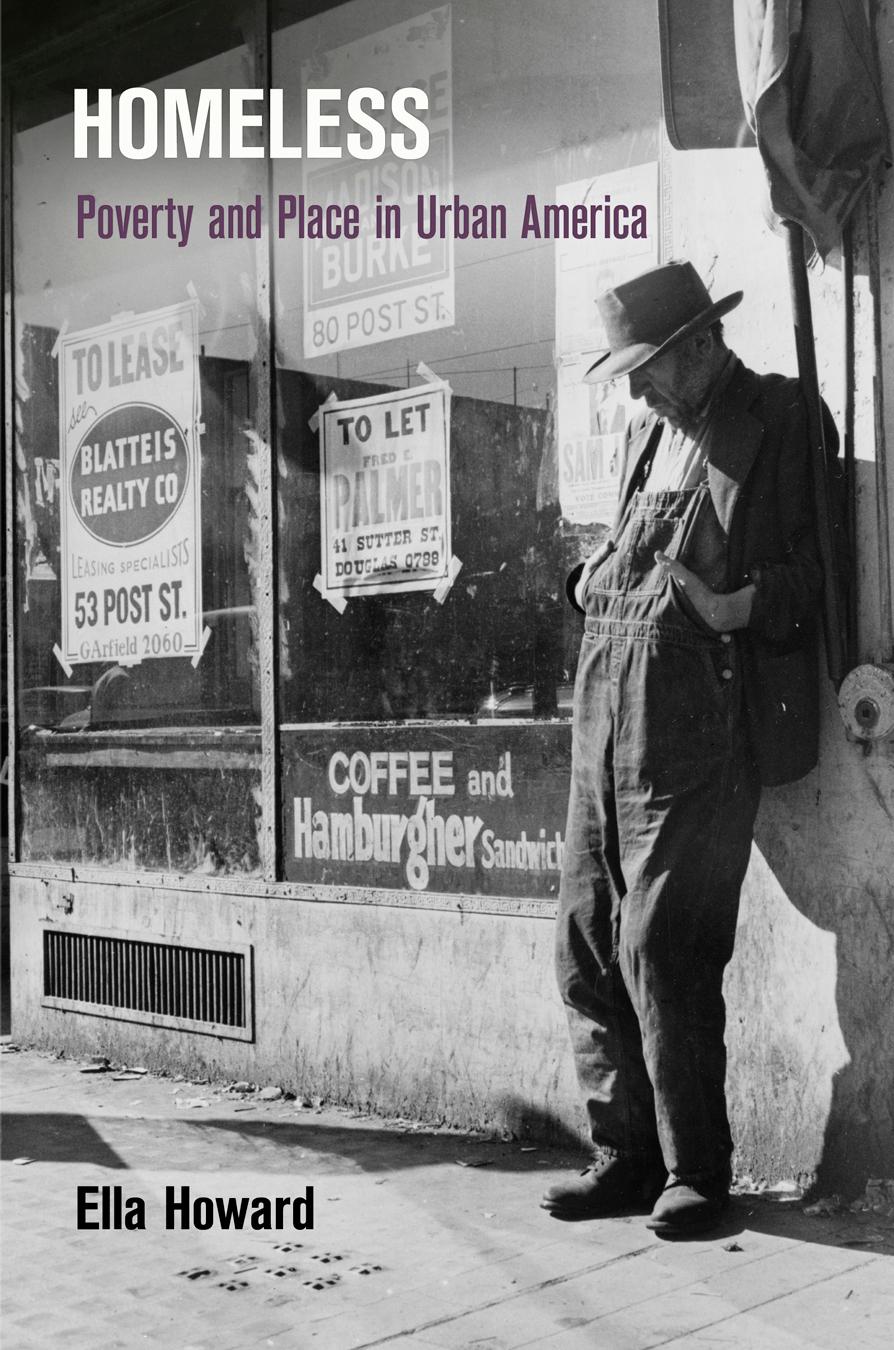
The homeless have the legal right to exist in modern American cities, yet antihomeless ordinances deny them access to many public spaces. How did previous generations of urban dwellers deal with the tensions between the rights of the homeless and those of other city residents? Ella Howard answers this question by tracing the history of skid rows from their rise in the late nineteenth century to their eradication in the mid-twentieth century.
Focusing on New York's infamous Bowery, Homeless analyzes the efforts of politicians, charity administrators, social workers, urban planners, and social scientists as they grappled with the problem of homelessness. The development of the Bowery from a respectable entertainment district to the nation's most infamous skid row offers a lens through which to understand national trends of homelessness and the complex relationship between poverty and place. Maintained by cities across the country as a type of informal urban welfare, skid rows anchored the homeless to a specific neighborhood, offering inhabitants places to eat, drink, sleep, and find work while keeping them comfortably removed from the urban middle classes. This separation of the homeless from the core of city life fostered simplistic and often inaccurate understandings of their plight. Most efforts to assist them centered on reforming their behavior rather than addressing structural economic concerns.
By midcentury, as city centers became more valuable, urban renewal projects and waves of gentrification destroyed skid rows and with them the public housing and social services they offered. With nowhere to go, the poor scattered across the urban landscape into public spaces, only to confront laws that effectively criminalized behavior associated with abject poverty. Richly detailed, Homeless lends insight into the meaning of homelessness and poverty in twentieth-century America and offers us a new perspective on the modern welfare system.
Payez facilement par carte, Klarna, Apple Pay ou Google Pay. Pas satisfait ? Vous avez toujours une garantie de remboursement de 14 jours. En savoir plus dans nos conditions. Si vous avez des questions, envoyez-nous un e-mail à hello@memmo.org.
Memmo facilite tes études, où que tu sois dans le monde. On rassemble tes manuels de cours et des outils d'étude intelligents au même endroit : résumés, quiz, podcasts et flashcards. Et il y a Ted, ton compagnon d'étude qui répond à toutes tes questions. Plus de 50 000 étudiants étudient déjà ici – conçu pour t'aider à apprendre plus vite et à moins stresser.