
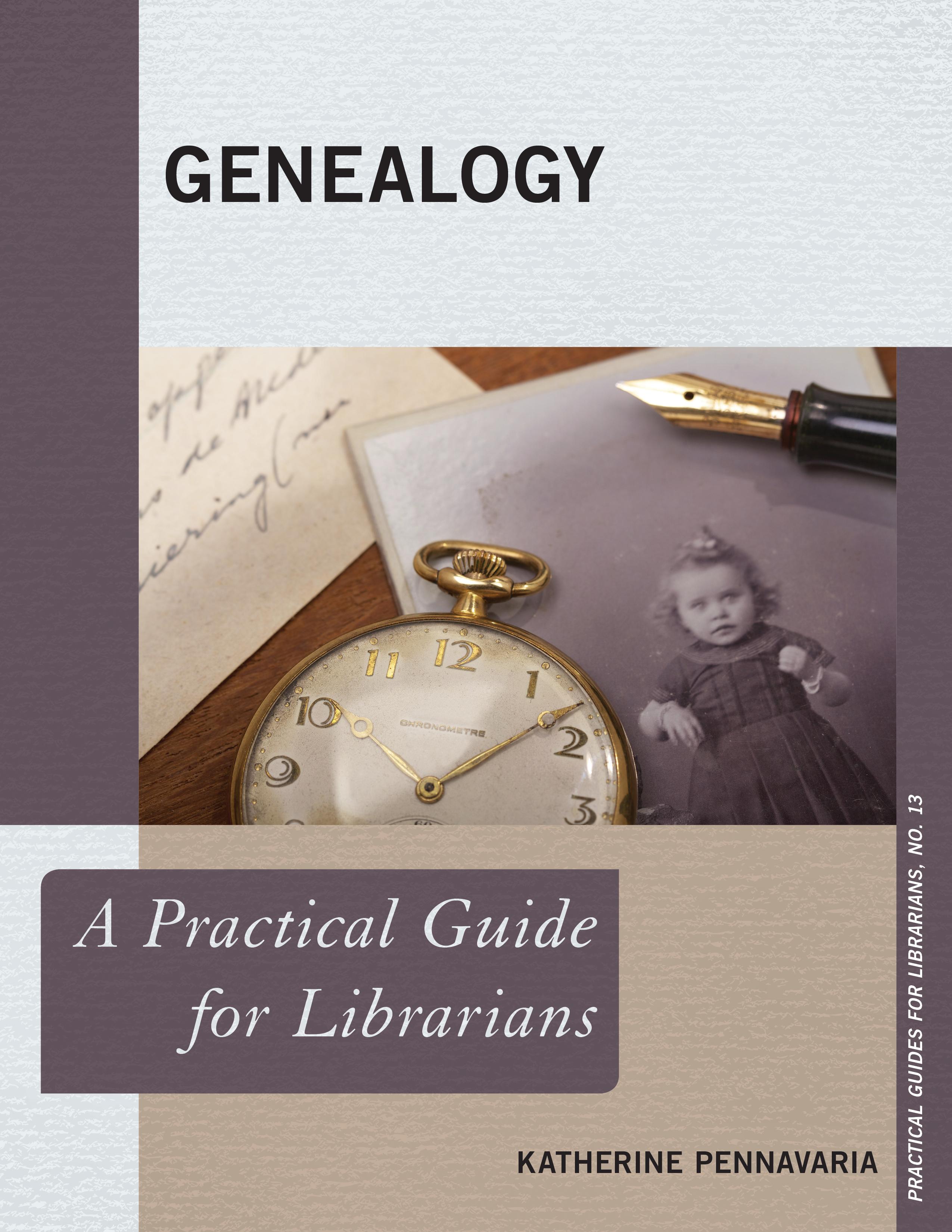
Commercials for the largest subscription database indicate that the process of genealogy is simple—you just “plug in” what you know, and the database does the rest! Those ads might sell subscriptions, but they are misleading. Getting beyond that “low-hanging fruit” is not so easy; collecting the records and data needed to delineate a family tree accurately requires time, organization, and informed searching. Records are available from many places, and finding them is never a “one-stop shopping” experience. So how does the new researcher identify which resources meet his or her specific research needs? And how can libraries and librarians best help this new generation of genealogists?
Genealogy: A Practical Guide for Librarians offers help on several levels:
First, librarians can use this book to learn what resources, both print and online, their library should offer their patron base. This means not only what monographs to purchase and subscription databases to maintain, but what websites to highlight at the library’s webpage, what to include in their online tutorials, what adult education programming is appropriate. Critical assessments of print and online resources are given, including the strengths and weaknesses that librarians need to help patrons understand them.
Second, both librarians and researchers can find here an in-depth discussion of the research process itself, including the best steps for a beginning researcher and search strategies for the experienced one.
And third, anyone can use this book to become better informed about the phenomenon of genealogy itself and about the latest standards for online searching and research.
The book includes practical advice for every public-service librarian and offers all researchers, from novice level to experienced, a clearly delineated context for the popular subject of family history research.
Genealogy: A Practical Guide for Librarians offers help on several levels:
First, librarians can use this book to learn what resources, both print and online, their library should offer their patron base. This means not only what monographs to purchase and subscription databases to maintain, but what websites to highlight at the library’s webpage, what to include in their online tutorials, what adult education programming is appropriate. Critical assessments of print and online resources are given, including the strengths and weaknesses that librarians need to help patrons understand them.
Second, both librarians and researchers can find here an in-depth discussion of the research process itself, including the best steps for a beginning researcher and search strategies for the experienced one.
And third, anyone can use this book to become better informed about the phenomenon of genealogy itself and about the latest standards for online searching and research.
The book includes practical advice for every public-service librarian and offers all researchers, from novice level to experienced, a clearly delineated context for the popular subject of family history research.
Payez facilement par carte, Klarna, Apple Pay ou Google Pay. Pas satisfait ? Vous avez toujours une garantie de remboursement de 14 jours. En savoir plus dans nos conditions. Si vous avez des questions, envoyez-nous un e-mail à hello@memmo.org.
Memmo facilite tes études, où que tu sois dans le monde. On rassemble tes manuels de cours et des outils d'étude intelligents au même endroit : résumés, quiz, podcasts et flashcards. Et il y a Ted, ton compagnon d'étude qui répond à toutes tes questions. Plus de 50 000 étudiants étudient déjà ici – conçu pour t'aider à apprendre plus vite et à moins stresser.