
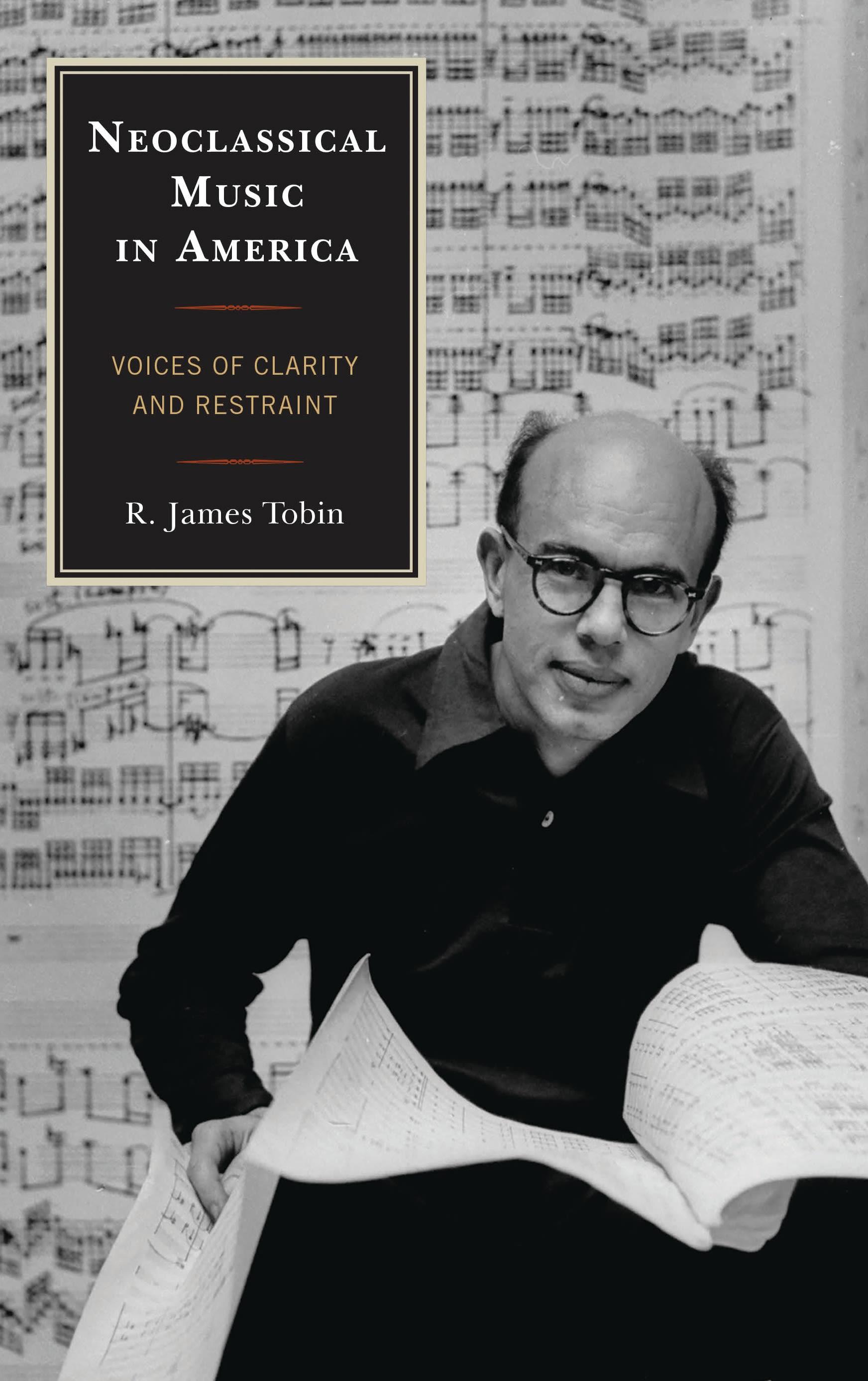
From the 1920s to the 1950s, neoclassicism was one of the dominant movements in American music. Today this music is largely in eclipse, mostly absent in performance and even from accounts of music history, in spite of—and initially because of—its adherence to an expanded tonality. No previous book has focused on the nature and scope of this musical tradition. Neoclassical Music in America: Voices of Clarity and Restraint makes clear what neoclassicism was, how it emerged in America, and what happened to it.
Music reviewer and scholar, R. James Tobin argues that efforts to define musical neoclassicism as a style largely fail because of the stylistic diversity of the music that fall within its scope. However, neoclassicists as different from one another as the influential Igor Stravinsky and Paul Hindemith did have a classical aesthetic in common, the basic characteristics of which extend to other neoclassicists This study focuses, in particular, on a group of interrelated neoclassical American composers who came to full maturity in the 1940s. These included Harvard professor Walter Piston, who had studied in France in the 1920s; Harold Shapero, the most traditional of the group; Irving Fine and Arthur Berger, his colleagues at Brandeis; Lukas Foss, later an experimentalist composer whose origins lay in neoclassicism of the 1940s; Alexei Haieff, and Ingolf Dahl, both close associates of Stravinsky; and others. Tobin surveys the careers of these figures, drawing especially on early reviews of performances before offering his own critical assessment of individual works.
Adventurous collectors of recordings, performing musicians, concert and broadcasting programmers, as well as music and cultural historians and those interested in musical aesthetics, will find much of interest here. Dates of composition, approximate duration of individual works, and discographies add to the work’s reference value.
Music reviewer and scholar, R. James Tobin argues that efforts to define musical neoclassicism as a style largely fail because of the stylistic diversity of the music that fall within its scope. However, neoclassicists as different from one another as the influential Igor Stravinsky and Paul Hindemith did have a classical aesthetic in common, the basic characteristics of which extend to other neoclassicists This study focuses, in particular, on a group of interrelated neoclassical American composers who came to full maturity in the 1940s. These included Harvard professor Walter Piston, who had studied in France in the 1920s; Harold Shapero, the most traditional of the group; Irving Fine and Arthur Berger, his colleagues at Brandeis; Lukas Foss, later an experimentalist composer whose origins lay in neoclassicism of the 1940s; Alexei Haieff, and Ingolf Dahl, both close associates of Stravinsky; and others. Tobin surveys the careers of these figures, drawing especially on early reviews of performances before offering his own critical assessment of individual works.
Adventurous collectors of recordings, performing musicians, concert and broadcasting programmers, as well as music and cultural historians and those interested in musical aesthetics, will find much of interest here. Dates of composition, approximate duration of individual works, and discographies add to the work’s reference value.
Pages: 300
Catégorie: Musikvetenskap
e-ISBN: 9780810884403
Poids d'expédition: 1.2 kg
Expédié sous: 1-2 jours
Payez facilement par carte, Klarna, Apple Pay ou Google Pay. Pas satisfait ? Vous avez toujours une garantie de remboursement de 14 jours. En savoir plus dans nos conditions. Si vous avez des questions, envoyez-nous un e-mail à hello@memmo.org.
Memmo facilite tes études, où que tu sois dans le monde. On rassemble tes manuels de cours et des outils d'étude intelligents au même endroit : résumés, quiz, podcasts et flashcards. Et il y a Ted, ton compagnon d'étude qui répond à toutes tes questions. Plus de 50 000 étudiants étudient déjà ici – conçu pour t'aider à apprendre plus vite et à moins stresser.