
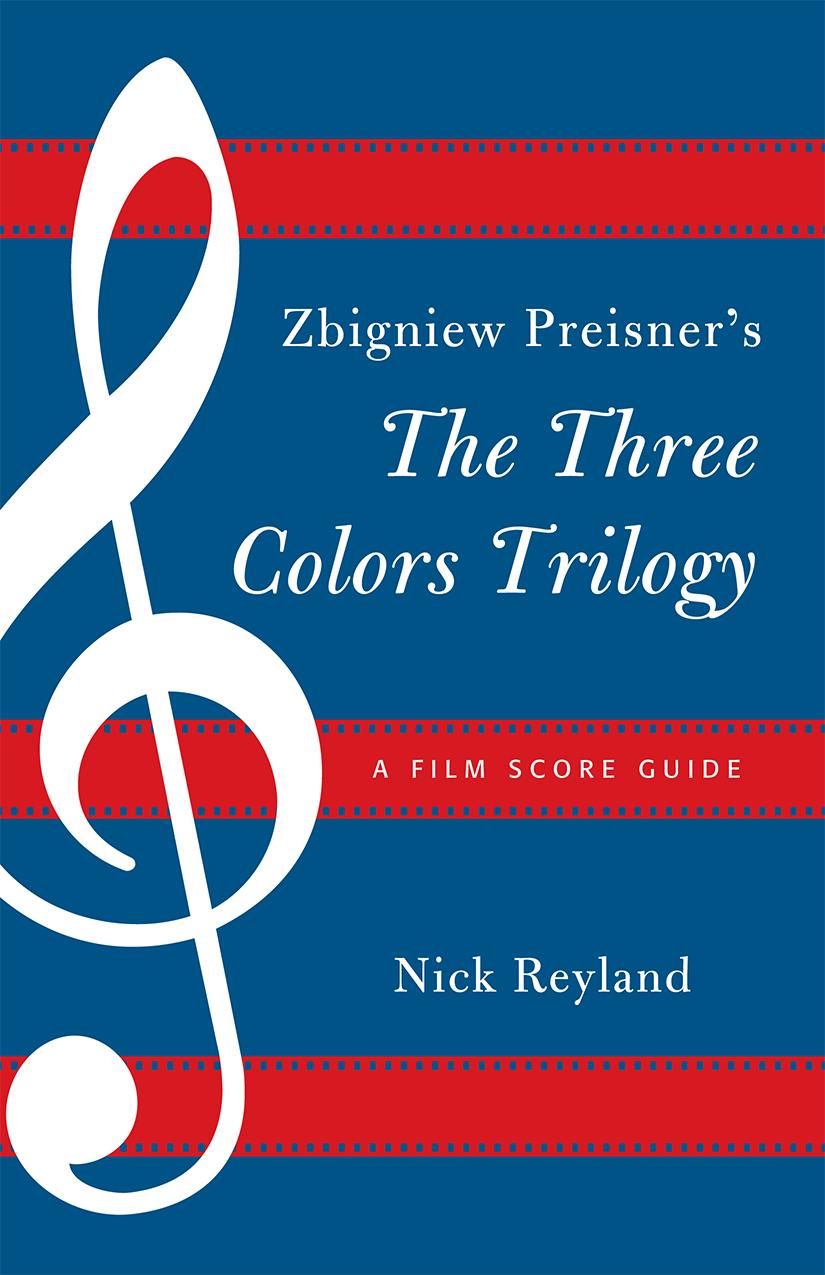
Director Krzysztof Kieslowski's Three Colors trilogy-Blue (1993), White (1993), and Red (1994)-is one of the great achievements of European film. A meditation on liberty, equality, and fraternity, these three films marked the culmination of the director's career, as well as the zenith of one of the most important creative collaborations in 20th-century cinema-between Kieslowski, scriptwriter Krzysztof Piesiewicz, and composer Zbigniew Preisner. Thanks to their close working relationship, music for the Three Colors trilogy achieves both a focal narrative and philosophical function. At times, Preisner's music advances the narrative independently of the films' other codes; at other times, it creates a metaphorical space into which the audience is invited in order to read for "deeper" messages.
As the first major scholarly treatment of Preisner's music, Nicholas Reyland's Zbigniew Preisner's Three Colors Trilogy: A Film Score Guide fills an important void in film score scholarship. In this guide, Reyland analyzes the historical context of the film scores, the life of the composer, the hermeneutic and narrative role of the music within the film, and the musical scoring techniques used for the trilogy.
This volume also draws on an interplay of established "classic" approaches to analyzing film music and more recent approaches in the exploration of its themes and readings. In addition, the composer's willingness to be interviewed by Reyland enhances the musicological scholarship of this book, giving the reader privileged access into the process of scoring. A significant contribution to both film studies and musicological literature, this book celebrates one of the great cinematic achievements of the last few decades.
As the first major scholarly treatment of Preisner's music, Nicholas Reyland's Zbigniew Preisner's Three Colors Trilogy: A Film Score Guide fills an important void in film score scholarship. In this guide, Reyland analyzes the historical context of the film scores, the life of the composer, the hermeneutic and narrative role of the music within the film, and the musical scoring techniques used for the trilogy.
This volume also draws on an interplay of established "classic" approaches to analyzing film music and more recent approaches in the exploration of its themes and readings. In addition, the composer's willingness to be interviewed by Reyland enhances the musicological scholarship of this book, giving the reader privileged access into the process of scoring. A significant contribution to both film studies and musicological literature, this book celebrates one of the great cinematic achievements of the last few decades.
Payez facilement par carte, Klarna, Apple Pay ou Google Pay. Pas satisfait ? Vous avez toujours une garantie de remboursement de 14 jours. En savoir plus dans nos conditions. Si vous avez des questions, envoyez-nous un e-mail à hello@memmo.org.
Memmo facilite tes études, où que tu sois dans le monde. On rassemble tes manuels de cours et des outils d'étude intelligents au même endroit : résumés, quiz, podcasts et flashcards. Et il y a Ted, ton compagnon d'étude qui répond à toutes tes questions. Plus de 50 000 étudiants étudient déjà ici – conçu pour t'aider à apprendre plus vite et à moins stresser.