
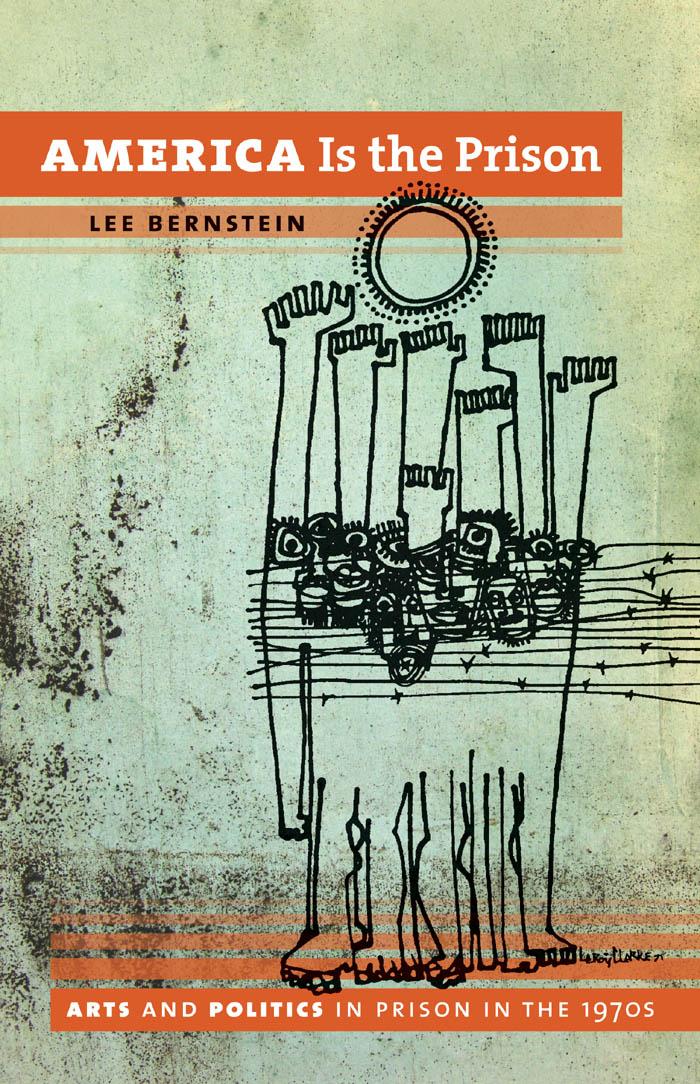
In the 1970s, while politicians and activists outside prisons debated the proper response to crime, incarcerated people helped shape those debates though a broad range of remarkable political and literary writings.
Lee Bernstein explores the forces that sparked a dramatic “prison art renaissance,” shedding light on how incarcerated people produced powerful works of writing, performance, and visual art. These included everything from George Jackson’s revolutionary Soledad Brother to Miguel Piñero’s acclaimed off-Broadway play and Hollywood film Short Eyes. An extraordinary range of prison programs — fine arts, theater, secondary education, and prisoner-run programs — allowed the voices of prisoners to influence the Black Arts Movement, the Nuyorican writers, “New Journalism,” and political theater, among the most important aesthetic contributions of the decade.
By the 1980s and '90s, prisoners' educational and artistic programs were scaled back or eliminated as the “war on crime” escalated. But by then these prisoners' words had crossed over the wall, helping many Americans to rethink the meaning of the walls themselves and, ultimately, the meaning of the society that produced them.
Lee Bernstein explores the forces that sparked a dramatic “prison art renaissance,” shedding light on how incarcerated people produced powerful works of writing, performance, and visual art. These included everything from George Jackson’s revolutionary Soledad Brother to Miguel Piñero’s acclaimed off-Broadway play and Hollywood film Short Eyes. An extraordinary range of prison programs — fine arts, theater, secondary education, and prisoner-run programs — allowed the voices of prisoners to influence the Black Arts Movement, the Nuyorican writers, “New Journalism,” and political theater, among the most important aesthetic contributions of the decade.
By the 1980s and '90s, prisoners' educational and artistic programs were scaled back or eliminated as the “war on crime” escalated. But by then these prisoners' words had crossed over the wall, helping many Americans to rethink the meaning of the walls themselves and, ultimately, the meaning of the society that produced them.
Payez facilement par carte, Klarna, Apple Pay ou Google Pay. Pas satisfait ? Vous avez toujours une garantie de remboursement de 14 jours. En savoir plus dans nos conditions. Si vous avez des questions, envoyez-nous un e-mail à hello@memmo.org.
Memmo facilite tes études, où que tu sois dans le monde. On rassemble tes manuels de cours et des outils d'étude intelligents au même endroit : résumés, quiz, podcasts et flashcards. Et il y a Ted, ton compagnon d'étude qui répond à toutes tes questions. Plus de 50 000 étudiants étudient déjà ici – conçu pour t'aider à apprendre plus vite et à moins stresser.
Tu pourrais aussi aimer
Acheter le livre0