
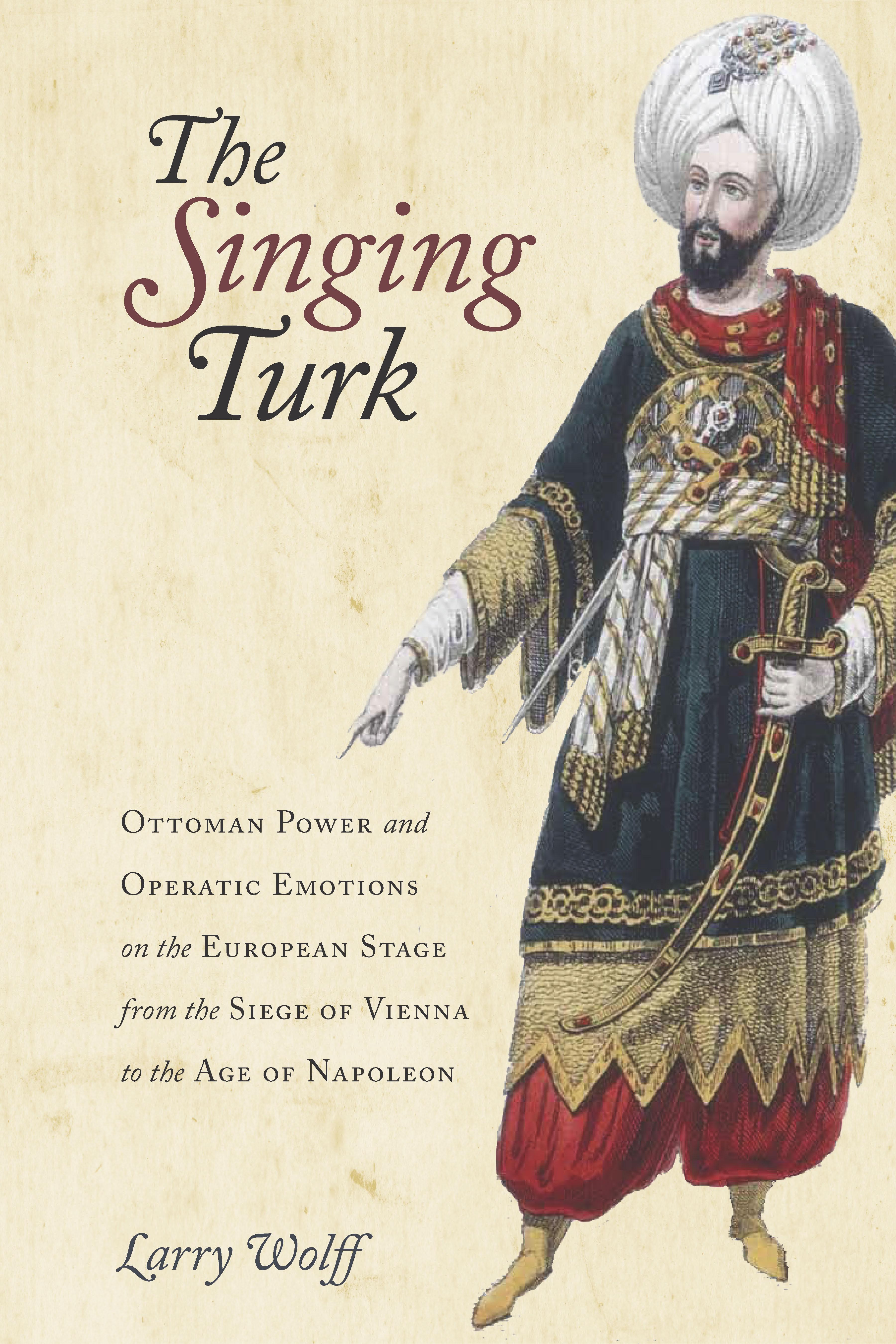
While European powers were at war with the Ottoman Empire for much of the eighteenth century, European opera houses were staging operas featuring singing sultans and pashas surrounded by their musical courts and harems. Mozart wrote The Abduction from the Seraglio. Rossini created a series of works, including The Italian Girl in Algiers. And these are only the best known of a vast repertory. This book explores how these representations of the Muslim Ottoman Empire, the great nemesis of Christian Europe, became so popular in the opera house and what they illustrate about European–Ottoman international relations.
After Christian armies defeated the Ottomans at Vienna in 1683, the Turks no longer seemed as threatening. Europeans increasingly understood that Turkish issues were also European issues, and the political absolutism of the sultan in Istanbul was relevant for thinking about politics in Europe, from the reign of Louis XIV to the age of Napoleon. While Christian European composers and publics recognized that Muslim Turks were, to some degree, different from themselves, this difference was sometimes seen as a matter of exotic costume and setting. The singing Turks of the stage expressed strong political perspectives and human emotions that European audiences could recognize as their own.
Payez facilement par carte, Klarna, Apple Pay ou Google Pay. Pas satisfait ? Vous avez toujours une garantie de remboursement de 14 jours. En savoir plus dans nos conditions. Si vous avez des questions, envoyez-nous un e-mail à hello@memmo.org.
Memmo facilite tes études, où que tu sois dans le monde. On rassemble tes manuels de cours et des outils d'étude intelligents au même endroit : résumés, quiz, podcasts et flashcards. Et il y a Ted, ton compagnon d'étude qui répond à toutes tes questions. Plus de 50 000 étudiants étudient déjà ici – conçu pour t'aider à apprendre plus vite et à moins stresser.