
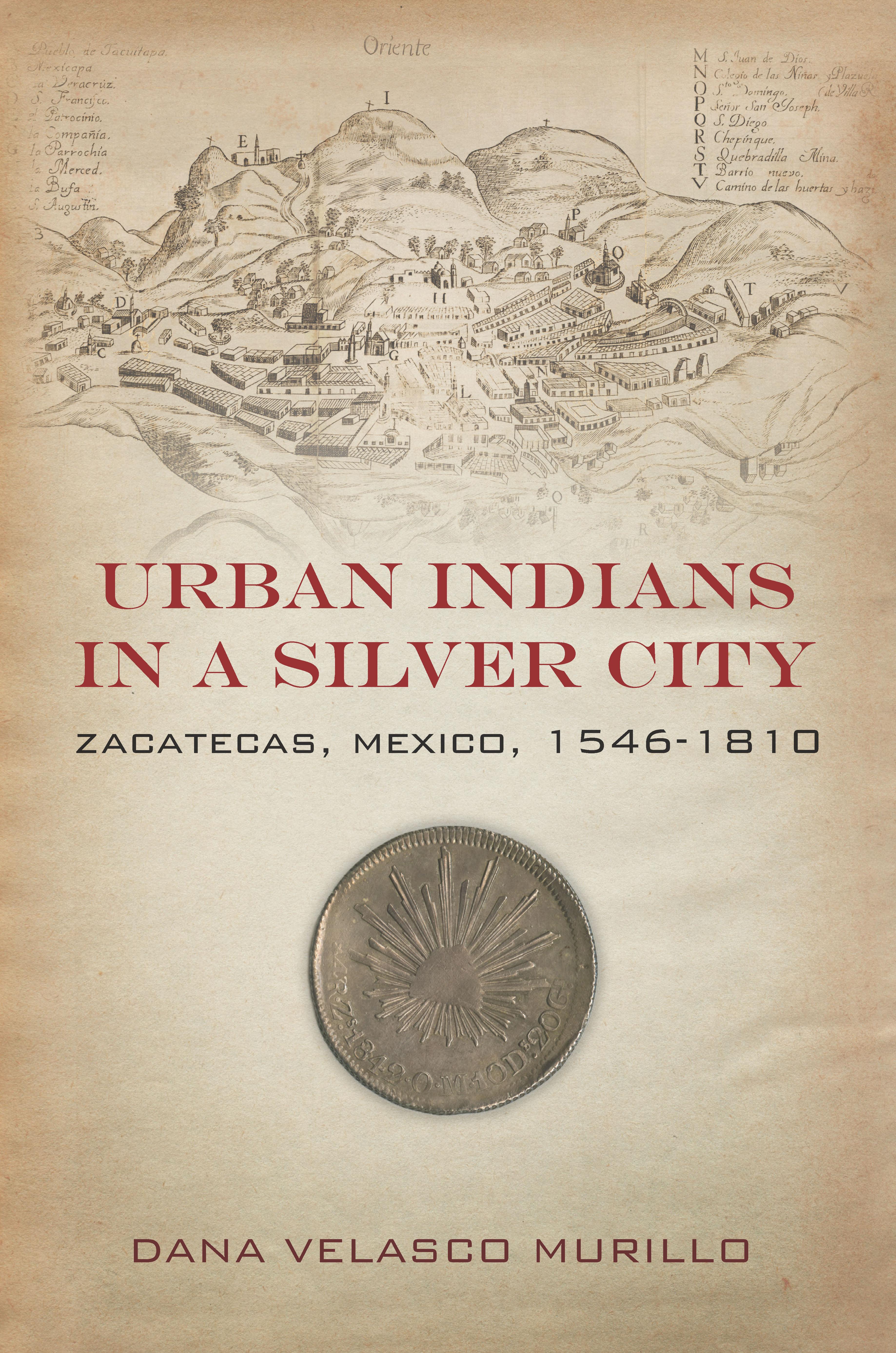
In the sixteenth century, silver mined by native peoples became New Spain's most important export. Silver production served as a catalyst for northern expansion, creating mining towns that led to the development of new industries, markets, population clusters, and frontier institutions. Within these towns, the need for labor, raw materials, resources, and foodstuffs brought together an array of different ethnic and social groups—Spaniards, Indians, Africans, and ethnically mixed individuals or castas. On the northern edge of the empire, 350 miles from Mexico City, sprung up Zacatecas, a silver-mining town that would grow in prominence to become the "Second City of New Spain."
Urban Indians in a Silver City illuminates the social footprint of colonial Mexico's silver mining district. It reveals the men, women, children, and families that shaped indigenous society and shifts the view of indigenous peoples from mere laborers to settlers and vecinos (municipal residents). Dana Velasco Murillo shows how native peoples exploited the urban milieu to create multiple statuses and identities that allowed them to live in Zacatecas as both Indians and vecinos. In reconsidering traditional paradigms about ethnicity and identity among the urban Indian population, she raises larger questions about the nature and rate of cultural change in the Mexican north.
Payez facilement par carte, Klarna, Apple Pay ou Google Pay. Pas satisfait ? Vous avez toujours une garantie de remboursement de 14 jours. En savoir plus dans nos conditions. Si vous avez des questions, envoyez-nous un e-mail à hello@memmo.org.
Memmo facilite tes études, où que tu sois dans le monde. On rassemble tes manuels de cours et des outils d'étude intelligents au même endroit : résumés, quiz, podcasts et flashcards. Et il y a Ted, ton compagnon d'étude qui répond à toutes tes questions. Plus de 50 000 étudiants étudient déjà ici – conçu pour t'aider à apprendre plus vite et à moins stresser.