
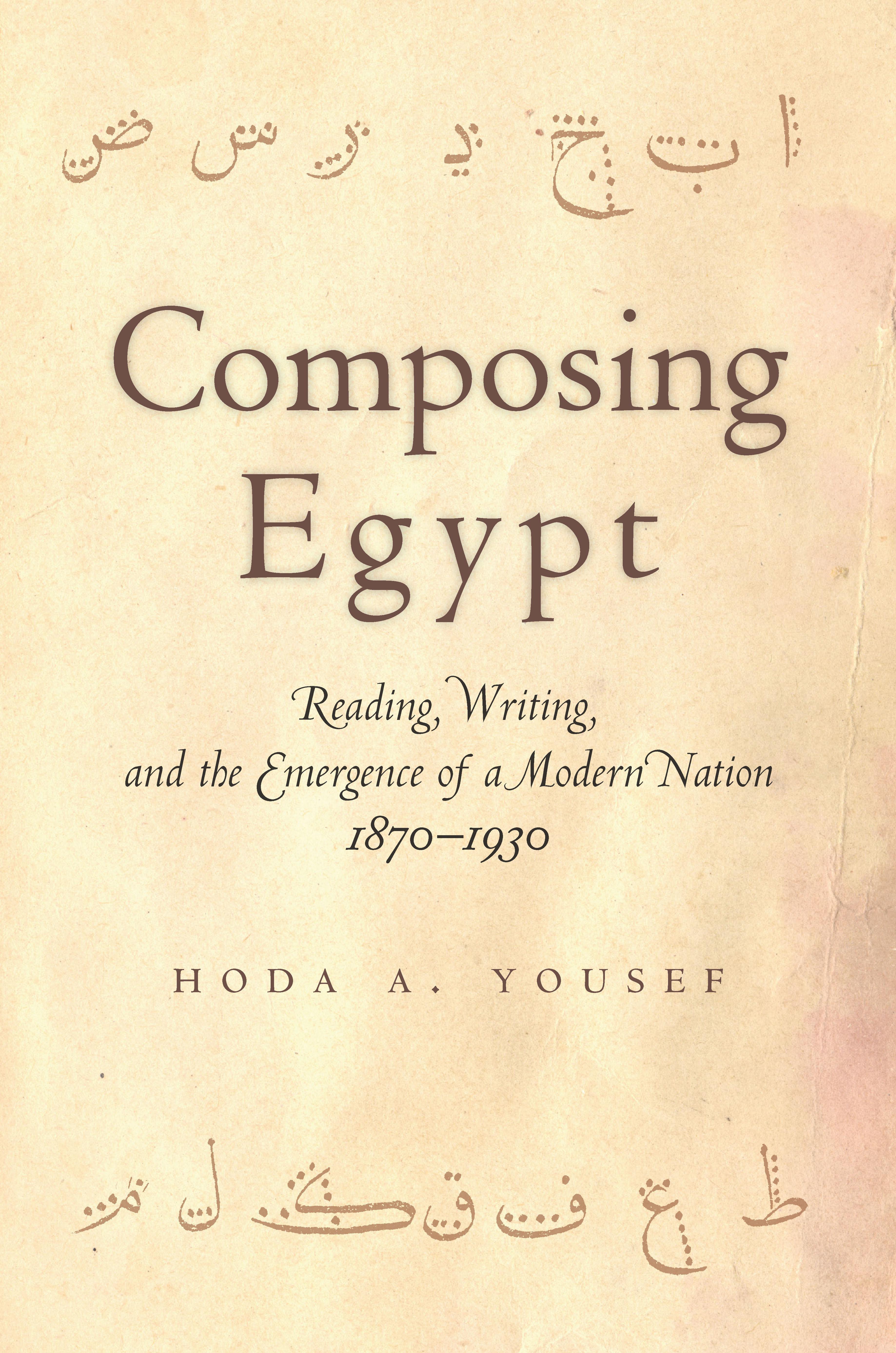
In this innovative history of reading and writing, Hoda Yousef explores how the idea of literacy and its practices fundamentally altered the social fabric of Egypt at the turn of the twentieth century. She traces how nationalists, Islamic modernists, bureaucrats, journalists, and early feminists sought to reform reading habits, writing styles, and the Arabic language itself in their hopes that the right kind of literacy practices would create the right kind of Egyptians.
The impact of new reading and writing practices went well beyond the elites and the newly literate of Egyptian society, and this book reveals the increasingly ubiquitous reading and writing practices of literate, illiterate, and semi-literate Egyptians alike. Students who wrote petitions, women who frequented scribes, and communities who gathered to hear a newspaper read aloud all used various literacies to participate in social exchanges and civic negotiations regarding the most important issues of their day. Composing Egypt illustrates how reading and writing practices became not only an object of social reform, but also a central medium for public exchange. Wide segments of society could engage with new ideas about nationalism, education, gender, and, ultimately, what it meant to be part of "modern Egypt."
Payez facilement par carte, Klarna, Apple Pay ou Google Pay. Pas satisfait ? Vous avez toujours une garantie de remboursement de 14 jours. En savoir plus dans nos conditions. Si vous avez des questions, envoyez-nous un e-mail à hello@memmo.org.
Memmo facilite tes études, où que tu sois dans le monde. On rassemble tes manuels de cours et des outils d'étude intelligents au même endroit : résumés, quiz, podcasts et flashcards. Et il y a Ted, ton compagnon d'étude qui répond à toutes tes questions. Plus de 50 000 étudiants étudient déjà ici – conçu pour t'aider à apprendre plus vite et à moins stresser.