
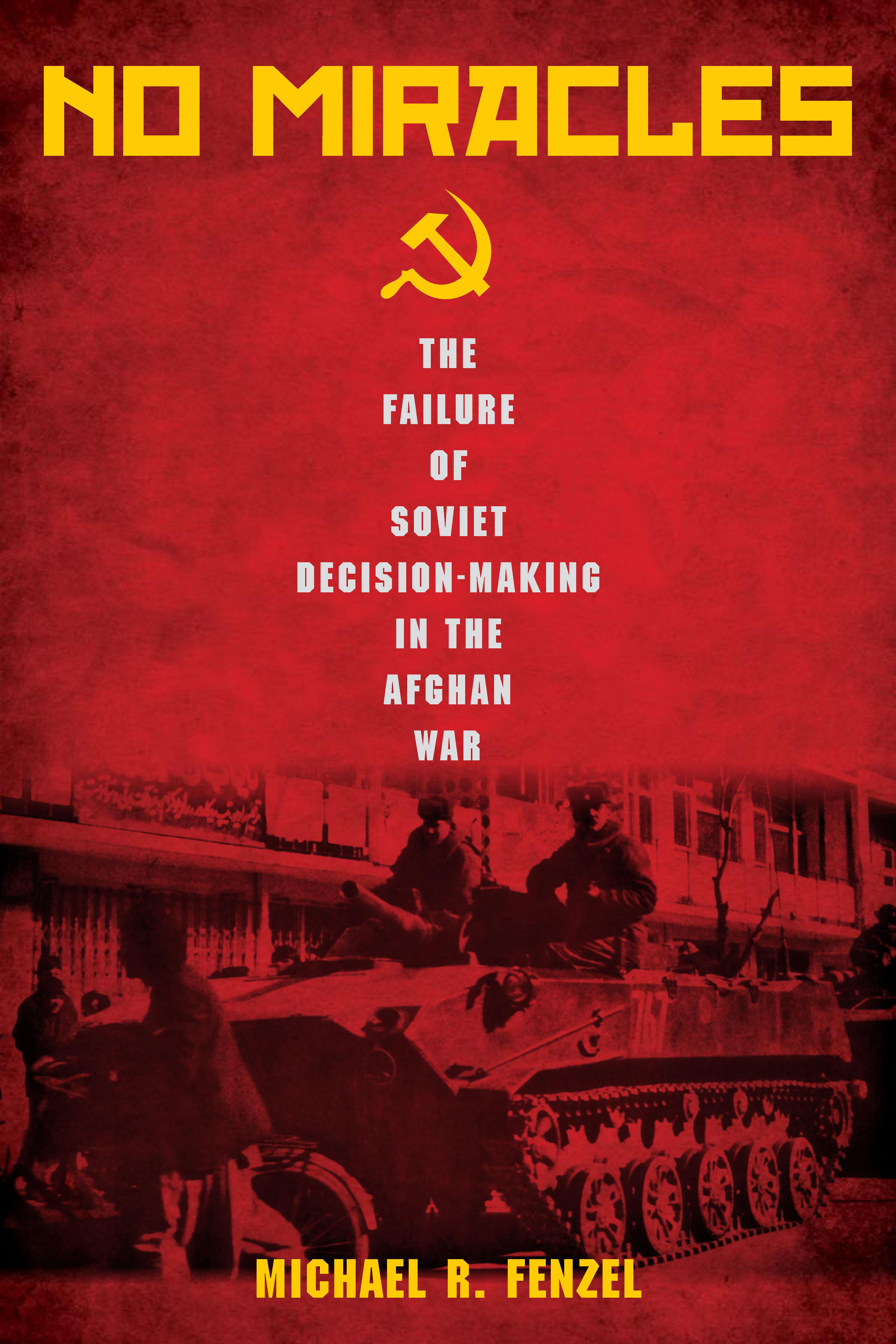
The Soviet experience in Afghanistan provides a compelling perspective on the far-reaching hazards of military intervention. In 1985, Mikhail Gorbachev decided that a withdrawal from Afghanistan should occur as soon as possible. The Soviet Union's senior leadership had become aware that their strategy was unraveling, their operational and tactical methods were not working, and the sacrifices they were demanding from the Soviet people and military were unlikely to produce the forecasted results. Despite this state of affairs, operations in Afghanistan persisted and four more years passed before the Soviets finally withdrew their military forces.
In No Miracles, Michael Fenzel explains why and how that happened, as viewed from the center of the Soviet state. From that perspective, three sources of failure stand out: poor civil-military relations, repeated and rapid turnover of Soviet leadership, and the perception that Soviet global prestige and influence were inexorably tied to the success of the Afghan mission. Fenzel enumerates the series of misperceptions and misjudgments that led to the Soviet invasion of Afghanistan, tracing the hazards of their military intervention and occupation. Ultimately, he offers a cautionary tale to nation states and policymakers considering military intervention and the use of force.
Payez facilement par carte, Klarna, Apple Pay ou Google Pay. Pas satisfait ? Vous avez toujours une garantie de remboursement de 14 jours. En savoir plus dans nos conditions. Si vous avez des questions, envoyez-nous un e-mail à hello@memmo.org.
Memmo facilite tes études, où que tu sois dans le monde. On rassemble tes manuels de cours et des outils d'étude intelligents au même endroit : résumés, quiz, podcasts et flashcards. Et il y a Ted, ton compagnon d'étude qui répond à toutes tes questions. Plus de 50 000 étudiants étudient déjà ici – conçu pour t'aider à apprendre plus vite et à moins stresser.