
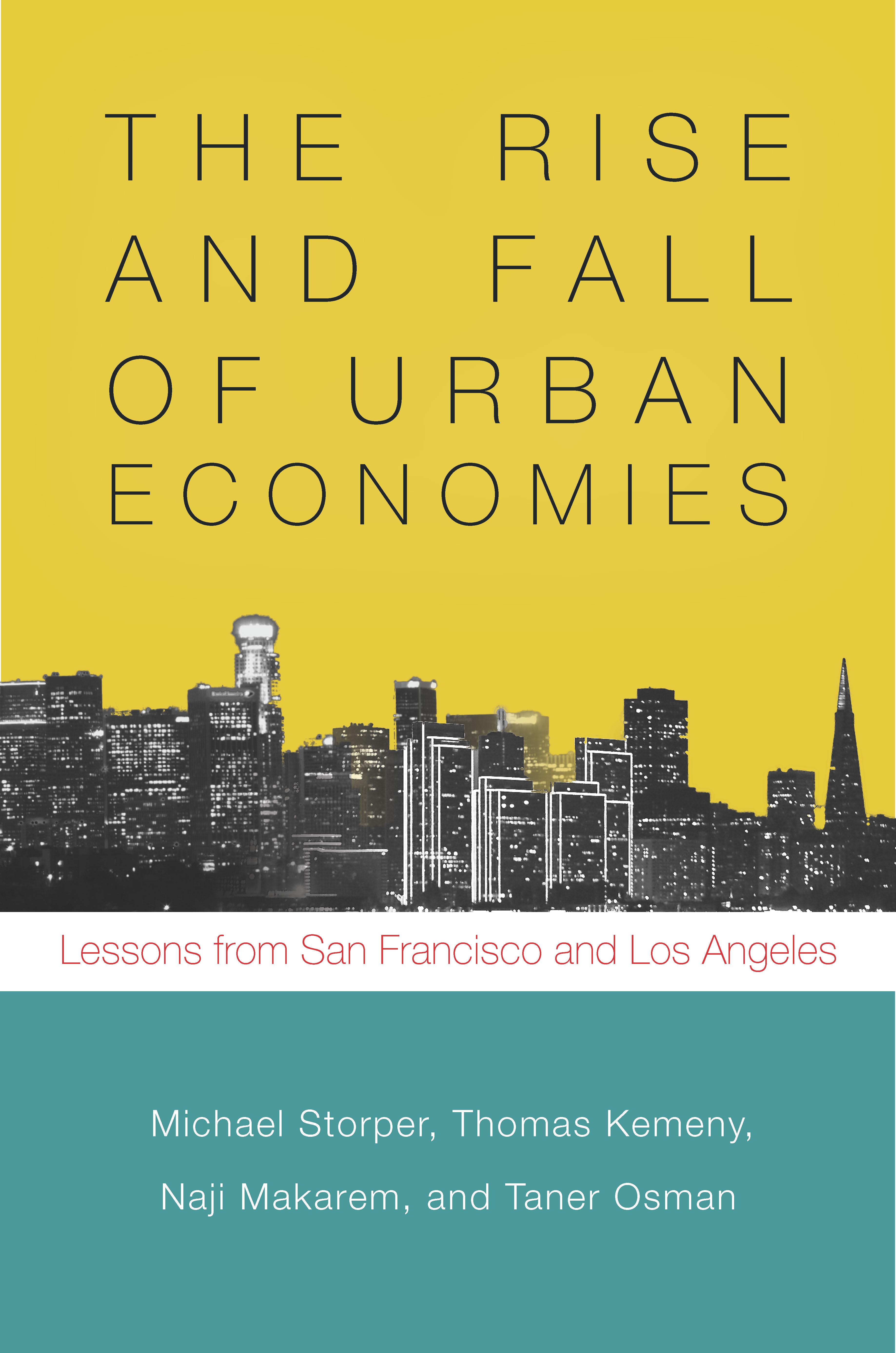
Today, the Bay Area is home to the most successful knowledge economy in America, while Los Angeles has fallen progressively further behind its neighbor to the north and a number of other American metropolises. Yet, in 1970, experts would have predicted that L.A. would outpace San Francisco in population, income, economic power, and influence. The usual factors used to explain urban growth—luck, immigration, local economic policies, and the pool of skilled labor—do not account for the contrast between the two cities and their fates. So what does?
The Rise and Fall of Urban Economies challenges many of the conventional notions about economic development and sheds new light on its workings. The authors argue that it is essential to understand the interactions of three major components—economic specialization, human capital formation, and institutional factors—to determine how well a regional economy will cope with new opportunities and challenges. Drawing on economics, sociology, political science, and geography, they argue that the economic development of metropolitan regions hinges on previously underexplored capacities for organizational change in firms, networks of people, and networks of leaders. By studying San Francisco and Los Angeles in unprecedented levels of depth, this book extracts lessons for the field of economic development studies and urban regions around the world.
Payez facilement par carte, Klarna, Apple Pay ou Google Pay. Pas satisfait ? Vous avez toujours une garantie de remboursement de 14 jours. En savoir plus dans nos conditions. Si vous avez des questions, envoyez-nous un e-mail à hello@memmo.org.
Memmo facilite tes études, où que tu sois dans le monde. On rassemble tes manuels de cours et des outils d'étude intelligents au même endroit : résumés, quiz, podcasts et flashcards. Et il y a Ted, ton compagnon d'étude qui répond à toutes tes questions. Plus de 50 000 étudiants étudient déjà ici – conçu pour t'aider à apprendre plus vite et à moins stresser.