
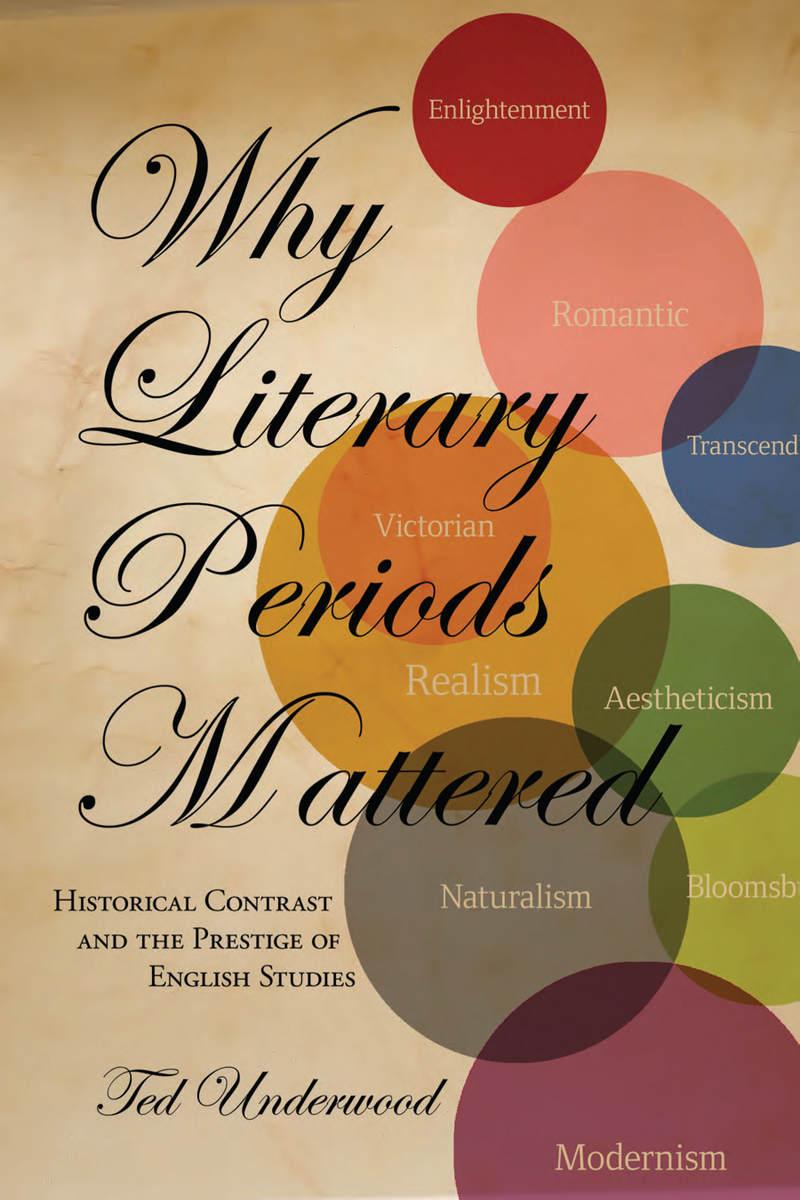
In the mid-nineteenth century, the study of English literature began to be divided into courses that surveyed discrete "periods." Since that time, scholars' definitions of literature and their rationales for teaching it have changed radically. But the periodized structure of the curriculum has remained oddly unshaken, as if the exercise of contrasting one literary period with another has an importance that transcends the content of any individual course.
Why Literary Periods Mattered explains how historical contrast became central to literary study, and why it remained institutionally central in spite of critical controversy about literature itself. Organizing literary history around contrast rather than causal continuity helped literature departments separate themselves from departments of history. But critics' long reliance on a rhetoric of contrasted movements and fateful turns has produced important blind spots in the discipline. In the twenty-first century, Underwood argues, literary study may need digital technology in particular to develop new methods of reasoning about gradual, continuous change.
Payez facilement par carte, Klarna, Apple Pay ou Google Pay. Pas satisfait ? Vous avez toujours une garantie de remboursement de 14 jours. En savoir plus dans nos conditions. Si vous avez des questions, envoyez-nous un e-mail à hello@memmo.org.
Memmo facilite tes études, où que tu sois dans le monde. On rassemble tes manuels de cours et des outils d'étude intelligents au même endroit : résumés, quiz, podcasts et flashcards. Et il y a Ted, ton compagnon d'étude qui répond à toutes tes questions. Plus de 50 000 étudiants étudient déjà ici – conçu pour t'aider à apprendre plus vite et à moins stresser.