
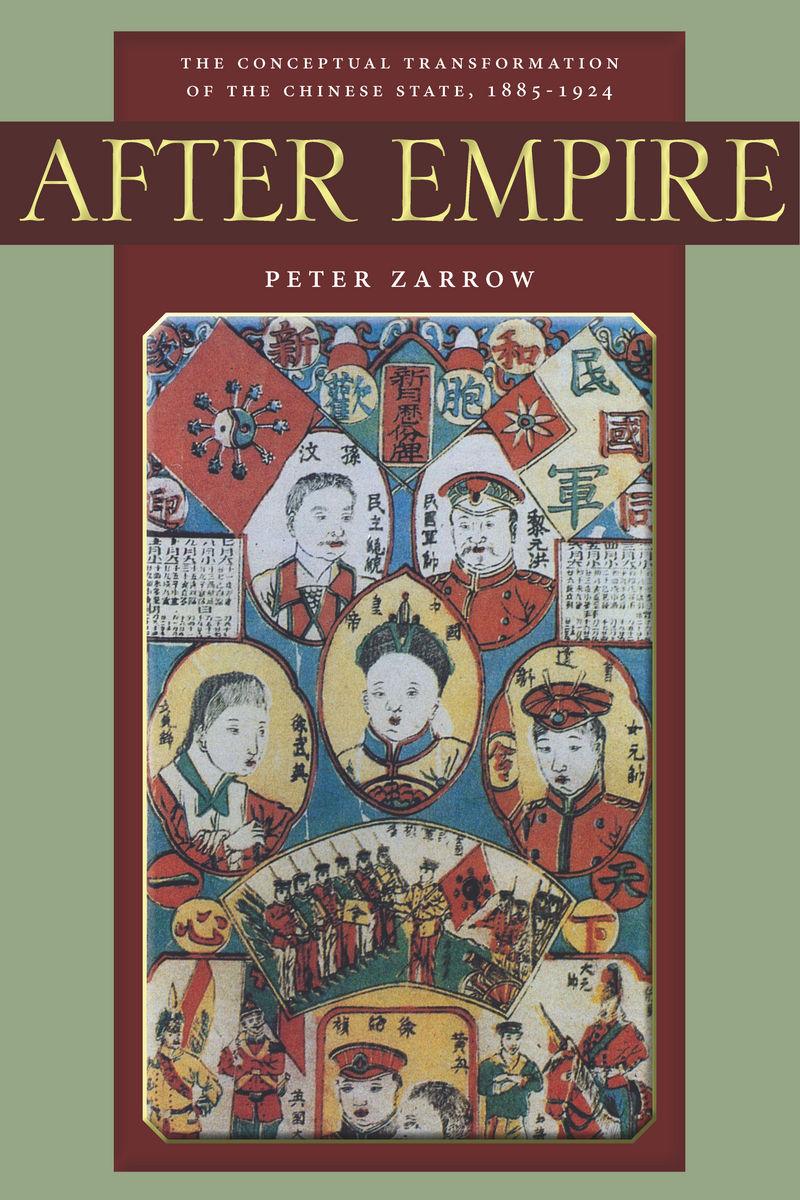
From 1885–1924, China underwent a period of acute political struggle and cultural change, brought on by a radical change in thought: after over 2,000 years of monarchical rule, the Chinese people stopped believing in the emperor. These forty years saw the collapse of Confucian political orthodoxy and the struggle among competing definitions of modern citizenship and the state. What made it possible to suddenly imagine a world without the emperor?
After Empire traces the formation of the modern Chinese idea of the state through the radical reform programs of the late Qing (1885–1911), the Revolution of 1911, and the first years of the Republic through the final expulsion of the last emperor of the Qing from the Forbidden City in 1924. It contributes to longstanding debates on modern Chinese nationalism by highlighting the evolving ideas of major political thinkers and the views reflected in the general political culture.
Zarrow uses a wide range of sources to show how "statism" became a hegemonic discourse that continues to shape China today. Essential to this process were the notions of citizenship and sovereignty, which were consciously adopted and modified from Western discourses on legal theory and international state practices on the basis of Chinese needs and understandings. This text provides fresh interpretations and keen insights into China's pivotal transition from dynasty to republic.
Payez facilement par carte, Klarna, Apple Pay ou Google Pay. Pas satisfait ? Vous avez toujours une garantie de remboursement de 14 jours. En savoir plus dans nos conditions. Si vous avez des questions, envoyez-nous un e-mail à hello@memmo.org.
Memmo facilite tes études, où que tu sois dans le monde. On rassemble tes manuels de cours et des outils d'étude intelligents au même endroit : résumés, quiz, podcasts et flashcards. Et il y a Ted, ton compagnon d'étude qui répond à toutes tes questions. Plus de 50 000 étudiants étudient déjà ici – conçu pour t'aider à apprendre plus vite et à moins stresser.