
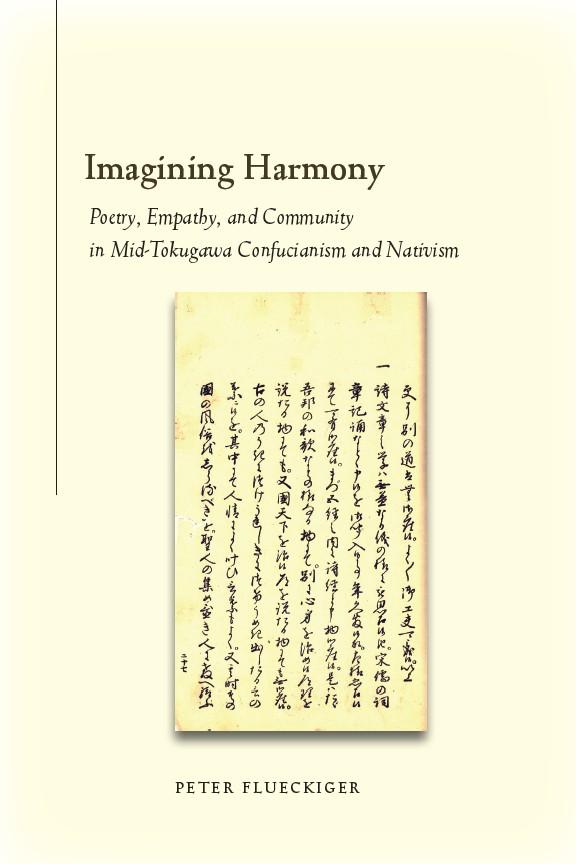
Many intellectuals in eighteenth-century Japan valued classical poetry in either Chinese or Japanese for its expression of unadulterated human sentiments. They also saw such poetry as a distillation of the language and aesthetic values of ancient China and Japan, which offered models of the good government and social harmony lacking in their time. By studying the poetry of the past and composing new poetry emulating its style, they believed it possible to reform their own society. Imagining Harmony focuses on the development of these ideas in the life and work of Ogyu Sorai, the most influential Confucian philosopher of the eighteenth century, and that of his key disciples and critics.
This study contends that the literary thought of these figures needs to be understood not just for what it has to say about the composition of poetry but as a form of political and philosophical discourse. Unlike other scholars of this literature, Peter Flueckiger argues that the increased valorization of human emotions in eighteenth-century literary thought went hand in hand with new demands for how emotions were to be regulated and socialized, and that literary and political thought of the time were thus not at odds but inextricably linked.
Payez facilement par carte, Klarna, Apple Pay ou Google Pay. Pas satisfait ? Vous avez toujours une garantie de remboursement de 14 jours. En savoir plus dans nos conditions. Si vous avez des questions, envoyez-nous un e-mail à hello@memmo.org.
Memmo facilite tes études, où que tu sois dans le monde. On rassemble tes manuels de cours et des outils d'étude intelligents au même endroit : résumés, quiz, podcasts et flashcards. Et il y a Ted, ton compagnon d'étude qui répond à toutes tes questions. Plus de 50 000 étudiants étudient déjà ici – conçu pour t'aider à apprendre plus vite et à moins stresser.