
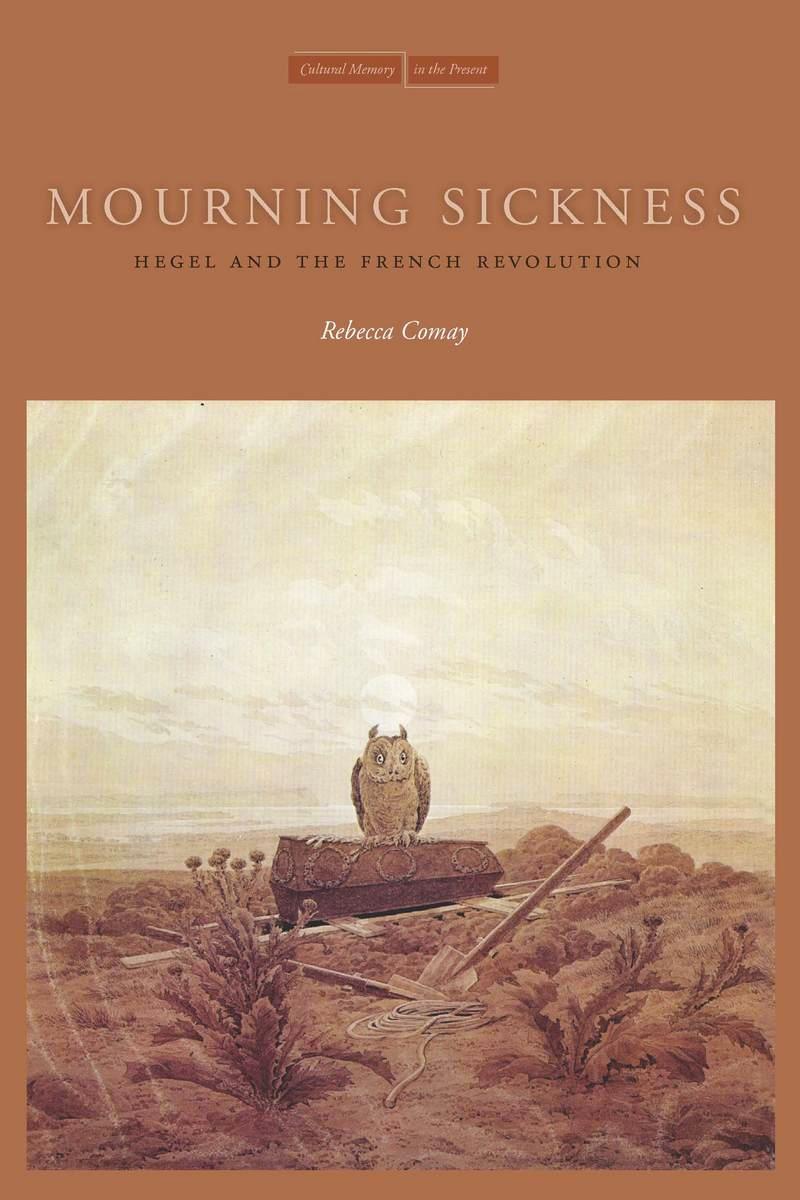
This book explores Hegel's response to the French Revolutionary Terror and its impact on Germany. Like many of his contemporaries, Hegel was struck by the seeming parallel between the political upheaval in France and the upheaval in German philosophy inaugurated by the Protestant Reformation and brought to a climax by German Idealism. Many thinkers reasoned that a political revolution would be unnecessary in Germany, because this intellectual "revolution" had preempted it. Having already been through its own cataclysm, Germany would be able to extract the energy of the Revolution and channel its radicalism into thought. Hegel comes close to making such an argument too. But he also offers a powerful analysis of how this kind of secondhand history gets generated in the first place, and shows what is stake. This is what makes him uniquely interesting among his contemporaries: he demonstrates how a fantasy can be simultaneously deconstructed and enjoyed.
Mourning Sickness provides a new reading of Hegel in the light of contemporary theories of historical trauma. It explores the ways in which major historical events are experienced vicariously, and the fantasies we use to make sense of them. Comay brings Hegel into relation with the most burning contemporary discussions around catastrophe, witness, memory, and the role of culture in shaping political experience.
Payez facilement par carte, Klarna, Apple Pay ou Google Pay. Pas satisfait ? Vous avez toujours une garantie de remboursement de 14 jours. En savoir plus dans nos conditions. Si vous avez des questions, envoyez-nous un e-mail à hello@memmo.org.
Memmo facilite tes études, où que tu sois dans le monde. On rassemble tes manuels de cours et des outils d'étude intelligents au même endroit : résumés, quiz, podcasts et flashcards. Et il y a Ted, ton compagnon d'étude qui répond à toutes tes questions. Plus de 50 000 étudiants étudient déjà ici – conçu pour t'aider à apprendre plus vite et à moins stresser.