
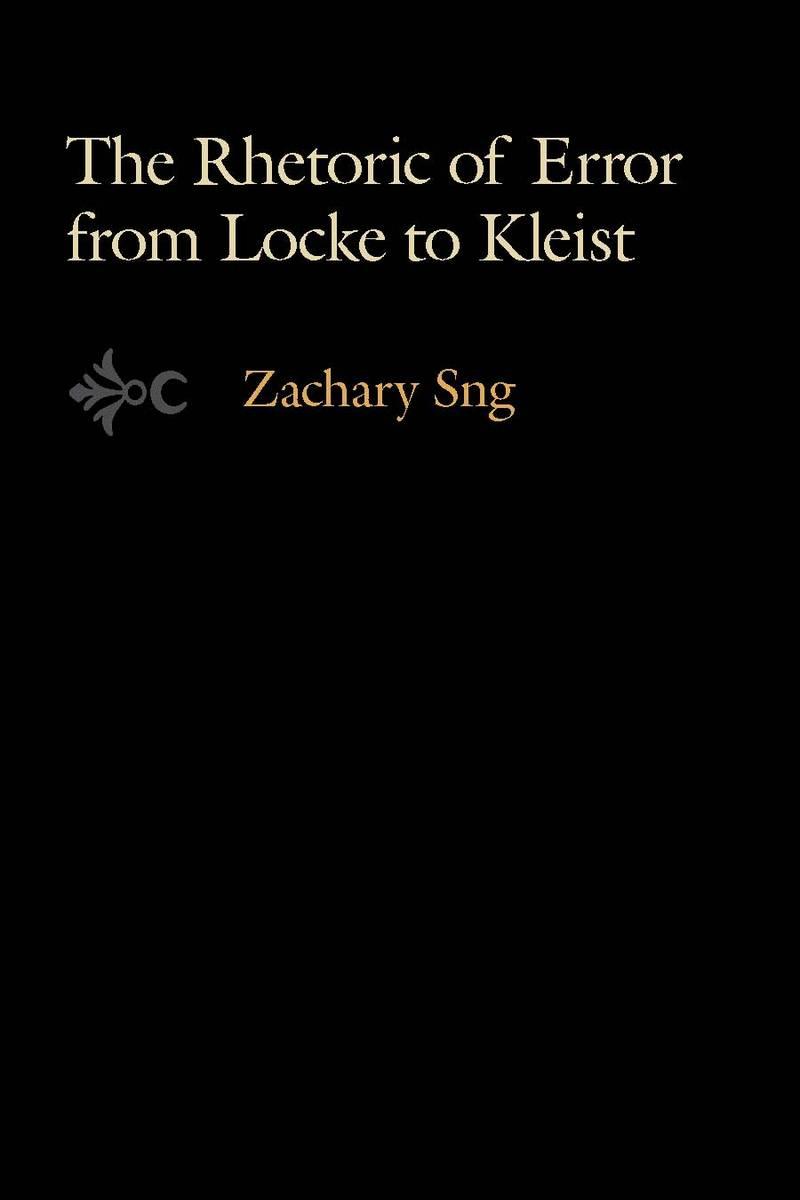
Eighteenth-century Europe, preoccupied with both the origins and the defense of reason, was naturally concerned with what might be the root of all error. A topic any systematic account of knowledge must grapple with, error became a frequent point of debate in new scientific, aesthetic, and philosophical investigations. Taking John Locke's Essay Concerning Human Understanding as his point of departure, Sng examines a number of such debates, focusing on literary and philosophical accounts of the relationship between language and thought. Rather than approaching its topic conceptually or historically, he takes on canonical texts of the Enlightenment and Romanticism and engages with their rhetorical strategies. In so doing, Sng elucidates how people wrote about error and how texts claimed to produce reliable and error-free modes of knowledge. The range of authors addressed—Leibniz, Adam Smith, Coleridge, Kant, and Goethe—demonstrates the diversity and heterogeneity underlying the textual production of the age.
Payez facilement par carte, Klarna, Apple Pay ou Google Pay. Pas satisfait ? Vous avez toujours une garantie de remboursement de 14 jours. En savoir plus dans nos conditions. Si vous avez des questions, envoyez-nous un e-mail à hello@memmo.org.
Memmo facilite tes études, où que tu sois dans le monde. On rassemble tes manuels de cours et des outils d'étude intelligents au même endroit : résumés, quiz, podcasts et flashcards. Et il y a Ted, ton compagnon d'étude qui répond à toutes tes questions. Plus de 50 000 étudiants étudient déjà ici – conçu pour t'aider à apprendre plus vite et à moins stresser.