
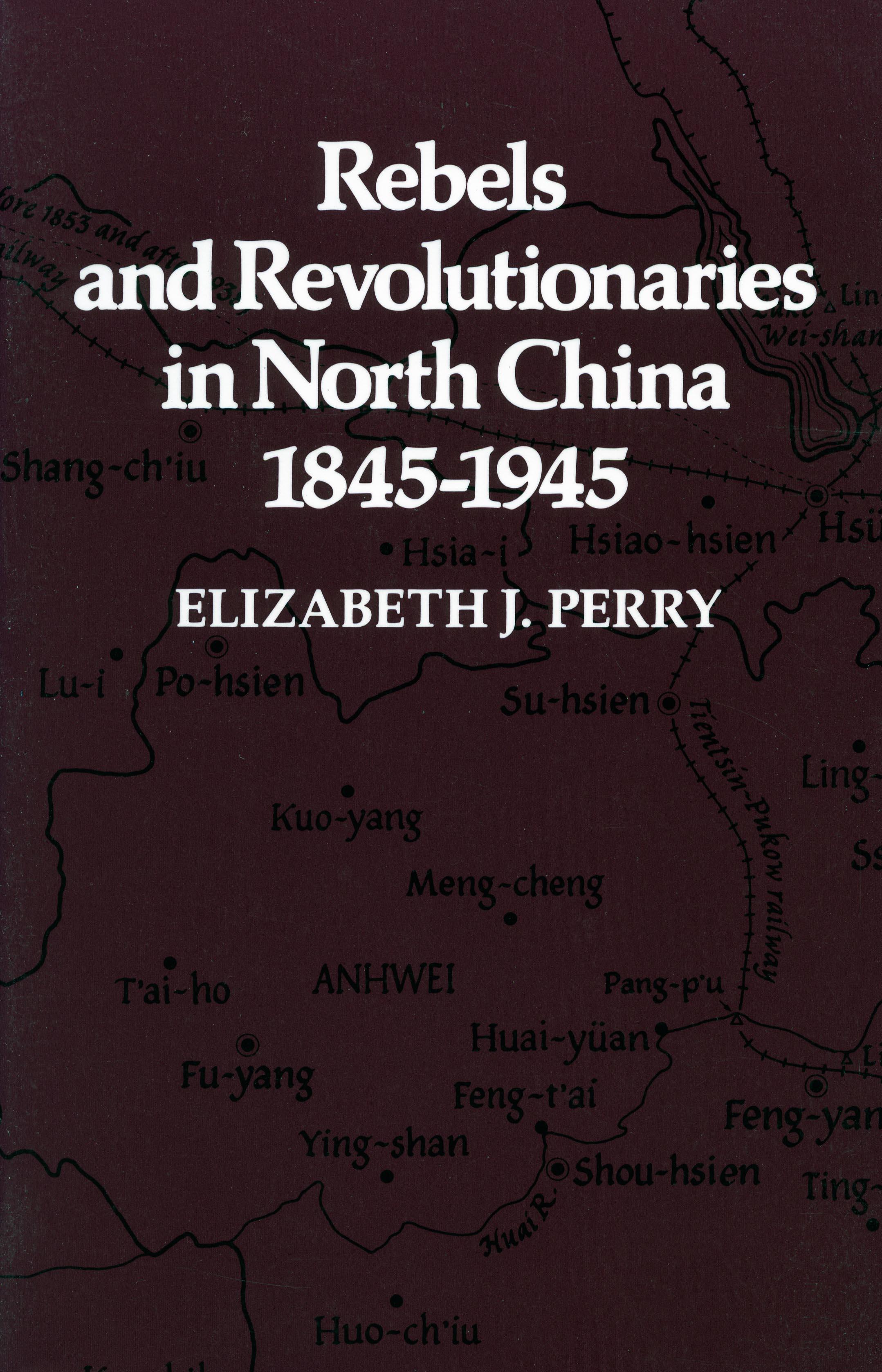
Why do peasants rebel? In particular, why do some peasants rebel and not others? Starting from the fact that only in certain geographical areas does rebellion seem to recur persistently, the author examines three notable rebel movements in one such area in China: Huaipei, a region of poor soil and unstable weather bounded by the Huai and Yellow (Huang He) rivers.
The Nien rebels of the 1850s and 1860s and the Red Spear Society of the Republican era are described as representing traditional forms of violent competition for scarce economic resources. The Nien were essentially "predatory," using violence as a way of obtaining food and other necessities; the Red Spears essentially "protective," concerned to defend peasant homes and property against bandits, warlord armies, and state efforts at taxation. The communist movement of the 1930s and 1940s, by contrast, looked beyond these traditional patterns to a national social revolution that would render local rebellions unnecessary.
The author throws new light on the role of secret societies in peasant protest, and offers a new interpretation of the relationship between rebellion and revolution.
Payez facilement par carte, Klarna, Apple Pay ou Google Pay. Pas satisfait ? Vous avez toujours une garantie de remboursement de 14 jours. En savoir plus dans nos conditions. Si vous avez des questions, envoyez-nous un e-mail à hello@memmo.org.
Memmo facilite tes études, où que tu sois dans le monde. On rassemble tes manuels de cours et des outils d'étude intelligents au même endroit : résumés, quiz, podcasts et flashcards. Et il y a Ted, ton compagnon d'étude qui répond à toutes tes questions. Plus de 50 000 étudiants étudient déjà ici – conçu pour t'aider à apprendre plus vite et à moins stresser.
Tu pourrais aussi aimer
Acheter le livre0