
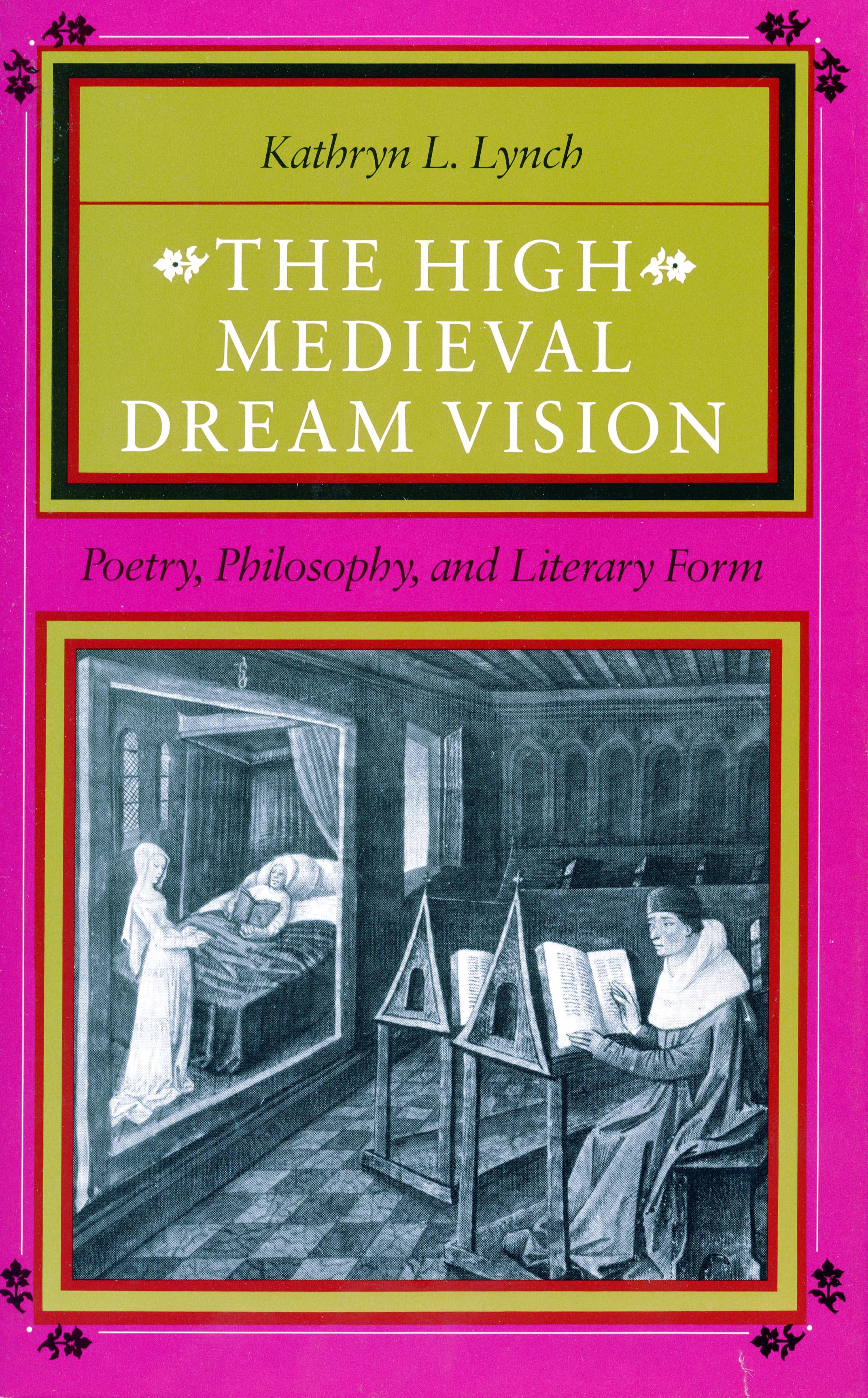
In the High Middle Ages, the dream narrative was an enormously popular and influential form. Along with the romance, it was perhaps the genre of the age. It has come down to us in such classics twelfth to fourteenth-century classics as The Divine Comedy, the Romance of the Rose, Piers Plowman, Chaucer's early poetry, and the works of Guillaume de Machaut. This book redefines the dream vision by attending to its role in philosophical debate of the time, a conservative role in defense of the high medieval synthesis of reason and revelation. Lynch shows how the epistemological basis of this synthesis and the theories of visions that emerged from it drew on Arabic commentaries of Aristotle. These theories informed poetic visions modeled on Boethius's Consolation of Philosophy, a work she discusses in detail before turning to Alain de Lille, Jean de Meun, and Dante. A final section, on John Gower's Confessio Amantis shows how fourteenth and fifteenth-century writers extended and finally moved beyond the conventional form of the dream vision.
Payez facilement par carte, Klarna, Apple Pay ou Google Pay. Pas satisfait ? Vous avez toujours une garantie de remboursement de 14 jours. En savoir plus dans nos conditions. Si vous avez des questions, envoyez-nous un e-mail à hello@memmo.org.
Memmo facilite tes études, où que tu sois dans le monde. On rassemble tes manuels de cours et des outils d'étude intelligents au même endroit : résumés, quiz, podcasts et flashcards. Et il y a Ted, ton compagnon d'étude qui répond à toutes tes questions. Plus de 50 000 étudiants étudient déjà ici – conçu pour t'aider à apprendre plus vite et à moins stresser.