
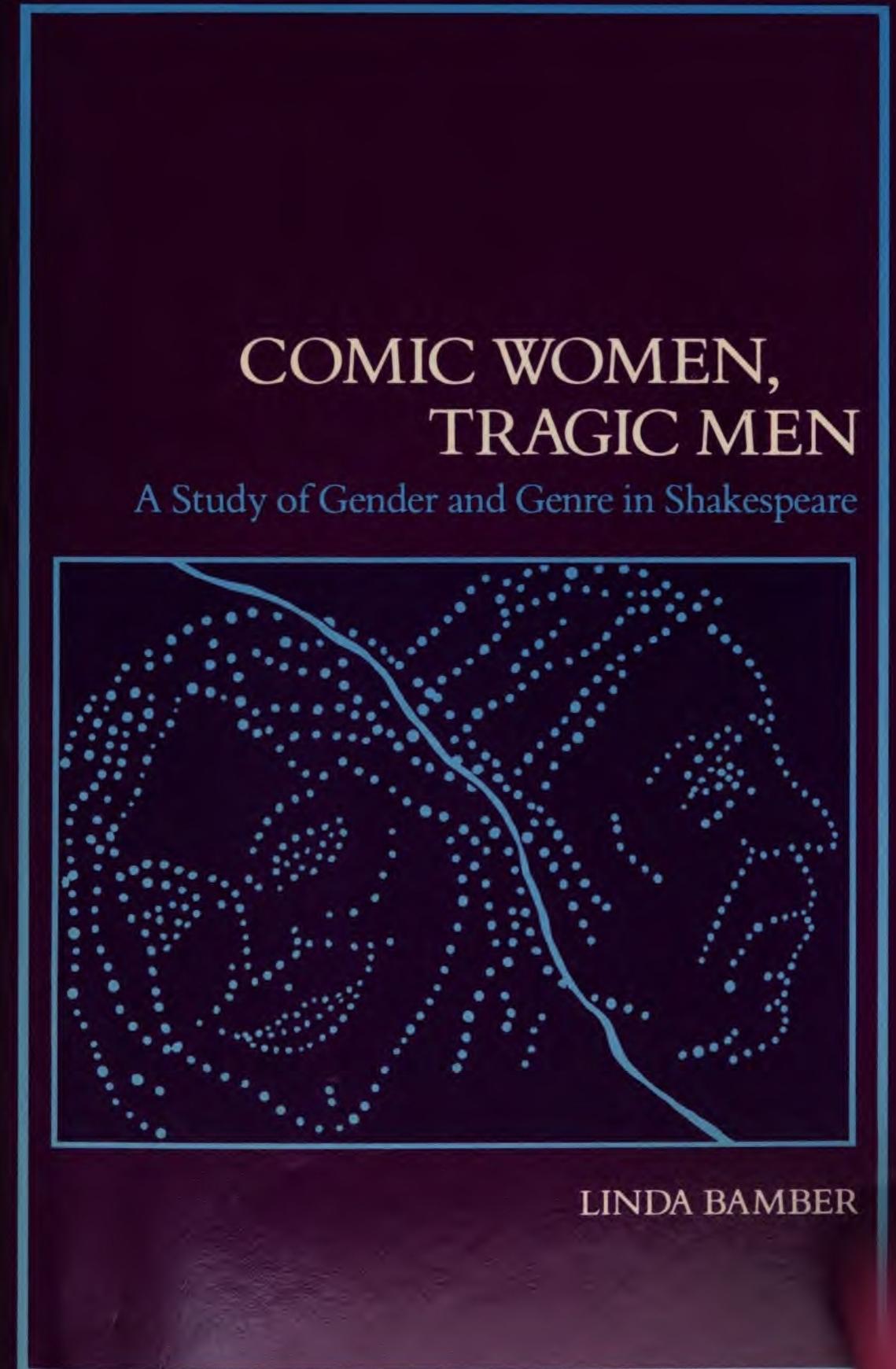
This book proceeds from the assumption that Shakespeare, so often perceived as the one writer who appears to have transcended the limits of gender, inevitably writes from the perspective of his own gender. From this perspective, whatever represents the Self is necessarily male; and the Other, which challenges the Self, is female. The author's approach gives us a fresh understanding of both Shakespeare's characters and the structure of the plays. The author defines genre in terms of the nature of the challenge offered by the Other to the Self. Using specific plays and characters of Shakespeare, the author shows how in tragedy the Other betrays or appears to betray the Self; in comedy the Other evades the social hierarchies dominated by versions of the male Self; in romance the Other comes and goes, leaving the Self bereft when she is gone and astounding him with happiness when she reappears. History is defined as a genre in which the masculine heroes confront no challenge from the Other but only from each other, from other versions of the Self. The book consists of a long theoretical introduction followed by chapters on comedy, history, and some individual plays: Hamlet, Antony and Cleopatra, Macbeth, Coriolanus, and The Tempest.
Payez facilement par carte, Klarna, Apple Pay ou Google Pay. Pas satisfait ? Vous avez toujours une garantie de remboursement de 14 jours. En savoir plus dans nos conditions. Si vous avez des questions, envoyez-nous un e-mail à hello@memmo.org.
Memmo facilite tes études, où que tu sois dans le monde. On rassemble tes manuels de cours et des outils d'étude intelligents au même endroit : résumés, quiz, podcasts et flashcards. Et il y a Ted, ton compagnon d'étude qui répond à toutes tes questions. Plus de 50 000 étudiants étudient déjà ici – conçu pour t'aider à apprendre plus vite et à moins stresser.
Tu pourrais aussi aimer
Acheter le livre0