
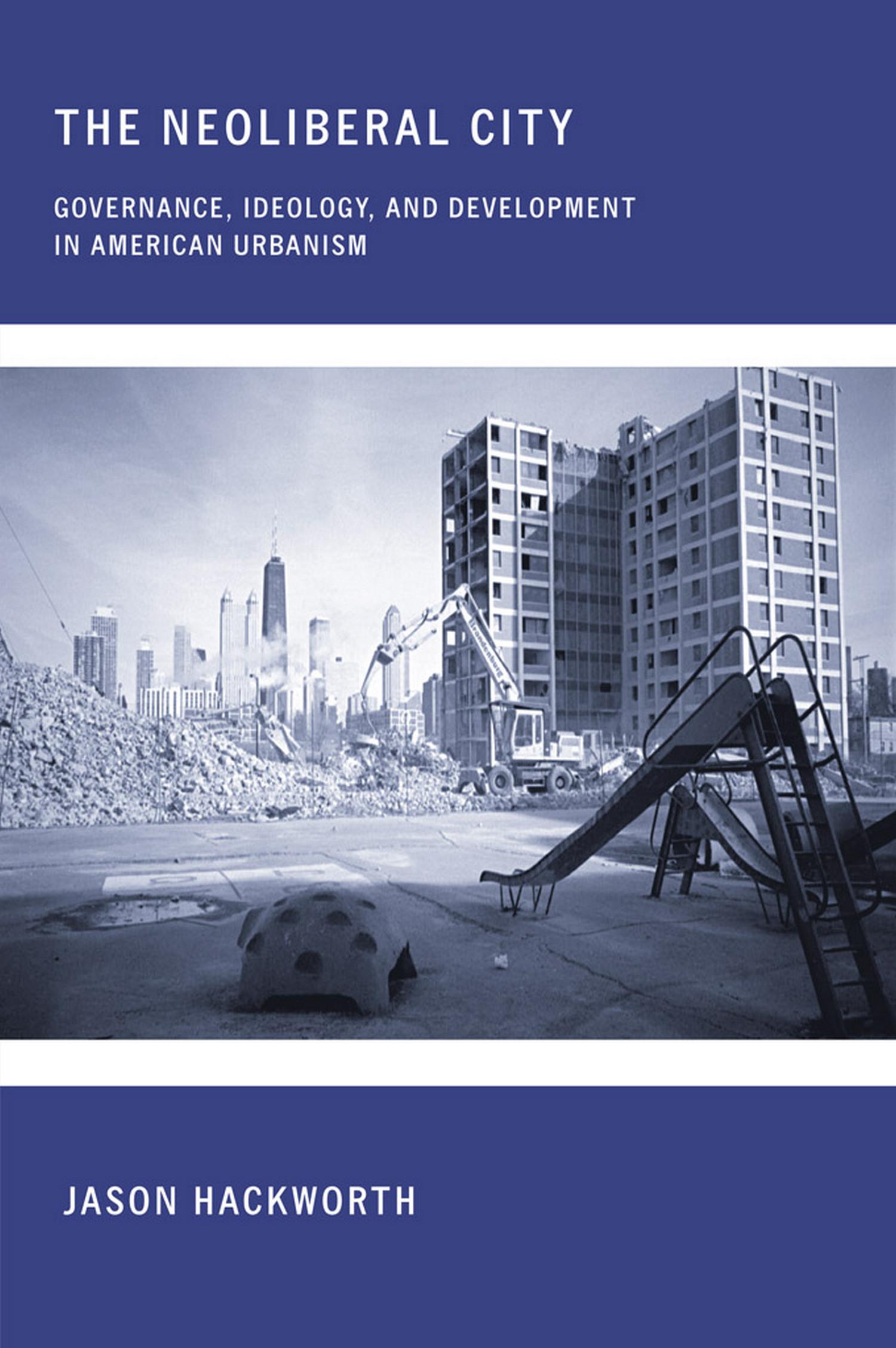
The shift in the ideological winds toward a "free-market" economy has brought profound effects in urban areas. The Neoliberal City presents an overview of the effect of these changes on today's cities. The term "neoliberalism" was originally used in reference to a set of practices that first-world institutions like the IMF and World Bank impose on third-world countries and cities. The support of unimpeded trade and individual freedoms and the discouragement of state regulation and social spending are the putative centerpieces of this vision. More and more, though, people have come to recognize that first-world cities are undergoing the same processes.
In The Neoliberal City, Jason Hackworth argues that neoliberal policies are in fact having a profound effect on the nature and direction of urbanization in the United States and other wealthy countries, and that much can be learned from studying its effect. He explores the impact that neoliberalism has had on three aspects of urbanization in the United States: governance, urban form, and social movements. The American inner city is seen as a crucial battle zone for the wider neoliberal transition primarily because it embodies neoliberalism's antithesis, Keynesian egalitarian liberalism. Focusing on issues such as gentrification in New York City; public-housing policy in New York, Chicago, and Seattle; downtown redevelopment in Phoenix; and urban-landscape change in New Brunswick, N.J., Hackworth shows us how material and symbolic changes to institutions, neighborhoods, and entire urban regions can be traced in part to the rise of neoliberalism.
Payez facilement par carte, Klarna, Apple Pay ou Google Pay. Pas satisfait ? Vous avez toujours une garantie de remboursement de 14 jours. En savoir plus dans nos conditions. Si vous avez des questions, envoyez-nous un e-mail à hello@memmo.org.
Memmo facilite tes études, où que tu sois dans le monde. On rassemble tes manuels de cours et des outils d'étude intelligents au même endroit : résumés, quiz, podcasts et flashcards. Et il y a Ted, ton compagnon d'étude qui répond à toutes tes questions. Plus de 50 000 étudiants étudient déjà ici – conçu pour t'aider à apprendre plus vite et à moins stresser.