
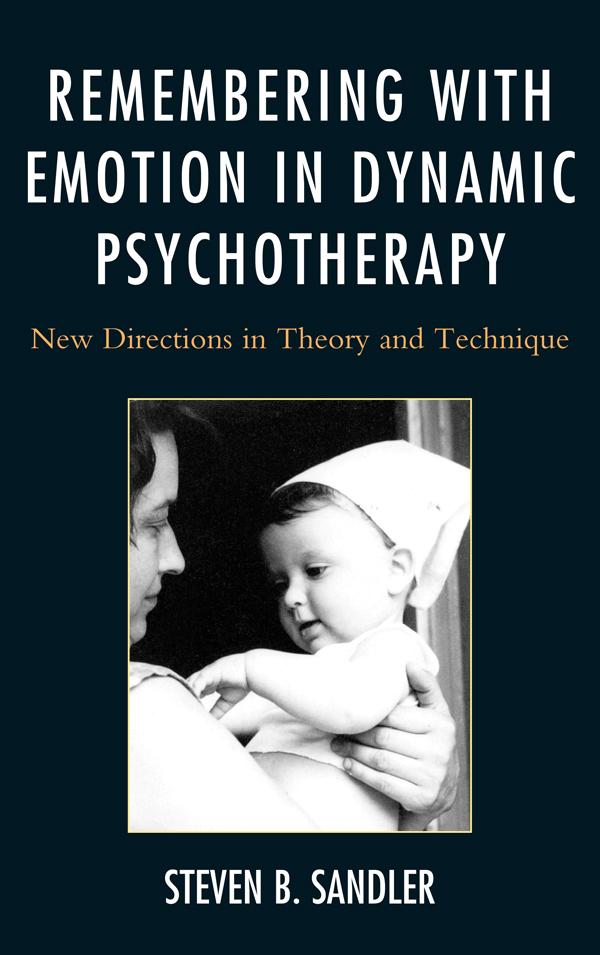
This book takes a new look at dynamic psychotherapy, from its most basic theory to the furthest limits of its capabilities. It invites the reader to re-examine a few of the most basic concepts underlying the practice of psychotherapy. What is emotion? What is a defense mechanism? It begins with emotion theory, an area of academic study that has traditionally been neglected in psychotherapy training programs. Throughout the book, it is argued that the patient's experience of emotion is critical for a successful outcome in therapy, and that the therapist's understanding of emotion will provide a solid theoretical foundation for practice. Attachment theory is also used extensively throughout the book. Case examples offer interventions that are designed to translate the theory into practical applications. In the middle chapters of the book, these basic ideas (emotion theory and attachment theory) are applied in an extended case example, using ample segments of verbatim dialogue.
Memory theory is used to explain some of the treatment failures in dynamic psychotherapy. Memory theory can lead to a revised approach that provides more durable outcomes. Dynamic psychotherapy has largely been a therapy of bad memories, therefore, a systematic approach to focusing on positive memories of early attachment experiences is outlined. We must not only help the patient to face negative memories of his past; we must also help revive and strengthen positive memories until they have "trace dominance" over negative ones.
Finally, the possibility that dynamic psychotherapy can lead to spiritual growth is explored. Early parent-child experiences of oneness can serve as the developmental precursors of the spiritual experience. Some of the child development literature, including Mahler's notion of "symbiosis" is reviewed. Some preliminary work with patients is presented, in which they are invited to broaden their new emotional connection with a parent (and others) until it leads to a greater sense of spiritual connection and o
Memory theory is used to explain some of the treatment failures in dynamic psychotherapy. Memory theory can lead to a revised approach that provides more durable outcomes. Dynamic psychotherapy has largely been a therapy of bad memories, therefore, a systematic approach to focusing on positive memories of early attachment experiences is outlined. We must not only help the patient to face negative memories of his past; we must also help revive and strengthen positive memories until they have "trace dominance" over negative ones.
Finally, the possibility that dynamic psychotherapy can lead to spiritual growth is explored. Early parent-child experiences of oneness can serve as the developmental precursors of the spiritual experience. Some of the child development literature, including Mahler's notion of "symbiosis" is reviewed. Some preliminary work with patients is presented, in which they are invited to broaden their new emotional connection with a parent (and others) until it leads to a greater sense of spiritual connection and o
Payez facilement par carte, Klarna, Apple Pay ou Google Pay. Pas satisfait ? Vous avez toujours une garantie de remboursement de 14 jours. En savoir plus dans nos conditions. Si vous avez des questions, envoyez-nous un e-mail à hello@memmo.org.
Memmo facilite tes études, où que tu sois dans le monde. On rassemble tes manuels de cours et des outils d'étude intelligents au même endroit : résumés, quiz, podcasts et flashcards. Et il y a Ted, ton compagnon d'étude qui répond à toutes tes questions. Plus de 50 000 étudiants étudient déjà ici – conçu pour t'aider à apprendre plus vite et à moins stresser.