
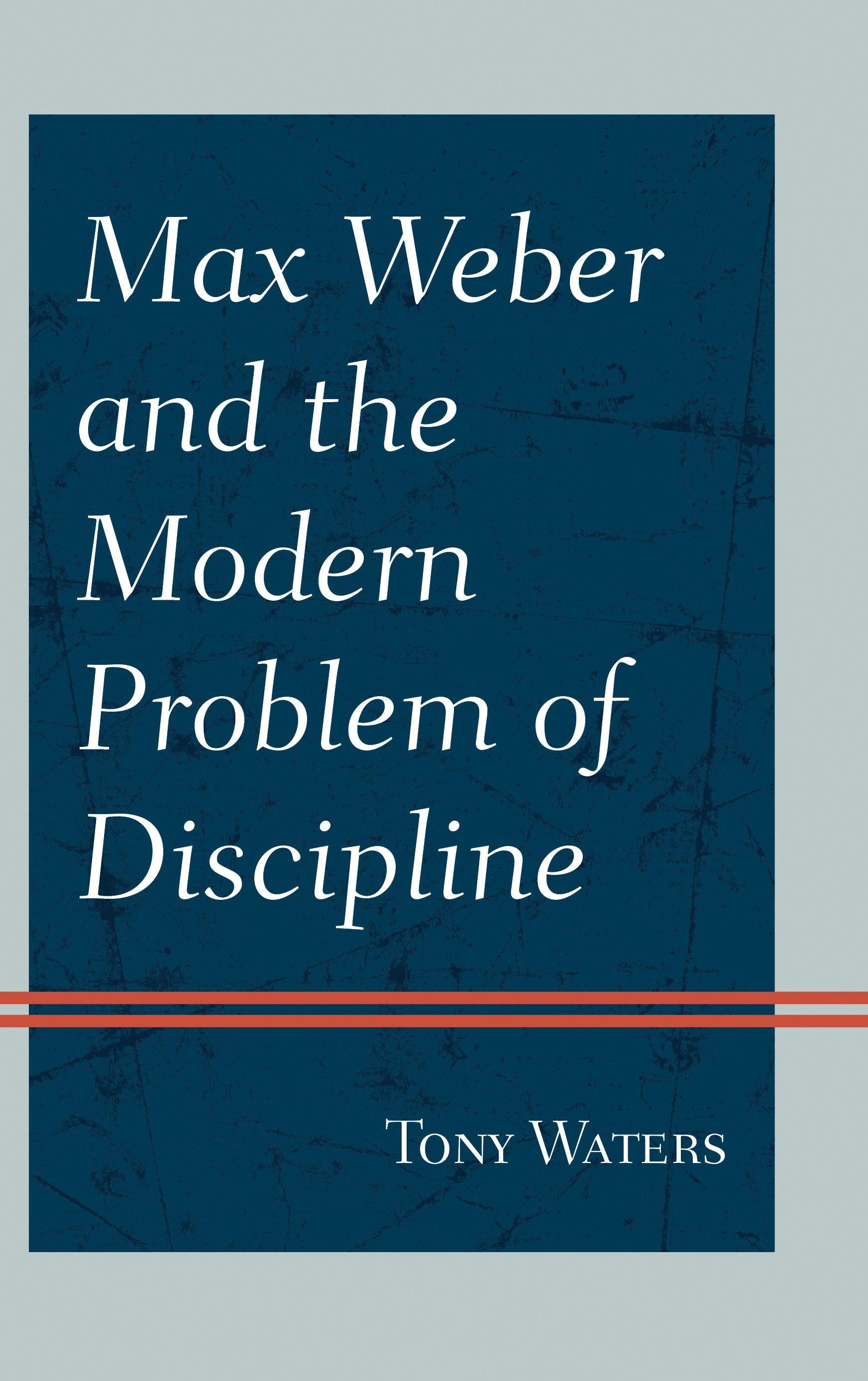
Max Weber believed that discipline underpins modern rationalized society. For Weber, modern discipline is the quality that gives a population the capacity to coordinate action across vast expanses. But modern discipline also requires individuals to shape their very psychobiological being to fit the larger socioeconomic system, be it a military unit, factory, bureaucracy, or other unit of modern society.
Max Weber and the Modern Problem of Discipline explores how Weber developed his ideas using examples from Ancient Egypt to the modern world and asks how his description of a habitus of discipline informs understanding of modernity not just in Europe but in places that continue to befuddle well-educated and well-paid modern economists, strategists, and politicians in places like the Democratic Republic of the Congo and Myanmar/Burma. These are the areas that, as Weber would have said, are still governed by traditional authority rather than the legal- disciplined habitus of rational authority brought by the modernizing outsiders. This book challenges development economists, foreign service officers, government officials, administrators, and development workers to rethink modern discipline and the costs that modern legal-rational rule imposes on traditional societies. By doing so, this book goes beyond standard prescriptions for good governance, free markets, and property rights, which underpin modern development planning.
To describe modern discipline, Tony Waters also draws on more the contemporary work of Karl Polanyi, James Scott, Goran Hyden, Teodor Shanin, and James Ferguson, among others. Each describes how and why independent peasantries ignored and even resisted the blandishments and trinkets proffered by development bureaucracies to sell their traditional rights in the modern marketplace. Waters agrees with them about farmer resilience, but he takes the argument a step further by pointing out that Weber was proposing a general theory of a disciplined modernity, not one focused on just a particular society.
Max Weber and the Modern Problem of Discipline explores how Weber developed his ideas using examples from Ancient Egypt to the modern world and asks how his description of a habitus of discipline informs understanding of modernity not just in Europe but in places that continue to befuddle well-educated and well-paid modern economists, strategists, and politicians in places like the Democratic Republic of the Congo and Myanmar/Burma. These are the areas that, as Weber would have said, are still governed by traditional authority rather than the legal- disciplined habitus of rational authority brought by the modernizing outsiders. This book challenges development economists, foreign service officers, government officials, administrators, and development workers to rethink modern discipline and the costs that modern legal-rational rule imposes on traditional societies. By doing so, this book goes beyond standard prescriptions for good governance, free markets, and property rights, which underpin modern development planning.
To describe modern discipline, Tony Waters also draws on more the contemporary work of Karl Polanyi, James Scott, Goran Hyden, Teodor Shanin, and James Ferguson, among others. Each describes how and why independent peasantries ignored and even resisted the blandishments and trinkets proffered by development bureaucracies to sell their traditional rights in the modern marketplace. Waters agrees with them about farmer resilience, but he takes the argument a step further by pointing out that Weber was proposing a general theory of a disciplined modernity, not one focused on just a particular society.
Pages: 124
Catégorie: Sociologi
e-ISBN: 9780761870593
Poids d'expédition: 1.2 kg
Expédié sous: 1-2 jours
Payez facilement par carte, Klarna, Apple Pay ou Google Pay. Pas satisfait ? Vous avez toujours une garantie de remboursement de 14 jours. En savoir plus dans nos conditions. Si vous avez des questions, envoyez-nous un e-mail à hello@memmo.org.
Memmo facilite tes études, où que tu sois dans le monde. On rassemble tes manuels de cours et des outils d'étude intelligents au même endroit : résumés, quiz, podcasts et flashcards. Et il y a Ted, ton compagnon d'étude qui répond à toutes tes questions. Plus de 50 000 étudiants étudient déjà ici – conçu pour t'aider à apprendre plus vite et à moins stresser.