
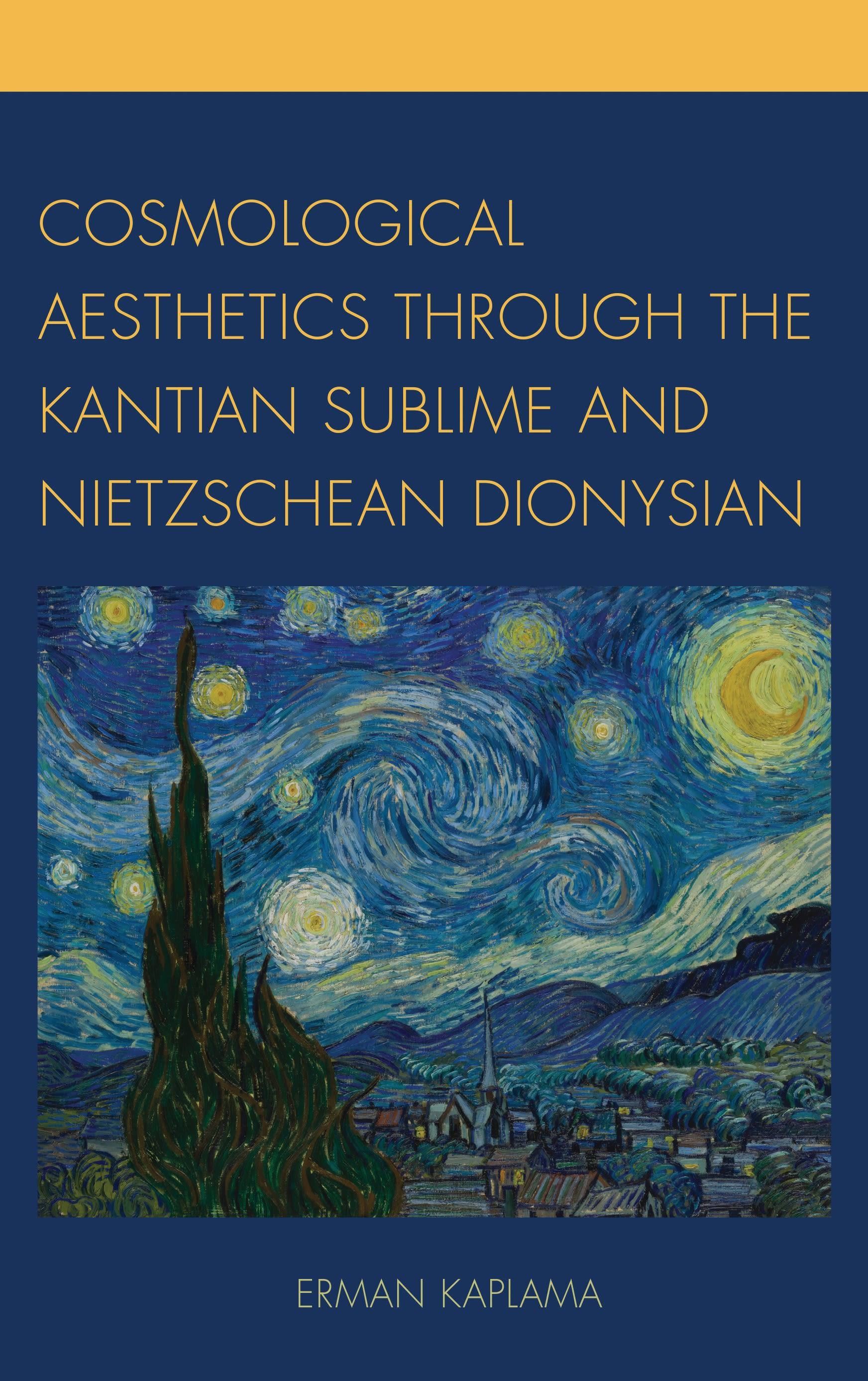
Erman Kaplama explores the principle of transition (Übergang) from metaphysics to physics developed by Kant in his unfinished magnum opus, Opus Postumum. Drawing on the Heraclitean logos and Kant’s notions of sense-intuition (Anschauung) and reflective judgment, Kaplama interprets transition as an aesthetic principle. He revises the idea of nature (phusis) as the principle of motion referring to Heraclitus’ cosmology as well as Heidegger’s and Nietzsche’s lectures on the pre-Socratics. Kaplama compares the Kantian sublime and Nietzschean Dionysian as aesthetic theories representing the transition from the sensible to supersensible and as cosmological theories that consider human nature (ethos) as an extension of nature. In light of such Nietzschean notions as the eternal recurrence and will to power, the Dionysian is shown to trigger the transition by which nature and art are redefined. Finally, Cosmological Aesthetics employs the principles of transition and motion to analyze Van Gogh’s Starry Night in an excursus.
Payez facilement par carte, Klarna, Apple Pay ou Google Pay. Pas satisfait ? Vous avez toujours une garantie de remboursement de 14 jours. En savoir plus dans nos conditions. Si vous avez des questions, envoyez-nous un e-mail à hello@memmo.org.
Memmo facilite tes études, où que tu sois dans le monde. On rassemble tes manuels de cours et des outils d'étude intelligents au même endroit : résumés, quiz, podcasts et flashcards. Et il y a Ted, ton compagnon d'étude qui répond à toutes tes questions. Plus de 50 000 étudiants étudient déjà ici – conçu pour t'aider à apprendre plus vite et à moins stresser.