
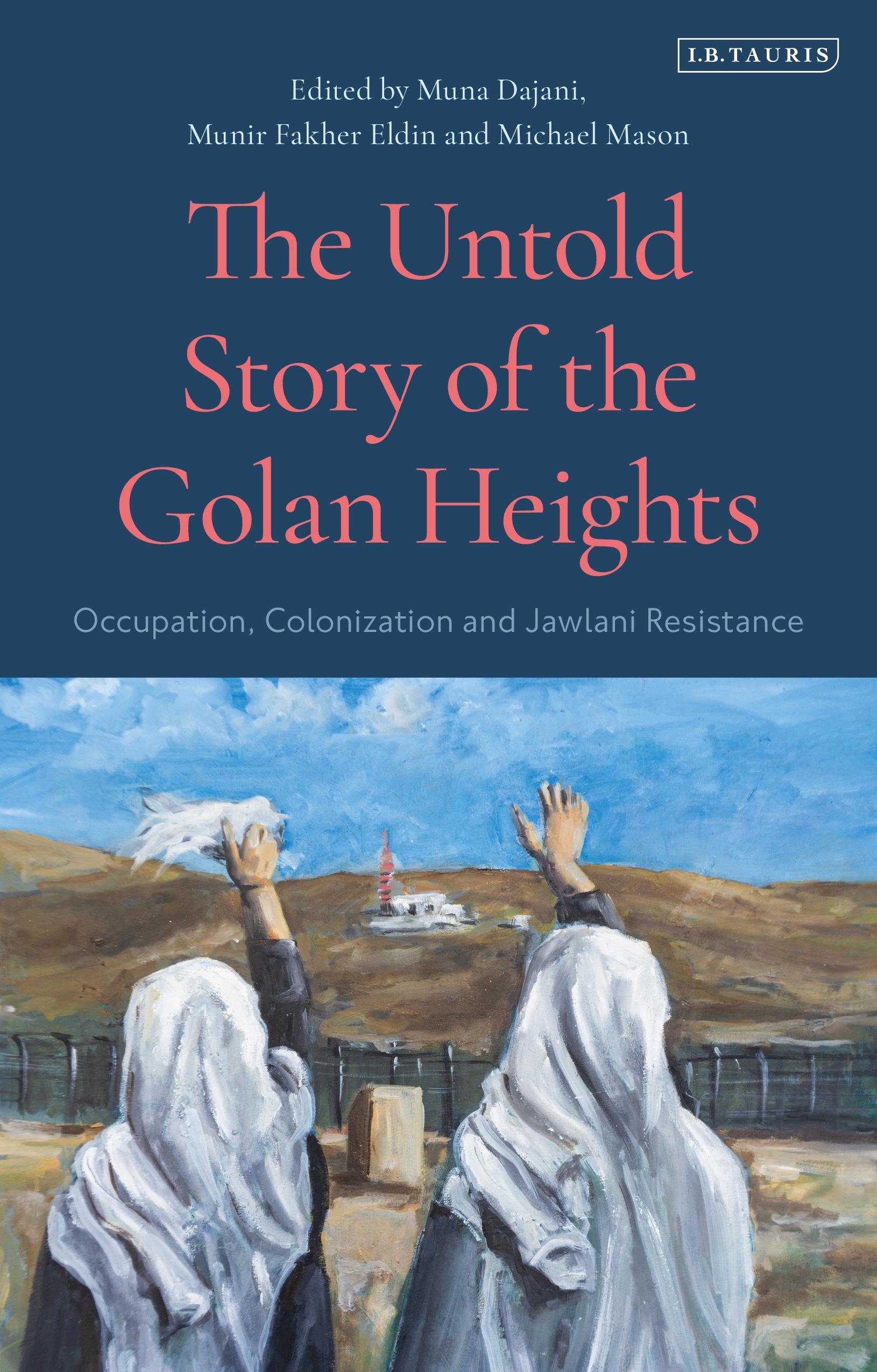
In 1967 Israel occupied the western section of Syria's Golan Heights, expelling 130,000 residents and leaving only a few thousand Arab inhabitants clustered in several villages. Sometimes characterised as the 'forgotten occupation', the western Golan Heights have been transformed by Israeli colonisation, including the appropriation of land and water resources, economic development and extensive military use.
This landmark volume is the first academic study in English of Arab politics and culture in the occupied Golan Heights. It focuses on an indigenous community, known as the Jawlanis, and their experience of everyday colonisation and resistance to settler colonisation. Chapters cover how governance is carried out in the Golan, from Israel's use of the education system and collective memory, to its development of large-scale wind turbines which are now a symbol of Israeli encroachment. To illustrate the ways in which the current regime of Israeli rule has been contested, there are chapters on the six-month strike of 1982, youth mobilisation in the occupied Golan, Palestinian solidarity movements, and the creation of Jawlani art and writing as an act of resistance.
Rich in ethnographic detail and with chapters from diverse disciplines, the book is unique in bringing together Jawlani, Palestinian and UK researchers. The innovative format - with shorter 'reflections' from young Arab researchers, activists and lawyers that respond to more traditional academic chapters - establishes a bold new 'de-colonial' approach.
This landmark volume is the first academic study in English of Arab politics and culture in the occupied Golan Heights. It focuses on an indigenous community, known as the Jawlanis, and their experience of everyday colonisation and resistance to settler colonisation. Chapters cover how governance is carried out in the Golan, from Israel's use of the education system and collective memory, to its development of large-scale wind turbines which are now a symbol of Israeli encroachment. To illustrate the ways in which the current regime of Israeli rule has been contested, there are chapters on the six-month strike of 1982, youth mobilisation in the occupied Golan, Palestinian solidarity movements, and the creation of Jawlani art and writing as an act of resistance.
Rich in ethnographic detail and with chapters from diverse disciplines, the book is unique in bringing together Jawlani, Palestinian and UK researchers. The innovative format - with shorter 'reflections' from young Arab researchers, activists and lawyers that respond to more traditional academic chapters - establishes a bold new 'de-colonial' approach.
Payez facilement par carte, Klarna, Apple Pay ou Google Pay. Pas satisfait ? Vous avez toujours une garantie de remboursement de 14 jours. En savoir plus dans nos conditions. Si vous avez des questions, envoyez-nous un e-mail à hello@memmo.org.
Memmo facilite tes études, où que tu sois dans le monde. On rassemble tes manuels de cours et des outils d'étude intelligents au même endroit : résumés, quiz, podcasts et flashcards. Et il y a Ted, ton compagnon d'étude qui répond à toutes tes questions. Plus de 50 000 étudiants étudient déjà ici – conçu pour t'aider à apprendre plus vite et à moins stresser.