
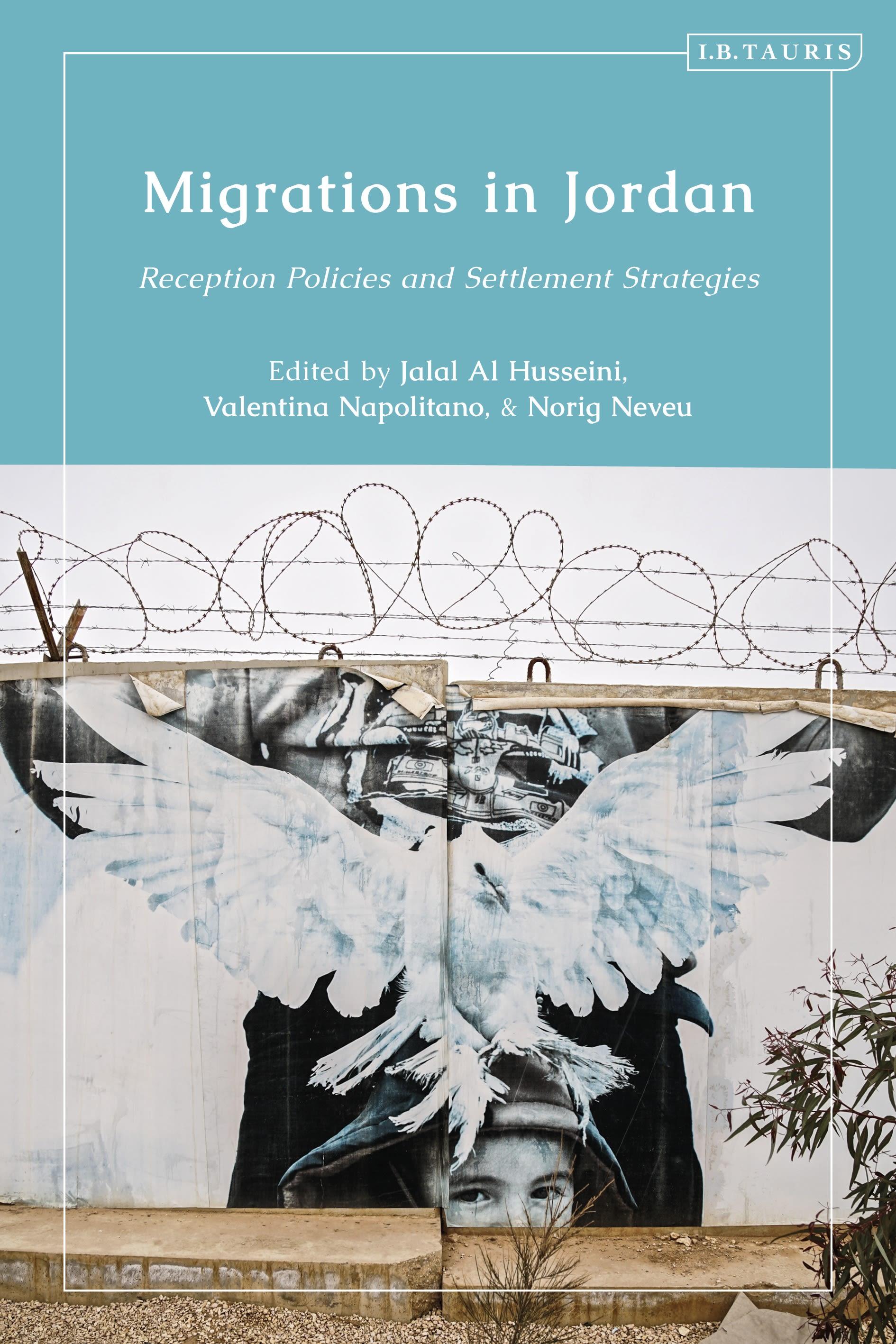
Jordan currently hosts the second largest percentage of registered refugees in the world: three million out of its eleven million inhabitants. Its experience in hosting migrants and refugees precedes its independence in 1946, with the arrival of Circassians, Chechens, and Armenians from the late 19th century. Jordan thus constitutes a unique observatory for reception policies and long-term settlement of different migrant groups.
Based on original empirical and archival material, this volume focuses on migrations caused by conflicts, wars, and crises underscoring their articulation with longstanding human mobility. It sheds light on the cumulative and processual dimensions of Jordan's reception policies and migrants' settlement strategies. It identifies the multiple actors involved in the management of migrants and, conversely, the latter's contribution to the Jordanian social, economic, political, and urban fabric.
The first part of the volume examines the policies adopted by the Jordanian authorities and international organizations to regulate access to basic services and to the labour market, and explores the economic and political factors underlying them. The second part analyzes the effects of Jordan's policies on the territorial distribution and settlement of migrants. How have these policies, combined with the adaptation strategies of migrants contributed to shaping new urban spaces? The third part focuses on capacity of the migrants to activate, establish, (re)build, and intersect different kinds of solidarity networks within the context of protracted displacement.
Based on original empirical and archival material, this volume focuses on migrations caused by conflicts, wars, and crises underscoring their articulation with longstanding human mobility. It sheds light on the cumulative and processual dimensions of Jordan's reception policies and migrants' settlement strategies. It identifies the multiple actors involved in the management of migrants and, conversely, the latter's contribution to the Jordanian social, economic, political, and urban fabric.
The first part of the volume examines the policies adopted by the Jordanian authorities and international organizations to regulate access to basic services and to the labour market, and explores the economic and political factors underlying them. The second part analyzes the effects of Jordan's policies on the territorial distribution and settlement of migrants. How have these policies, combined with the adaptation strategies of migrants contributed to shaping new urban spaces? The third part focuses on capacity of the migrants to activate, establish, (re)build, and intersect different kinds of solidarity networks within the context of protracted displacement.
Pages: 304
Catégorie: Samhällsvetenskap
e-ISBN: 9780755606870
Poids d'expédition: 1.2 kg
Expédié sous: 1-2 jours
Payez facilement par carte, Klarna, Apple Pay ou Google Pay. Pas satisfait ? Vous avez toujours une garantie de remboursement de 14 jours. En savoir plus dans nos conditions. Si vous avez des questions, envoyez-nous un e-mail à hello@memmo.org.
Memmo facilite tes études, où que tu sois dans le monde. On rassemble tes manuels de cours et des outils d'étude intelligents au même endroit : résumés, quiz, podcasts et flashcards. Et il y a Ted, ton compagnon d'étude qui répond à toutes tes questions. Plus de 50 000 étudiants étudient déjà ici – conçu pour t'aider à apprendre plus vite et à moins stresser.