
Choice Outstanding Academic Title for 2015
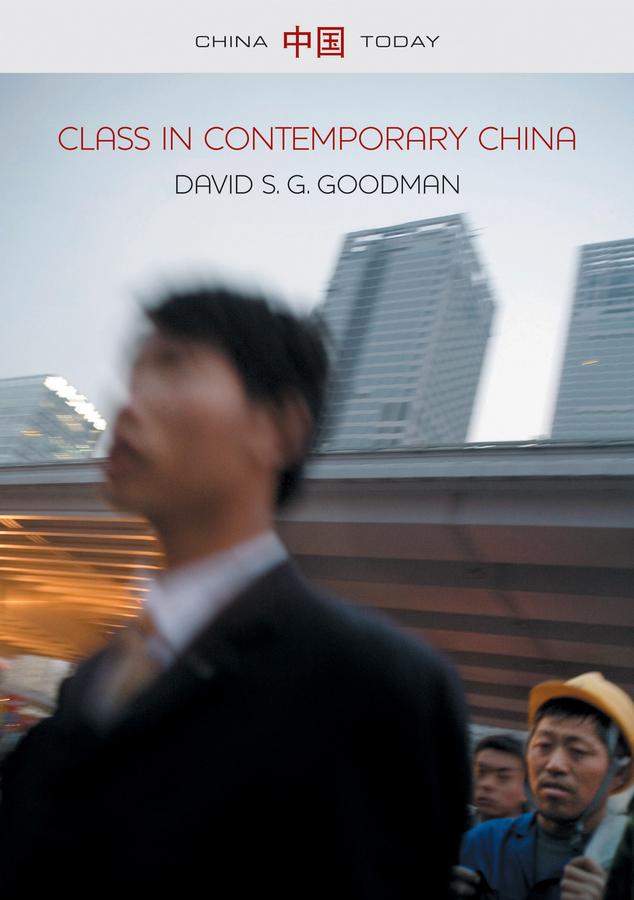
More than three decades of economic growth have led to significant social change in the People�s Republic of China. This timely book examines the emerging structures of class and social stratification: how they are interpreted and managed by the Chinese Communist Party, and how they are understood and lived by people themselves.
David Goodman details the emergence of a dominant class based on political power and wealth that has emerged from the institutions of the Party-state; a well-established middle class that is closely associated with the Party-state and a not-so-well-established entrepreneurial middle class; and several different subordinate classes in both the rural and urban areas. In doing so, he considers several critical issues: the extent to which the social basis of the Chinese political system has changed and the likely consequences; the impact of change on the old working class that was the socio-political mainstay of state socialism before the 1980s; the extent to which the migrant workers on whom much of the economic power of the PRC since the early 1980s has been based are becoming a new working class; and the consequences of China�s growing middle class, especially for politics.
The result is an invaluable guide for students and non-specialists interested in the contours of ongoing social change in China.
More than three decades of economic growth have led to significant social change in the People�s Republic of China. This timely book examines the emerging structures of class and social stratification: how they are interpreted and managed by the Chinese Communist Party, and how they are understood and lived by people themselves.
David Goodman details the emergence of a dominant class based on political power and wealth that has emerged from the institutions of the Party-state; a well-established middle class that is closely associated with the Party-state and a not-so-well-established entrepreneurial middle class; and several different subordinate classes in both the rural and urban areas. In doing so, he considers several critical issues: the extent to which the social basis of the Chinese political system has changed and the likely consequences; the impact of change on the old working class that was the socio-political mainstay of state socialism before the 1980s; the extent to which the migrant workers on whom much of the economic power of the PRC since the early 1980s has been based are becoming a new working class; and the consequences of China�s growing middle class, especially for politics.
The result is an invaluable guide for students and non-specialists interested in the contours of ongoing social change in China.
Payez facilement par carte, Klarna, Apple Pay ou Google Pay. Pas satisfait ? Vous avez toujours une garantie de remboursement de 14 jours. En savoir plus dans nos conditions. Si vous avez des questions, envoyez-nous un e-mail à hello@memmo.org.
Memmo facilite tes études, où que tu sois dans le monde. On rassemble tes manuels de cours et des outils d'étude intelligents au même endroit : résumés, quiz, podcasts et flashcards. Et il y a Ted, ton compagnon d'étude qui répond à toutes tes questions. Plus de 50 000 étudiants étudient déjà ici – conçu pour t'aider à apprendre plus vite et à moins stresser.
Tu pourrais aussi aimer
Acheter le livre0