
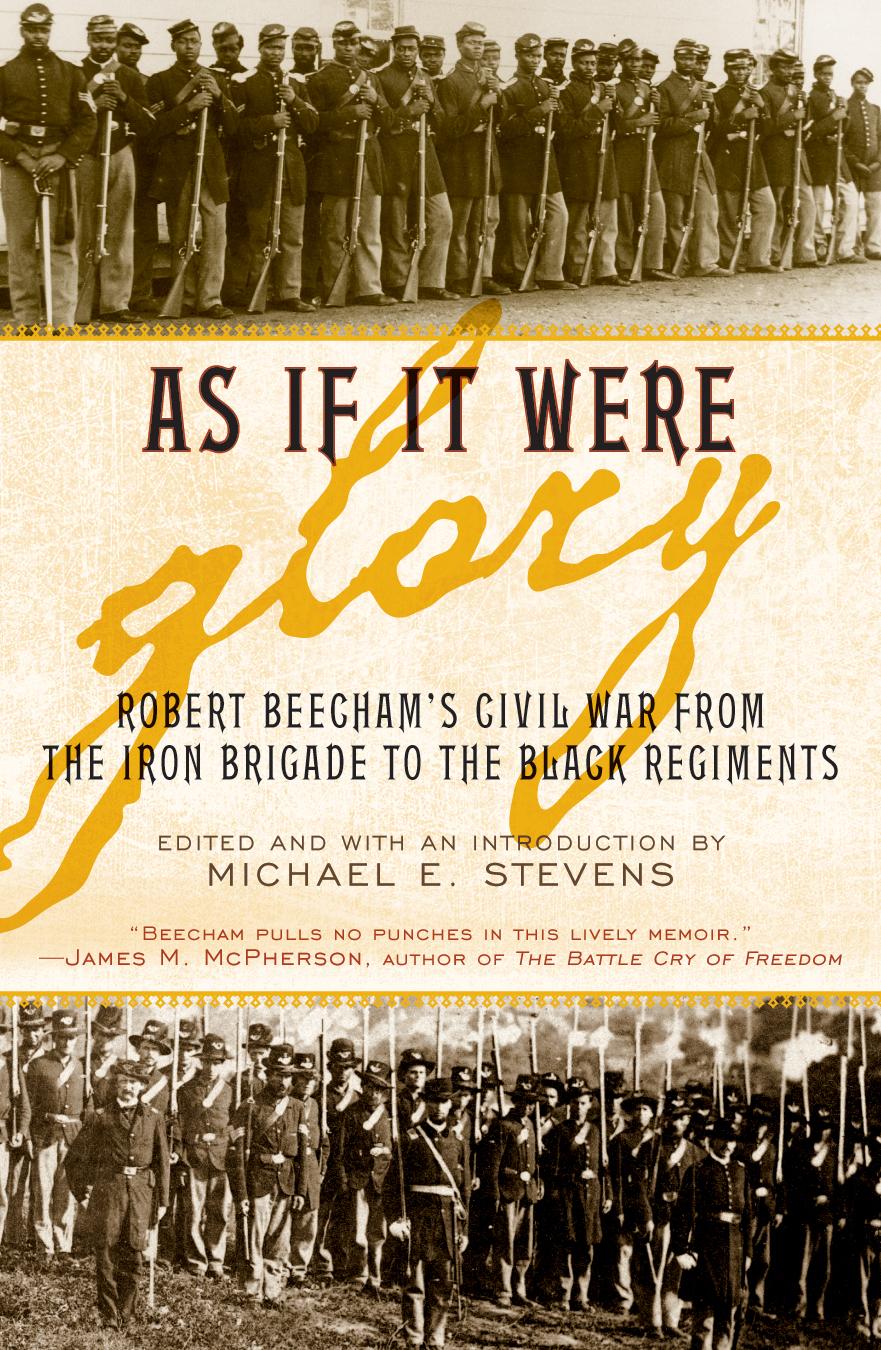
In this powerful and moving memoir, Robert Beecham tells of his Civil War experiences, both as an enlisted man in the fabled Iron Brigade of the Army of the Potomac and as an officer commanding a newly raised African-American unit. Written in 1902, Beecham recounts his war experiences with a keen eye toward the daily life of the soldier, the suffering and brutality of war, and the remarkable acts of valor, by soldiers both black and white, that punctuated the grind of long campaigns. As If It Were Glory is an unforgettable account of the Civil War, unclouded by sentimentality and insistent that the nation remain true to the cause for which it fought.
Beecham's war was a long one-he served from May 1861 through the completion of the war in the spring of 1865. With the Iron Brigade he saw action at such momentous battles as Chancellorsville and then at Gettysburg, where he was taken prisoner. Returned to service in a prison exchange, Beecham was promoted to first lieutenant of the 23rd United States Colored Troops whom he lead in fierce fighting at the Battle of the Crater. At the Crater, Beecham was wounded, again captured, and, after eight months in a Confederate prison, escaped to find his way to Annapolis just before the conclusion of the war.
In his narrative, Beecham celebrates the ingenuity of the enlisted man at the expense of officers who are often arrogant or incompetent. He also chides the altered recollections of fellow veterans who remember only triumphs and forgot defeats. In one of the most powerful parts of his memoir, Beecham pays tribute to the valor of the African Americans who fought under his command and insists that they were "the bravest and best soldiers that ever lived."
Beecham's war was a long one-he served from May 1861 through the completion of the war in the spring of 1865. With the Iron Brigade he saw action at such momentous battles as Chancellorsville and then at Gettysburg, where he was taken prisoner. Returned to service in a prison exchange, Beecham was promoted to first lieutenant of the 23rd United States Colored Troops whom he lead in fierce fighting at the Battle of the Crater. At the Crater, Beecham was wounded, again captured, and, after eight months in a Confederate prison, escaped to find his way to Annapolis just before the conclusion of the war.
In his narrative, Beecham celebrates the ingenuity of the enlisted man at the expense of officers who are often arrogant or incompetent. He also chides the altered recollections of fellow veterans who remember only triumphs and forgot defeats. In one of the most powerful parts of his memoir, Beecham pays tribute to the valor of the African Americans who fought under his command and insists that they were "the bravest and best soldiers that ever lived."
Payez facilement par carte, Klarna, Apple Pay ou Google Pay. Pas satisfait ? Vous avez toujours une garantie de remboursement de 14 jours. En savoir plus dans nos conditions. Si vous avez des questions, envoyez-nous un e-mail à hello@memmo.org.
Memmo facilite tes études, où que tu sois dans le monde. On rassemble tes manuels de cours et des outils d'étude intelligents au même endroit : résumés, quiz, podcasts et flashcards. Et il y a Ted, ton compagnon d'étude qui répond à toutes tes questions. Plus de 50 000 étudiants étudient déjà ici – conçu pour t'aider à apprendre plus vite et à moins stresser.