
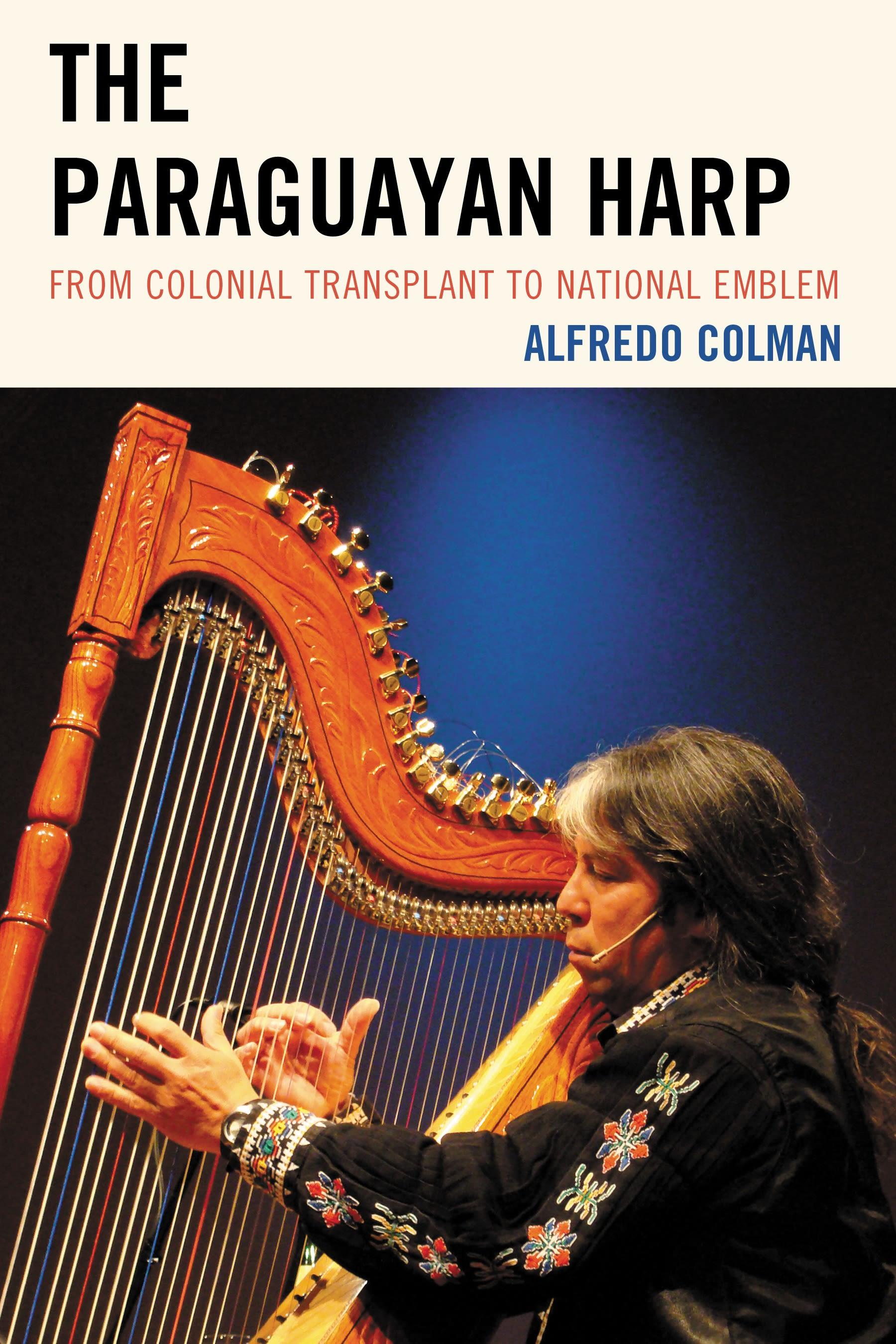
How did a music instrument transplated to South America by colonial Jesuit missionaries earn the official designation as Paraguay's cultural national symbol? This ethnomusicological and organological study of the Paraguayan diatonic harp in the twentieth century tells its story as an emblematic national musical instrument.
First used liturgically by Jesuit missions in colonial times, the transplanted European diatonic harp was transformed and adopted into the folk music vocabulary of Paraguay and the Río de la Plata region. Following the commercial success of Paraguayan harpist Félix Pérez Cardozo in the 1930s in Argentina, the instrument's symbolic value as an icon of social, cultural, and national identity was articulated in local traditions such as popular folk music festivals. It received designation of arpa paraguaya (Paraguayan harp) and, in 2010, official recognition as simbolo de la cultura nacional (cultural national symbol).
The author's fieldwork in Paraguay and continuous contact with composers, educators, festival organizers, harp performers, researchers, and festival organizers have provided unique insights into the development of the Paraguayan harp tradition as a cultural icon of the nation.
First used liturgically by Jesuit missions in colonial times, the transplanted European diatonic harp was transformed and adopted into the folk music vocabulary of Paraguay and the Río de la Plata region. Following the commercial success of Paraguayan harpist Félix Pérez Cardozo in the 1930s in Argentina, the instrument's symbolic value as an icon of social, cultural, and national identity was articulated in local traditions such as popular folk music festivals. It received designation of arpa paraguaya (Paraguayan harp) and, in 2010, official recognition as simbolo de la cultura nacional (cultural national symbol).
The author's fieldwork in Paraguay and continuous contact with composers, educators, festival organizers, harp performers, researchers, and festival organizers have provided unique insights into the development of the Paraguayan harp tradition as a cultural icon of the nation.
Payez facilement par carte, Klarna, Apple Pay ou Google Pay. Pas satisfait ? Vous avez toujours une garantie de remboursement de 14 jours. En savoir plus dans nos conditions. Si vous avez des questions, envoyez-nous un e-mail à hello@memmo.org.
Memmo facilite tes études, où que tu sois dans le monde. On rassemble tes manuels de cours et des outils d'étude intelligents au même endroit : résumés, quiz, podcasts et flashcards. Et il y a Ted, ton compagnon d'étude qui répond à toutes tes questions. Plus de 50 000 étudiants étudient déjà ici – conçu pour t'aider à apprendre plus vite et à moins stresser.