
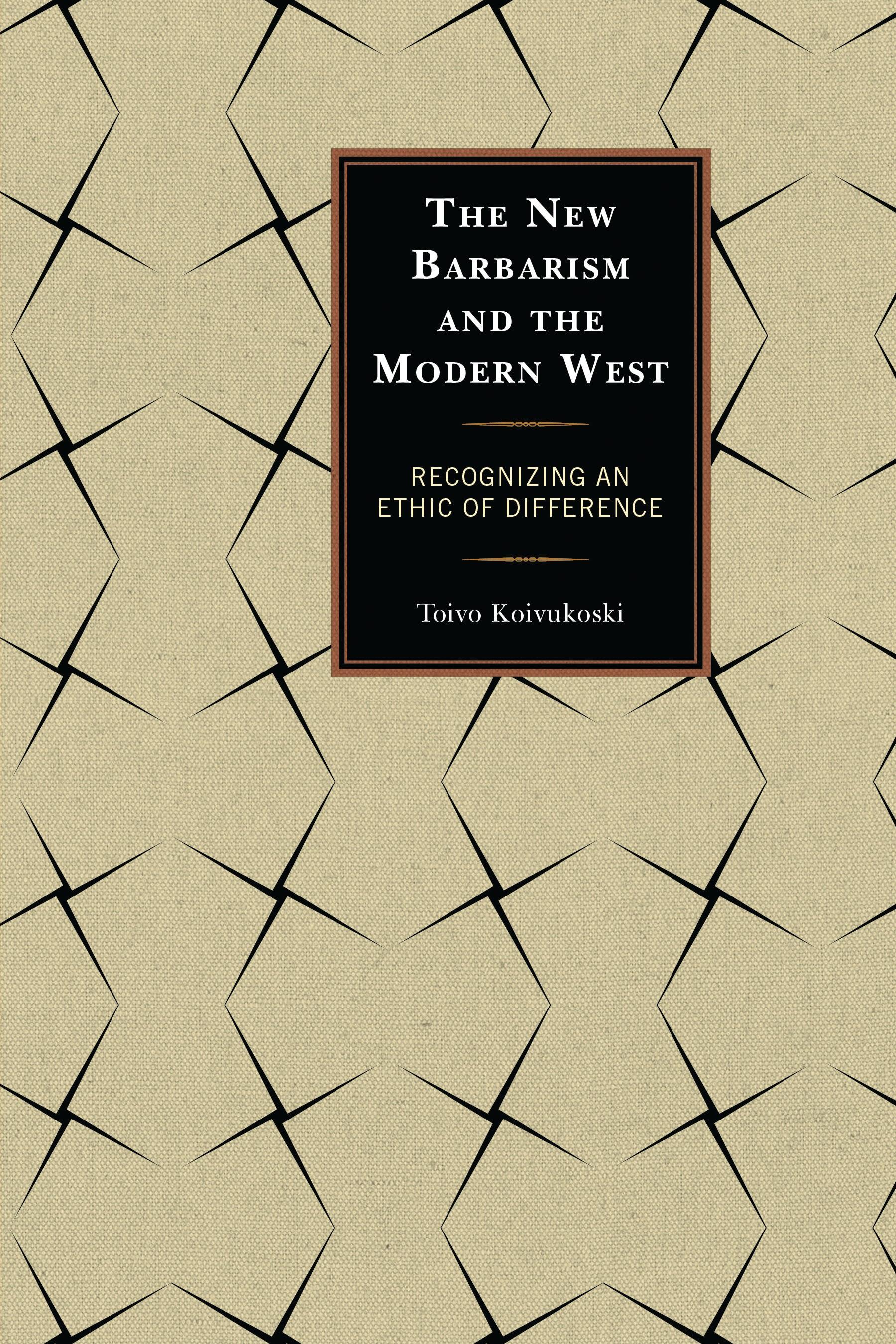
Liberalism is being called into question both in practice and in principle, from insurgencies at its bloody hinterlands and from the illiberal responses those insurgencies engender within the so-called civilized world, with technological integration creating the conditions for new forms of barbarism.
What then are the chances of progress towards a substantial equality of freedoms within this new context of retrograde attitudes framed by the occlusion of others as somehow essentially different? How can we register the significances of cultural distinctions without letting those ‘we's’ and ‘they's’ split an emergent global civil society into parochial retro-nations, where belonging knows itself only by exclusion? What is it that is being called out of the spirit of modernity in our seemingly backward-moving age of essentialized others and self-righteous rage? And to the end of inter-cultural understanding, how can we come to know the other, both through the care of others and in ourselves?
This work of political theory reflects on how cultures imagine their barbarians in the form of essentialized others, focusing specifically on the kinds of barbarism associated with a civilization devoted to technological progress. In response to the excesses of modernity, the author looks to advances an ethic of difference, inverting the golden rule so as to do unto others as those others would do unto themselves.
What then are the chances of progress towards a substantial equality of freedoms within this new context of retrograde attitudes framed by the occlusion of others as somehow essentially different? How can we register the significances of cultural distinctions without letting those ‘we's’ and ‘they's’ split an emergent global civil society into parochial retro-nations, where belonging knows itself only by exclusion? What is it that is being called out of the spirit of modernity in our seemingly backward-moving age of essentialized others and self-righteous rage? And to the end of inter-cultural understanding, how can we come to know the other, both through the care of others and in ourselves?
This work of political theory reflects on how cultures imagine their barbarians in the form of essentialized others, focusing specifically on the kinds of barbarism associated with a civilization devoted to technological progress. In response to the excesses of modernity, the author looks to advances an ethic of difference, inverting the golden rule so as to do unto others as those others would do unto themselves.
Pages: 164
Catégorie: Statsvetenskap & Politik
e-ISBN: 9780739190005
Poids d'expédition: 1.2 kg
Expédié sous: 1-2 jours
Payez facilement par carte, Klarna, Apple Pay ou Google Pay. Pas satisfait ? Vous avez toujours une garantie de remboursement de 14 jours. En savoir plus dans nos conditions. Si vous avez des questions, envoyez-nous un e-mail à hello@memmo.org.
Memmo facilite tes études, où que tu sois dans le monde. On rassemble tes manuels de cours et des outils d'étude intelligents au même endroit : résumés, quiz, podcasts et flashcards. Et il y a Ted, ton compagnon d'étude qui répond à toutes tes questions. Plus de 50 000 étudiants étudient déjà ici – conçu pour t'aider à apprendre plus vite et à moins stresser.