
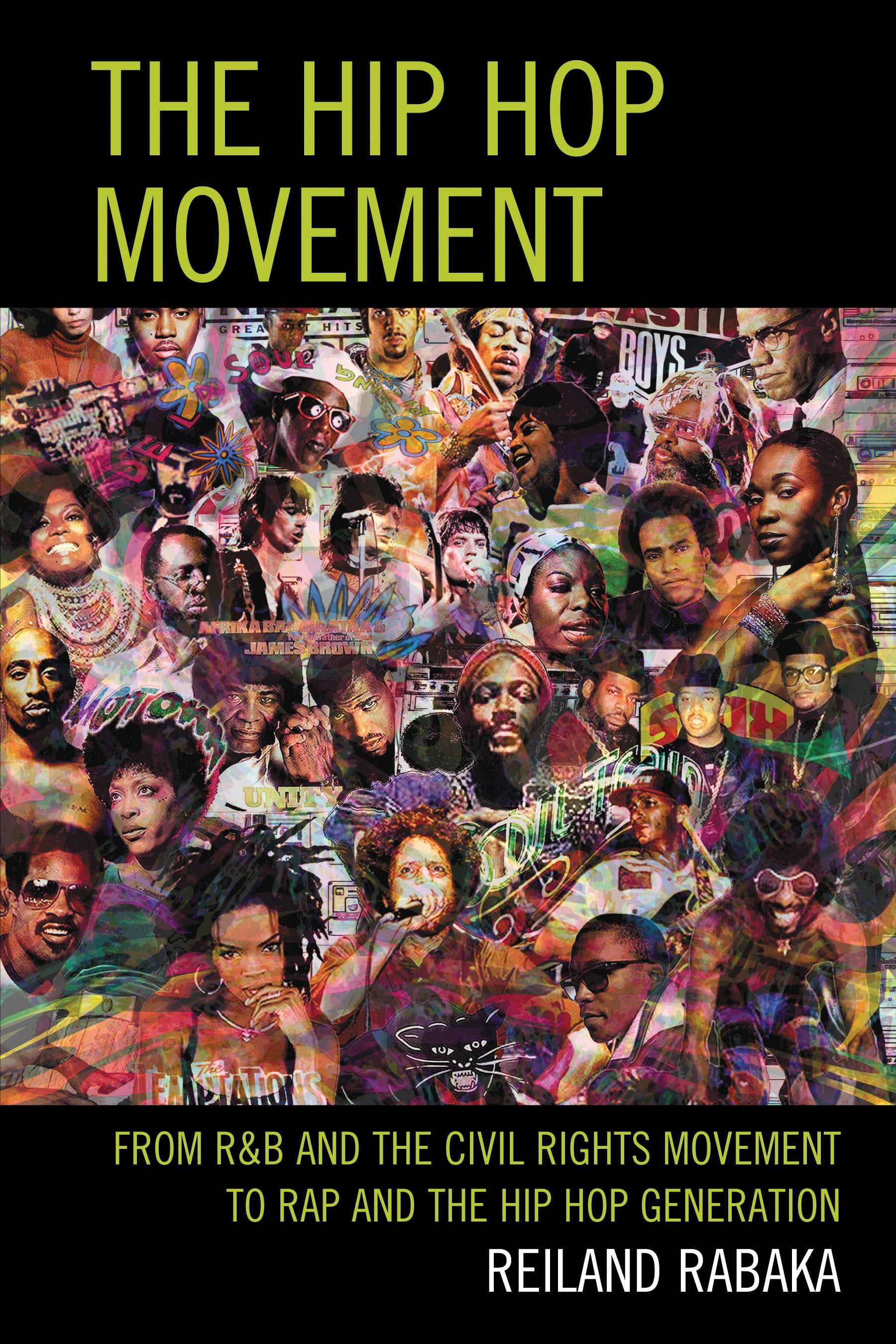
The Hip Hop Movement offers a critical theory and alternative history of rap music and hip hop culture by examining their roots in the popular musics and popular cultures of the Civil Rights Movement and Black Power Movement. Connecting classic rhythm & blues and rock & roll to the Civil Rights Movement, and classic soul and funk to the Black Power Movement, The Hip Hop Movement explores what each of these musics and movements contributed to rap, neo-soul, hip hop culture, and the broader Hip Hop Movement. Ultimately, this book’s remixes (as opposed to chapters) reveal that black popular music and black popular culture have always been more than merely “popular music” and “popular culture” in the conventional sense and reflect a broader social, political, and cultural movement. With this in mind, sociologist and musicologist Reiland Rabaka critically reinterprets rap and neo-soul as popular expressions of the politics, social visions, and cultural values of a contemporary multi-issue movement: the Hip Hop Movement.
Rabaka argues that rap music, hip hop culture, and the Hip Hop Movement are as deserving of critical scholarly inquiry as previous black popular musics, such as the spirituals, blues, ragtime, jazz, rhythm & blues, rock & roll, soul, and funk, and previous black popular movements, such as the Black Women’s Club Movement, New Negro Movement, Harlem Renaissance, Civil Rights Movement, Black Power Movement, Black Arts Movement, and Black Women’s Liberation Movement. This volume, equal parts alternative history of hip hop and critical theory of hip hop, challenges those scholars, critics, and fans of hip hop who lopsidedly over-focus on commercial rap, pop rap, and gangsta rap while failing to acknowledge that there are more than three dozen genres of rap music and many other socially and politically progressive forms of hip hop culture beyond DJing, MCing, rapping, beat-making, break-dancing, and graffiti-writing.
Rabaka argues that rap music, hip hop culture, and the Hip Hop Movement are as deserving of critical scholarly inquiry as previous black popular musics, such as the spirituals, blues, ragtime, jazz, rhythm & blues, rock & roll, soul, and funk, and previous black popular movements, such as the Black Women’s Club Movement, New Negro Movement, Harlem Renaissance, Civil Rights Movement, Black Power Movement, Black Arts Movement, and Black Women’s Liberation Movement. This volume, equal parts alternative history of hip hop and critical theory of hip hop, challenges those scholars, critics, and fans of hip hop who lopsidedly over-focus on commercial rap, pop rap, and gangsta rap while failing to acknowledge that there are more than three dozen genres of rap music and many other socially and politically progressive forms of hip hop culture beyond DJing, MCing, rapping, beat-making, break-dancing, and graffiti-writing.
Payez facilement par carte, Klarna, Apple Pay ou Google Pay. Pas satisfait ? Vous avez toujours une garantie de remboursement de 14 jours. En savoir plus dans nos conditions. Si vous avez des questions, envoyez-nous un e-mail à hello@memmo.org.
Memmo facilite tes études, où que tu sois dans le monde. On rassemble tes manuels de cours et des outils d'étude intelligents au même endroit : résumés, quiz, podcasts et flashcards. Et il y a Ted, ton compagnon d'étude qui répond à toutes tes questions. Plus de 50 000 étudiants étudient déjà ici – conçu pour t'aider à apprendre plus vite et à moins stresser.