
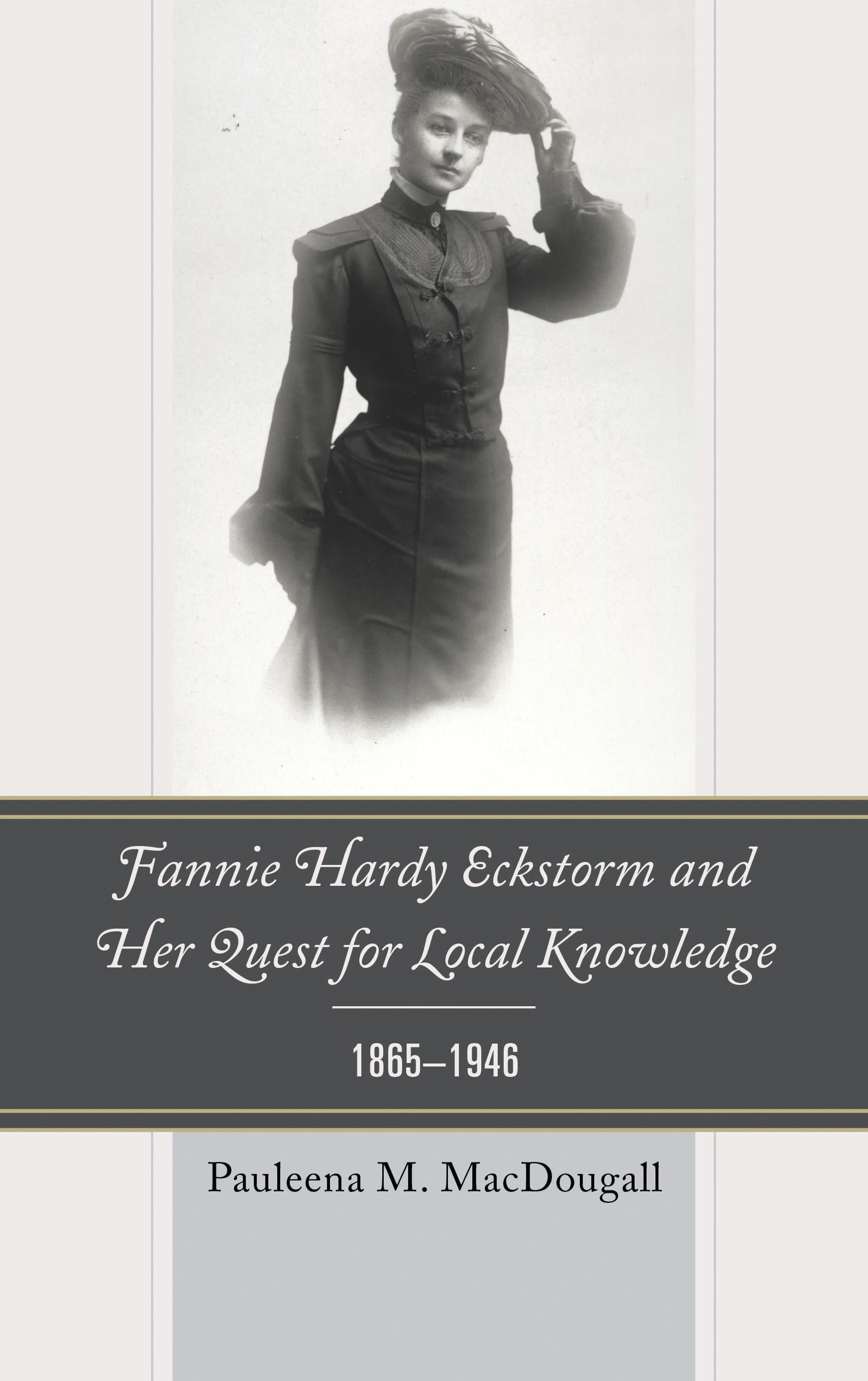
Eckstorm was the daughter of a fur trader living in Maine who published six books and many articles on natural history, woods culture, and Indian language and lore. A writer from Maine with a national readership, Eckstorm drew on her unique relationship with both Maine woodsmen and Maine's Native Americans that grew out of the time she spent in the woods with her father. She developed a complex system of work largely based on oral tradition, recording and interpreting local knowledge about animal behavior and hunting practices, boat handling, ballad singing, Native American languages, crafts, and storytelling. Her work has formed the foundation for much scholarship in New England folklore and history and clearly illustrates the importance of indigenous and folk knowledge to scholarship.
Fannie Hardy Eckstorm and Her Quest for Local Knowledge, 1865–1946 reveals an important story which speaks directly to contemporary issues as historians of science, social science and humanities begin to re-evaluate the nature, content, and role of indigenous and folk knowledge systems. Eckstorm's life and work illustrate the constant tension between local lay knowledge and the more privileged scientific production of academics that increasingly dominated the field from the early twentieth century. At the time Eckstorm was writing, the growth in professionalism and eclipse of the amateur led to a reorganization of knowledge. As increasing specialization defined the academy, indigenous knowledge systems were dismissed as unscientific and born of ignorance. Eckstorm recognized and lauded the innate value of traditional knowledge that could, for example, fell trees in the interior of Maine and ship them internationally as finished lumber.
Fannie Hardy Eckstorm and Her Quest for Local Knowledge, 1865–1946 reveals an important story which speaks directly to contemporary issues as historians of science, social science and humanities begin to re-evaluate the nature, content, and role of indigenous and folk knowledge systems. Eckstorm's life and work illustrate the constant tension between local lay knowledge and the more privileged scientific production of academics that increasingly dominated the field from the early twentieth century. At the time Eckstorm was writing, the growth in professionalism and eclipse of the amateur led to a reorganization of knowledge. As increasing specialization defined the academy, indigenous knowledge systems were dismissed as unscientific and born of ignorance. Eckstorm recognized and lauded the innate value of traditional knowledge that could, for example, fell trees in the interior of Maine and ship them internationally as finished lumber.
Payez facilement par carte, Klarna, Apple Pay ou Google Pay. Pas satisfait ? Vous avez toujours une garantie de remboursement de 14 jours. En savoir plus dans nos conditions. Si vous avez des questions, envoyez-nous un e-mail à hello@memmo.org.
Memmo facilite tes études, où que tu sois dans le monde. On rassemble tes manuels de cours et des outils d'étude intelligents au même endroit : résumés, quiz, podcasts et flashcards. Et il y a Ted, ton compagnon d'étude qui répond à toutes tes questions. Plus de 50 000 étudiants étudient déjà ici – conçu pour t'aider à apprendre plus vite et à moins stresser.