
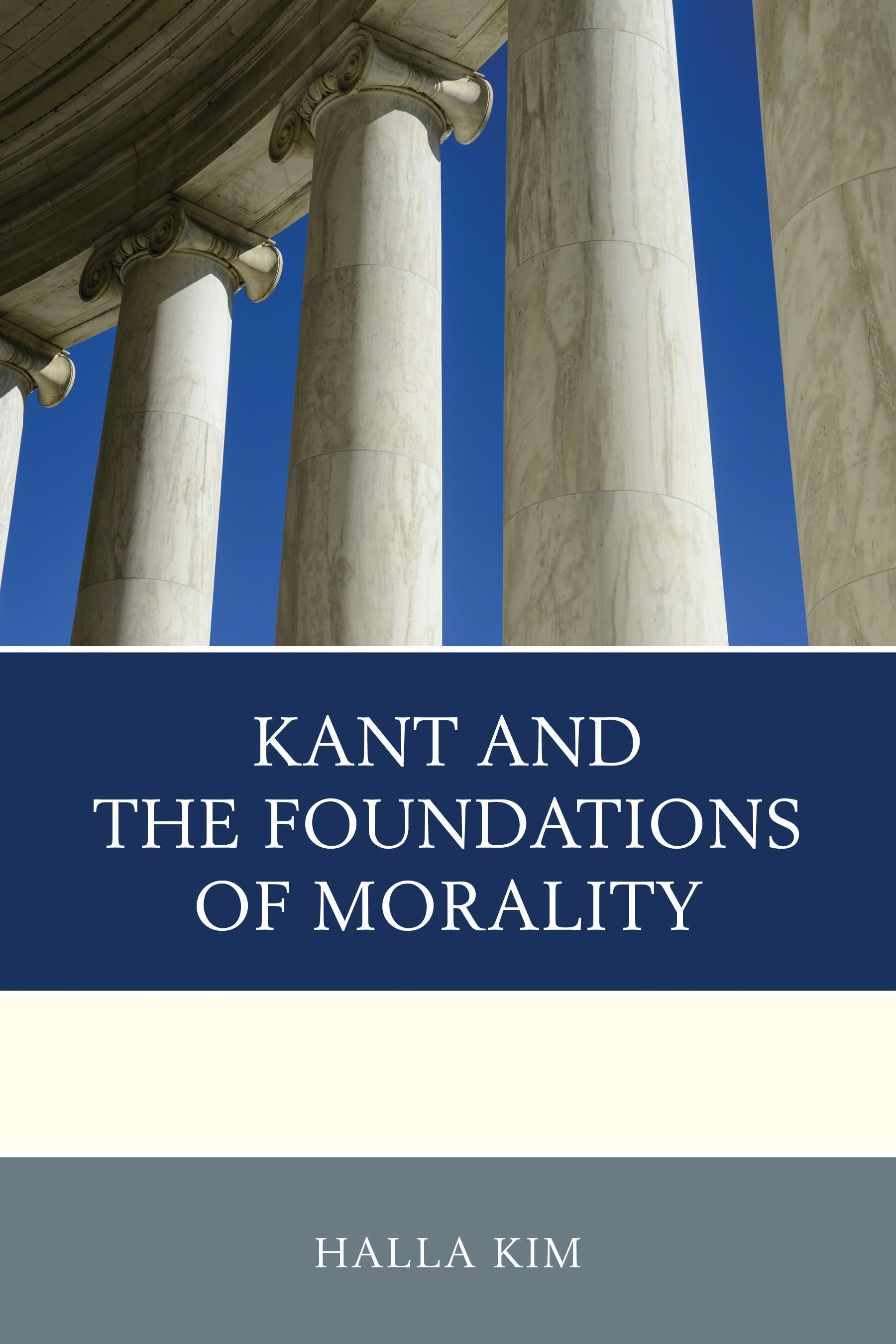
Halla Kim explores the leading themes in Kant’s philosophical ethics from a structural-methodological point of view to highlight the activities of reason vis-à-vis the blind forces of brute nature. Basing the study on Kant's short, but monumental, Groundwork of the Metaphysics of Morals, Kim also draws on other major writings by Kant and his critics. Kim shows that philosophical ethics, as Kant conceived it, must capture the gist of the ineluctable, inescapable, and irreducible freedom we strive to exemplify in our practical lives. Viewed this way, the moral law is none other than the law of the will determining itself. It is the law of the self-activity of the will. Contending that the concepts and doctrines in Kant’s ethics should be understood as an ethics of the self-activity of the will, Kim argues that the categorical imperative is the particular way this moral law is addressed to finite rational beings.
Kant and the Foundations of Morality provides new perspective on the philosopher's thought to benefit studies of eighteenth-century philosophy, epistemology, modern philosophy, moral theory, moral philosophy, and ethics.
Kant and the Foundations of Morality provides new perspective on the philosopher's thought to benefit studies of eighteenth-century philosophy, epistemology, modern philosophy, moral theory, moral philosophy, and ethics.
Payez facilement par carte, Klarna, Apple Pay ou Google Pay. Pas satisfait ? Vous avez toujours une garantie de remboursement de 14 jours. En savoir plus dans nos conditions. Si vous avez des questions, envoyez-nous un e-mail à hello@memmo.org.
Memmo facilite tes études, où que tu sois dans le monde. On rassemble tes manuels de cours et des outils d'étude intelligents au même endroit : résumés, quiz, podcasts et flashcards. Et il y a Ted, ton compagnon d'étude qui répond à toutes tes questions. Plus de 50 000 étudiants étudient déjà ici – conçu pour t'aider à apprendre plus vite et à moins stresser.