
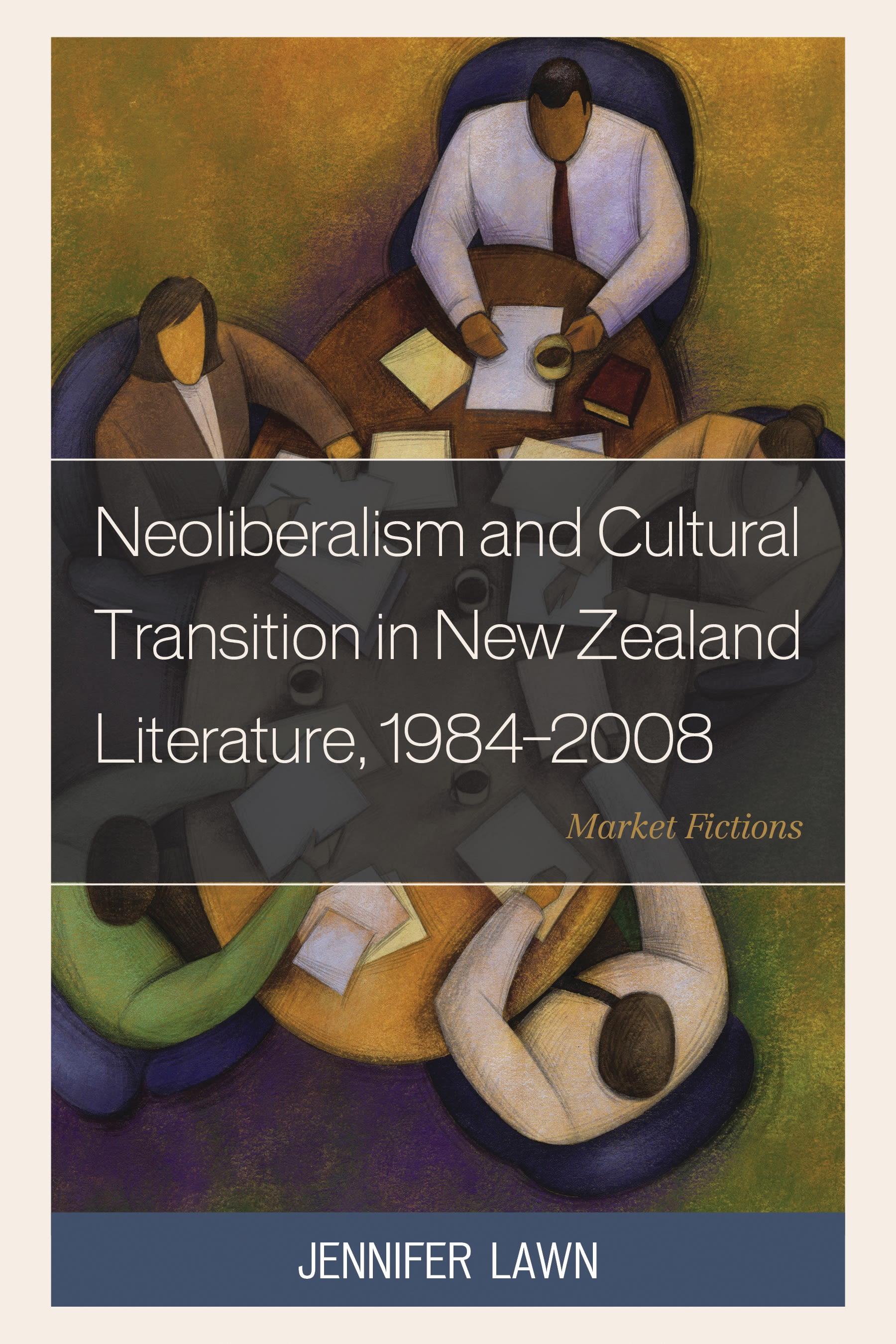
Through a literary lens, Neoliberalism and Cultural Transition in New Zealand Literature, 1984-2008: Market Fictions examines the ways in which the reprise of market-based economics has impacted the forms of social exchange and cultural life in a settler-colonial context. Jennifer Lawn proposes that postcolonial literary studies needs to take more account of the way in which the new configuration of dominance—increasingly gathered under the umbrella term of neoliberalism—works in concert with, rather than against, assertions of cultural identity on the part of historically subordinated groups. The pre-eminence of new right economics over the past three decades has raised a conundrum for writers on the left: while neoliberalism has tended to undermine collective social action, it has also fostered expressions of identity in the form of “cultural capital” which minority communities can exploit for economic gain.
Neoliberalism and Cultural Transition in New Zealand Literature, 1984-2008 advocates for reading practices that balance the appeals of culture against the structuring forces of social class and the commodification of identity, while not losing sight of the specific aesthetic qualities of literary fiction. Jennifer Lawn demonstrates the value of this approach in a wide-ranging account of New Zealand literature. Movements towards decolonization in a bicultural society are read within the context of a marginal post-industrial economy that was, in many ways, a test case for radical free market reforms.
Through a study of politically-engaged writing across a range of genres by both Maori and non-Maori authors, the New Zealand experience shows in high relief the twinned dynamics of a decline in the ideal of social egalitarianism and the corresponding rise of the idea of culture as a transformative force in economic and civic life, tending ultimately to blur the distinction between these spheres altogether. This work includes well-recognized authors such as Alan Duff, Patricia Grace, Witi Ihimaera, Eleanor Catton and Maurice Gee, but also introduces a number of non-canonical or emergent writers whose work is discussed in detail for the first time in this volume. The result is a distinctive literary history of a turbulent period of social and economic change.
Neoliberalism and Cultural Transition in New Zealand Literature, 1984-2008 advocates for reading practices that balance the appeals of culture against the structuring forces of social class and the commodification of identity, while not losing sight of the specific aesthetic qualities of literary fiction. Jennifer Lawn demonstrates the value of this approach in a wide-ranging account of New Zealand literature. Movements towards decolonization in a bicultural society are read within the context of a marginal post-industrial economy that was, in many ways, a test case for radical free market reforms.
Through a study of politically-engaged writing across a range of genres by both Maori and non-Maori authors, the New Zealand experience shows in high relief the twinned dynamics of a decline in the ideal of social egalitarianism and the corresponding rise of the idea of culture as a transformative force in economic and civic life, tending ultimately to blur the distinction between these spheres altogether. This work includes well-recognized authors such as Alan Duff, Patricia Grace, Witi Ihimaera, Eleanor Catton and Maurice Gee, but also introduces a number of non-canonical or emergent writers whose work is discussed in detail for the first time in this volume. The result is a distinctive literary history of a turbulent period of social and economic change.
Payez facilement par carte, Klarna, Apple Pay ou Google Pay. Pas satisfait ? Vous avez toujours une garantie de remboursement de 14 jours. En savoir plus dans nos conditions. Si vous avez des questions, envoyez-nous un e-mail à hello@memmo.org.
Memmo facilite tes études, où que tu sois dans le monde. On rassemble tes manuels de cours et des outils d'étude intelligents au même endroit : résumés, quiz, podcasts et flashcards. Et il y a Ted, ton compagnon d'étude qui répond à toutes tes questions. Plus de 50 000 étudiants étudient déjà ici – conçu pour t'aider à apprendre plus vite et à moins stresser.