
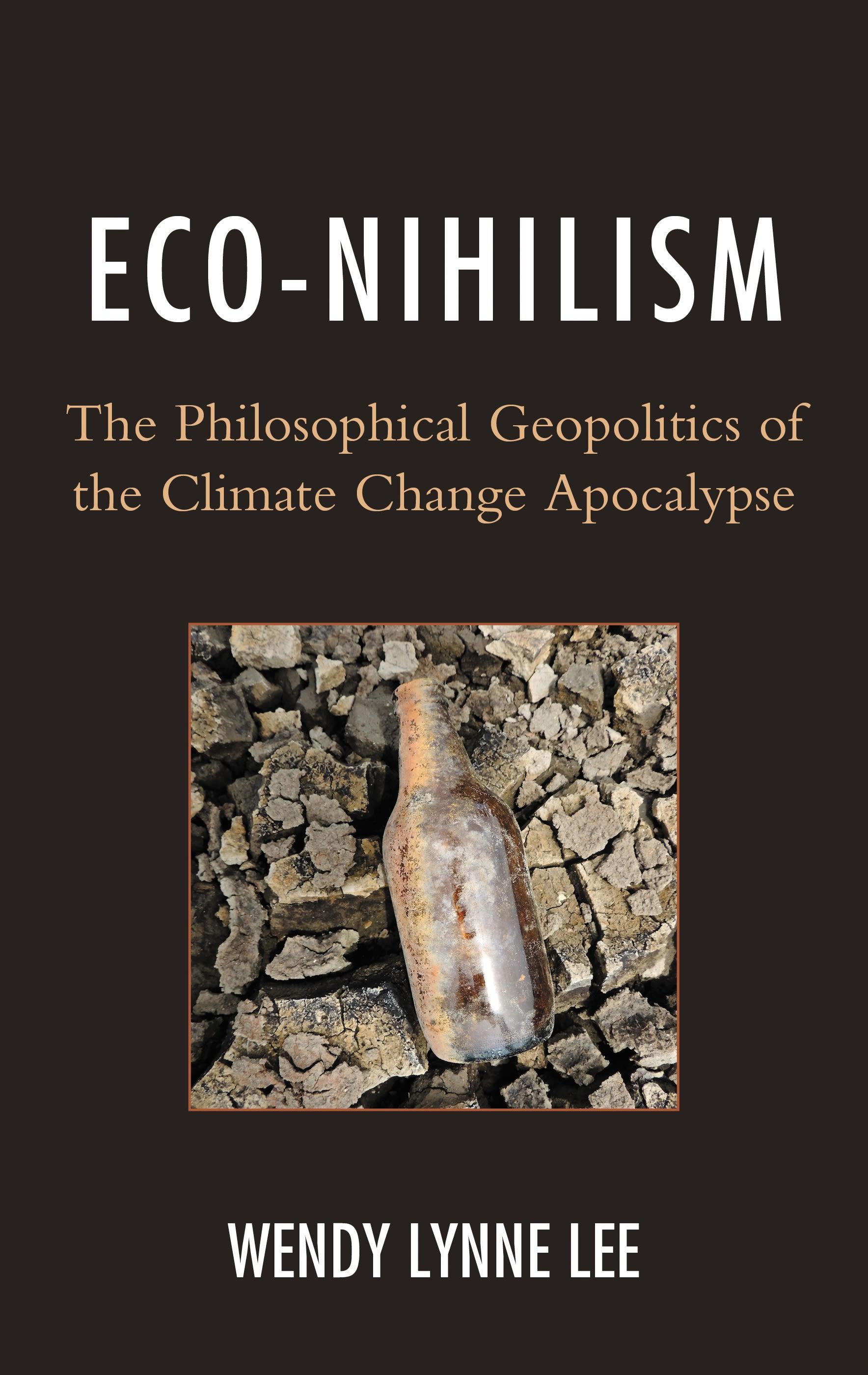
If we were to ask what is the root cause of our current and unprecedented environmental crisis, climate change, many, particularly on the progressive Left, would refer to the excesses of capitalism—and they’d be right. In Eco-Nihilism: The Philosophical Geopolitics of the Climate Change Apocalypse, Wendy Lynne Lee demonstrates that there are no versions of conquest capital compatible with the fact of a finite planet and that a logic whose operating premise is growth is destined to not only exhaust our planetary resources, but also generate profound social injustice and geopolitical violence in its pursuit. Nonetheless, it is clear that the violence and injustice of capital is selective—some benefit greatly while others are subjugated to its pathological drive to profit. Hence, Lee argues that any comprehensive analysis of what Jason Moore has dubbed the Capitalocene must include an equally probing account of human chauvinism, that is, the axes along which capital is supplied with resources and labor. Defined in terms of race, sex, gender, and species, these axes come ready-made to the advantage of capitalist commodification. Without an understanding of how and why, humanity will remain doomed to settling for a sustainably unjust world as opposed to realizing a just and desirable one. Indeed, on our current trajectory, we may not even achieve the sustainable. The introduction of climate change into the mix of environmental deterioration, the ever-widening economic gap between global North and global South, and the accelerating violence of terrorism, civil war, and human slavery make of a warming planet a combustible world.
The only way out requires ending the myth of endless resources, a rejection of climate change denial, and a radical re-valuation of human-centeredness, not as a locus of power, but as an opportunity to take moral and epistemic responsibility for a world whose biotic diversity and ecological integrity make the struggle to realize it worthwhile. This solution demands not only an end to capitalism, but the deliberate reclamation of value—aesthetic, moral, and civic—and a radical transformation of both personal and collective conscience. Lee appeals to the experiential aesthetics of John Dewey and the feminist concept of the standpoint of the subjugated. She argues for a version of the precautionary principle informed by an environmentally and socially responsible concept of the desirable future as the clearest path away from the precipice.
The only way out requires ending the myth of endless resources, a rejection of climate change denial, and a radical re-valuation of human-centeredness, not as a locus of power, but as an opportunity to take moral and epistemic responsibility for a world whose biotic diversity and ecological integrity make the struggle to realize it worthwhile. This solution demands not only an end to capitalism, but the deliberate reclamation of value—aesthetic, moral, and civic—and a radical transformation of both personal and collective conscience. Lee appeals to the experiential aesthetics of John Dewey and the feminist concept of the standpoint of the subjugated. She argues for a version of the precautionary principle informed by an environmentally and socially responsible concept of the desirable future as the clearest path away from the precipice.
Payez facilement par carte, Klarna, Apple Pay ou Google Pay. Pas satisfait ? Vous avez toujours une garantie de remboursement de 14 jours. En savoir plus dans nos conditions. Si vous avez des questions, envoyez-nous un e-mail à hello@memmo.org.
Memmo facilite tes études, où que tu sois dans le monde. On rassemble tes manuels de cours et des outils d'étude intelligents au même endroit : résumés, quiz, podcasts et flashcards. Et il y a Ted, ton compagnon d'étude qui répond à toutes tes questions. Plus de 50 000 étudiants étudient déjà ici – conçu pour t'aider à apprendre plus vite et à moins stresser.