
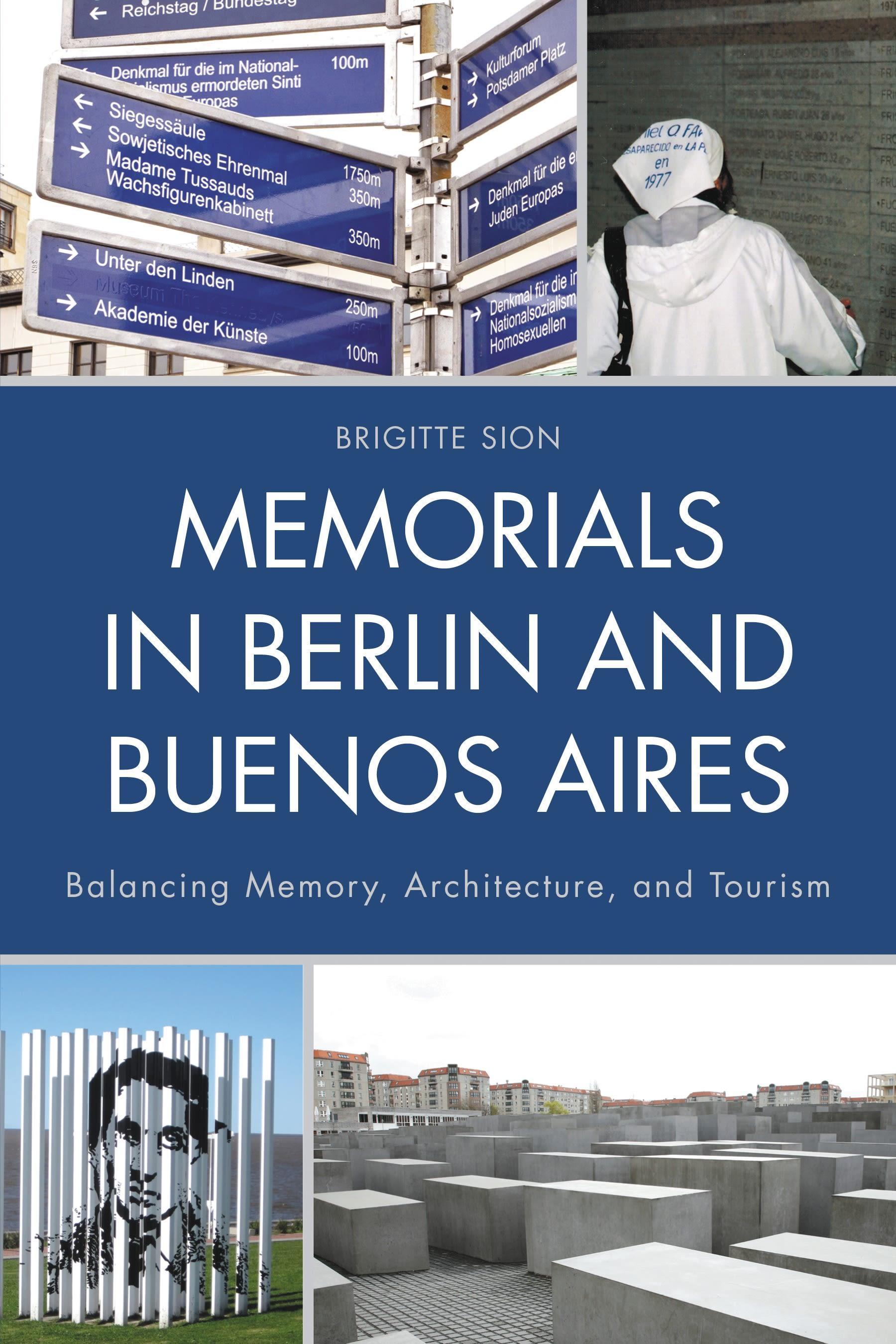
The Memorial to the Murdered Jews in Berlin, inaugurated in 2005, and the Monument to the Victims of State Terrorism within the Memory Park (Parque de la Memoria) in Buenos Aires, partially unveiled in 2007, have been controversial from start to finish. While these sites differ in many respects, Germany and Argentina share a history of dictatorial regimes that murdered civilians on a massive scale. The Nazis implemented the genocide of millions of Jews and other minorities during World War II. In Argentina, the junta-led state repression was responsible for the “disappearance” and subsequent murder of thousands of civilians between 1976 and 1983. Decades later, new governments in Germany and Argentina acknowledged the responsibility of their respective states for these mass murders by memorializing the victims with a national monument in the capital city for the first time. This study of two memorials develops a model and method for analyzing the memorialization of recent tragedies that share several basic characteristics: the state creates a self-indicting national memorial to the victims of state-sponsored mass murder in the absence of their bodies. Analyzed as sites of conflicting performances and as performances themselves, these memorials illuminate the ways in which people engage with them, and how an architecture of absence triggers embodied memory through somatic experience. While death tourism and architourism are a key to their success in attracting visitors, they also pose a threat to their commemorative role. Besides assessing the success and failure of these memorials, Sion explores the ways in which these sites are paradigmatic and offers a model for analyzing a transnational circuit of commemorative practices.
Payez facilement par carte, Klarna, Apple Pay ou Google Pay. Pas satisfait ? Vous avez toujours une garantie de remboursement de 14 jours. En savoir plus dans nos conditions. Si vous avez des questions, envoyez-nous un e-mail à hello@memmo.org.
Memmo facilite tes études, où que tu sois dans le monde. On rassemble tes manuels de cours et des outils d'étude intelligents au même endroit : résumés, quiz, podcasts et flashcards. Et il y a Ted, ton compagnon d'étude qui répond à toutes tes questions. Plus de 50 000 étudiants étudient déjà ici – conçu pour t'aider à apprendre plus vite et à moins stresser.