
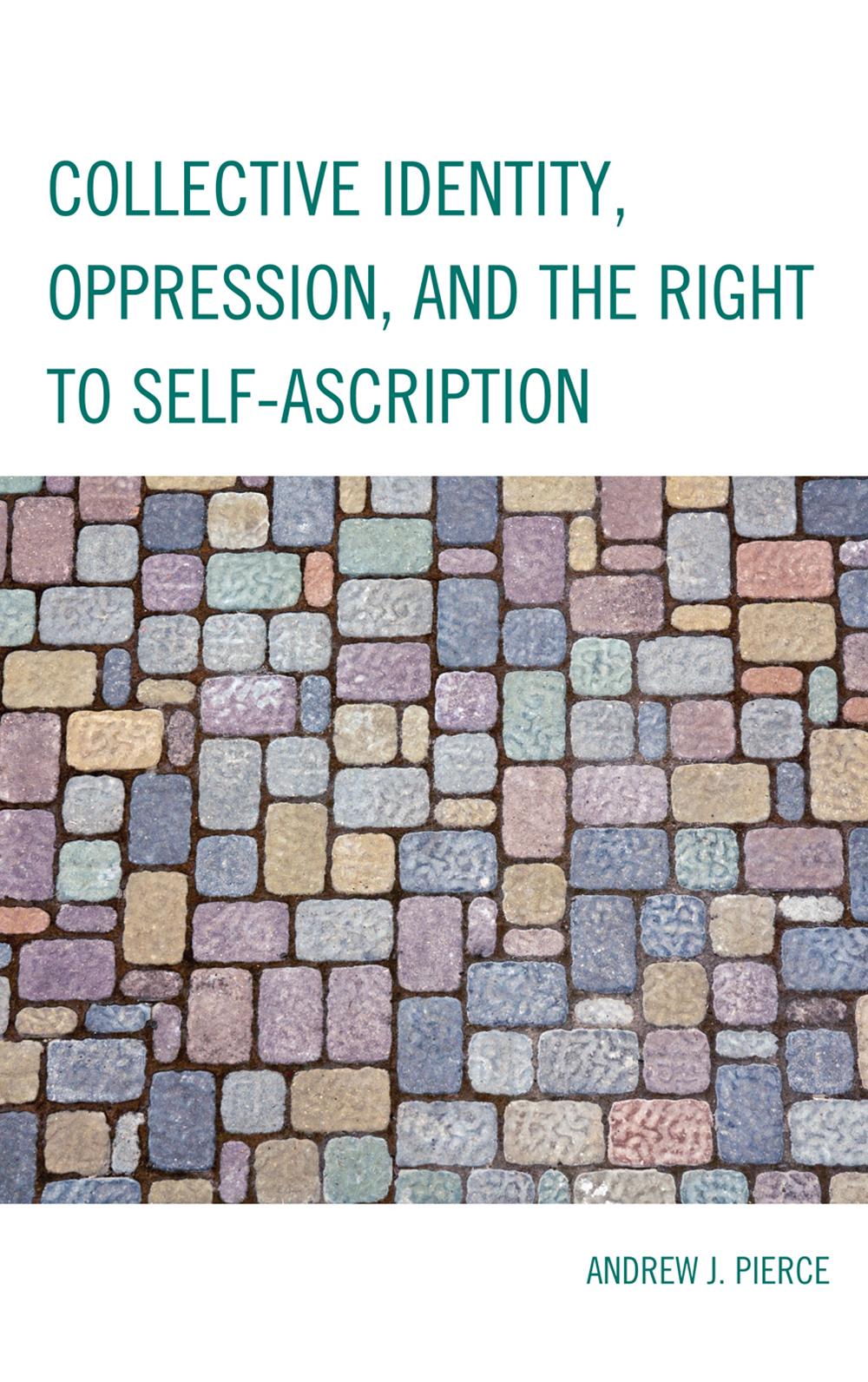
Collective Identity, Oppression, and the Right to Self-Ascription argues that groups have an irreducibly collective right to determine the meaning of their shared group identity, and that such a right is especially important for historically oppressed groups. The author specifies this right by way of a modified discourse ethic, demonstrating that it can provide the foundation for a conception of identity politics that avoids many of its usual pitfalls. The focus throughout is on racial identity, which provides a test case for the theory. That is, it investigates what it would mean for racial identities to be self-ascribed rather than imposed, establishing the possible role racial identity might play in a just society. The book thus makes a unique contribution to both the field of critical theory, which has been woefully silent on issues of race, and to race theory, which often either presumes that a just society would be a raceless society, or focuses primarily on understanding existing racial inequalities, in the manner typical of so-called “non-ideal theory.”
Payez facilement par carte, Klarna, Apple Pay ou Google Pay. Pas satisfait ? Vous avez toujours une garantie de remboursement de 14 jours. En savoir plus dans nos conditions. Si vous avez des questions, envoyez-nous un e-mail à hello@memmo.org.
Memmo facilite tes études, où que tu sois dans le monde. On rassemble tes manuels de cours et des outils d'étude intelligents au même endroit : résumés, quiz, podcasts et flashcards. Et il y a Ted, ton compagnon d'étude qui répond à toutes tes questions. Plus de 50 000 étudiants étudient déjà ici – conçu pour t'aider à apprendre plus vite et à moins stresser.