
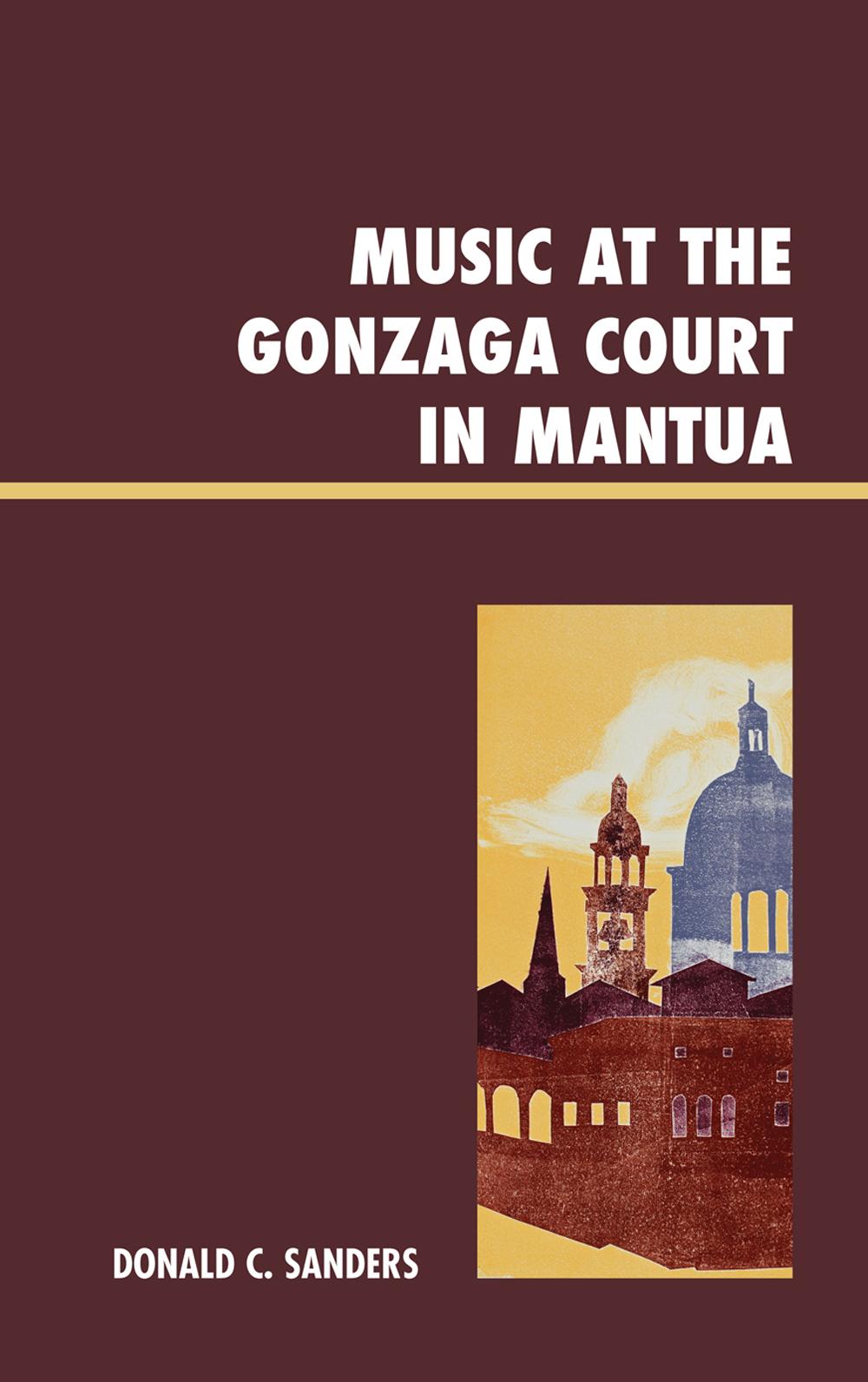
Beginning in the second half of the fifteenth century, under the patronage of the Gonzaga family, the northern Italian city of Mantua became a vibrant center for visual art, theatre, and music. The performance at the Gonzaga court of Poliziano's Fabula di Orfeo, around 1480, marked the beginning of secular music theatre. The use of musical numbers within the drama anticipated the beginnings of opera at Florence a century later, as well as the first masterpiece of the genre, Monteverdi's La favola d'Orfeo at Mantua in 1607. Mantua reached the zenith of its artistic distinction during the reign of Duke Vincenzo I, between 1587 and 1612. During this time, Wert and Gastoldi were joined at the court by the important Jewish composer Salamone Rossi and, most notably, by Monteverdi. The premieres of his Orfeo and Arisanna made the Gonzaga court, for that brief period, the most important center in the development of opera.
In Music at the Gonzaga Court in Mantua, Donald C. Sanders discusses musical composition at the court in the context of the brilliant visual art that provided such a conducive environment. Sanders also traces the history of this very colorful family and their relationships with the emperors, kings, and popes who shaped modern Europe. Part history, part musicology, Sanders' analysis spans the fifteenth century through the seventeenth century, filling informative gaps with details essential for students in courses on Renaissance or Baroque music, or in more specialized courses on madrigal, opera, or liturgical music. Music at the Gonzaga Court in Mantua is also important reading for knowledgeable musical amateurs and anyone with interest in Italian history and arts.
In Music at the Gonzaga Court in Mantua, Donald C. Sanders discusses musical composition at the court in the context of the brilliant visual art that provided such a conducive environment. Sanders also traces the history of this very colorful family and their relationships with the emperors, kings, and popes who shaped modern Europe. Part history, part musicology, Sanders' analysis spans the fifteenth century through the seventeenth century, filling informative gaps with details essential for students in courses on Renaissance or Baroque music, or in more specialized courses on madrigal, opera, or liturgical music. Music at the Gonzaga Court in Mantua is also important reading for knowledgeable musical amateurs and anyone with interest in Italian history and arts.
Pages: 200
Catégorie: Musikvetenskap
e-ISBN: 9780739167274
Poids d'expédition: 1.2 kg
Expédié sous: 1-2 jours
Payez facilement par carte, Klarna, Apple Pay ou Google Pay. Pas satisfait ? Vous avez toujours une garantie de remboursement de 14 jours. En savoir plus dans nos conditions. Si vous avez des questions, envoyez-nous un e-mail à hello@memmo.org.
Memmo facilite tes études, où que tu sois dans le monde. On rassemble tes manuels de cours et des outils d'étude intelligents au même endroit : résumés, quiz, podcasts et flashcards. Et il y a Ted, ton compagnon d'étude qui répond à toutes tes questions. Plus de 50 000 étudiants étudient déjà ici – conçu pour t'aider à apprendre plus vite et à moins stresser.