
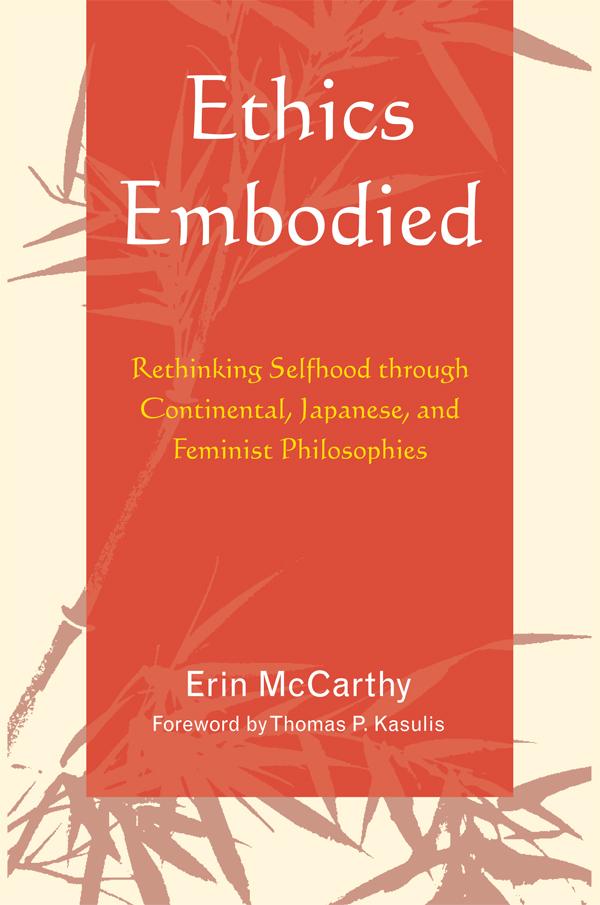
While the body has been largely neglected in much of traditional Western philosophy, there is a rich tradition of Japanese philosophy in which this is not the case. Ethics Embodied explains how Japanese philosophy includes the body as an integral part of selfhood and ethics and shows how it provides an alternative and challenge to the traditional Western philosophical view of self and ethics. Through a comparative feminist approach, the book articulates the striking similarities that exist between certain strands of Japanese philosophy and feminist philosophy concerning selfhood, ethics and the body. Despite the similarities, McCarthy argues that there are significant differences between these philosophies and that each reveals important limitations of the other. Thus, the book urges a view of ethical embodied selfhood that goes beyond where each of these views leaves us when considered in isolation.
With keen analysis and constructive comparison, this book will be accessible for students and scholars familiar with the Western philosophical tradition, while still adding a more global perspective.
With keen analysis and constructive comparison, this book will be accessible for students and scholars familiar with the Western philosophical tradition, while still adding a more global perspective.
Payez facilement par carte, Klarna, Apple Pay ou Google Pay. Pas satisfait ? Vous avez toujours une garantie de remboursement de 14 jours. En savoir plus dans nos conditions. Si vous avez des questions, envoyez-nous un e-mail à hello@memmo.org.
Memmo facilite tes études, où que tu sois dans le monde. On rassemble tes manuels de cours et des outils d'étude intelligents au même endroit : résumés, quiz, podcasts et flashcards. Et il y a Ted, ton compagnon d'étude qui répond à toutes tes questions. Plus de 50 000 étudiants étudient déjà ici – conçu pour t'aider à apprendre plus vite et à moins stresser.