
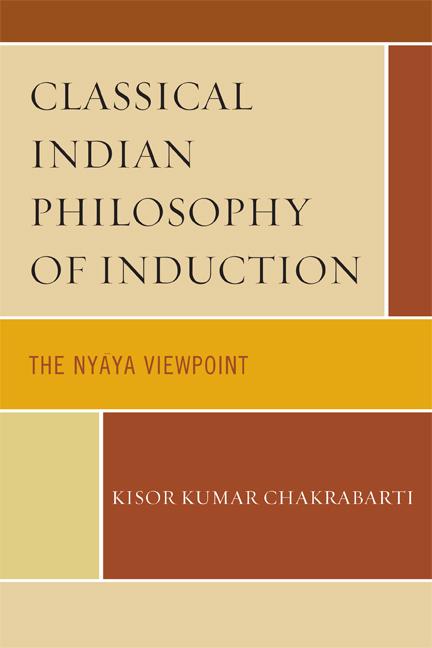
Induction is a basic method of scientific and philosophical inquiry. The work seeks to show against the skeptical tide that the method is secure and reliable. The problem of induction has been a hotly debated issue in modern and contemporary philosophy since David Hume. However, long before the modern era Indian philosophers have addressed this problem for about two thousand years. This work examines some major Indian viewpoints including those of Jayarasi (7th century), Dharmakirti (7th century), Prabhakara (8th century), Udayana (11th century) and Prabhacandra (14th century). It also discusses some influential contemporary positions including those of Russell, Strawson, Popper, Reichenbach, Carnap, Goodman and Quine. The main focus is on the Nyaya view developed by Gangesa (13th century). A substantial part of the work is devoted to annotated translation of selected chapters from Gangesa's work dealing with the problem of induction with copious references to the later Nyaya philosophers including Raghunatha (15th century), Mathuranatha (16th century), Jagadisa (17th century) and Gadadhara (17th century). An annotated translation of selections from Sriharsa (12th century) of the Vedanta school, Prabhacandra of the Jaina school and Dharmakirti of the Buddhist school is also included. A solution is presented to the classical problem of induction and the Grue paradox based on the Nyaya perspective. The solution includes an argument from counterfactual reasoning, arguments in defense of causality, analyses of circularity and logical economy, arguments for objective universals and an argument from belief-behavior contradiction.
Payez facilement par carte, Klarna, Apple Pay ou Google Pay. Pas satisfait ? Vous avez toujours une garantie de remboursement de 14 jours. En savoir plus dans nos conditions. Si vous avez des questions, envoyez-nous un e-mail à hello@memmo.org.
Memmo facilite tes études, où que tu sois dans le monde. On rassemble tes manuels de cours et des outils d'étude intelligents au même endroit : résumés, quiz, podcasts et flashcards. Et il y a Ted, ton compagnon d'étude qui répond à toutes tes questions. Plus de 50 000 étudiants étudient déjà ici – conçu pour t'aider à apprendre plus vite et à moins stresser.