
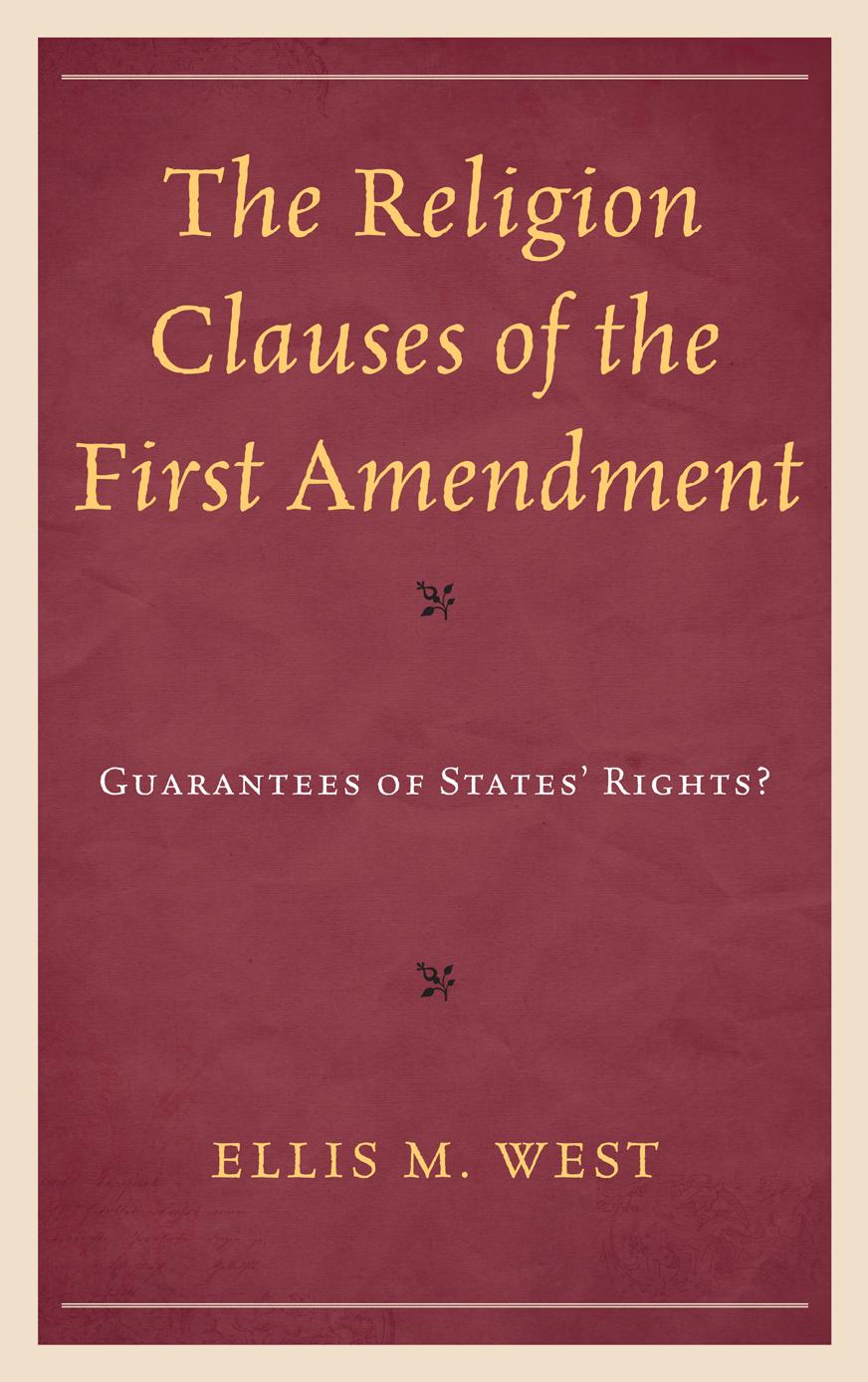
The First Amendment of the U. S. Constitution begins: "Congress shall make no law respecting an establishment of religion, or prohibiting the free exercise thereof . . . ." The Supreme Court has consistently held that these words, usually called the "religion clauses," were meant to prohibit laws that violate religious freedom or equality. In recent years, however, a growing number of constitutional law and history scholars have contended that the religion clauses were not intended to protect religious freedom, but to reserve the states' rights to legislate on. If the states' rights interpretation of the religion clauses were correct and came to be accepted by the Supreme Court, it could profoundly affect the way the Court decides church-state cases involving state laws. It would allow the states to legislate on religion-even to violate religious freedom, discriminate on the basis of religion, or to establish a particular religion. This book carefully, thoroughly, and critically examines all the arguments for such an interpretation and, more importantly, all the available historical evidence. It concludes that the clauses were meant to protect religious freedom and equality of the individuals not the states' rights
Payez facilement par carte, Klarna, Apple Pay ou Google Pay. Pas satisfait ? Vous avez toujours une garantie de remboursement de 14 jours. En savoir plus dans nos conditions. Si vous avez des questions, envoyez-nous un e-mail à hello@memmo.org.
Memmo facilite tes études, où que tu sois dans le monde. On rassemble tes manuels de cours et des outils d'étude intelligents au même endroit : résumés, quiz, podcasts et flashcards. Et il y a Ted, ton compagnon d'étude qui répond à toutes tes questions. Plus de 50 000 étudiants étudient déjà ici – conçu pour t'aider à apprendre plus vite et à moins stresser.