
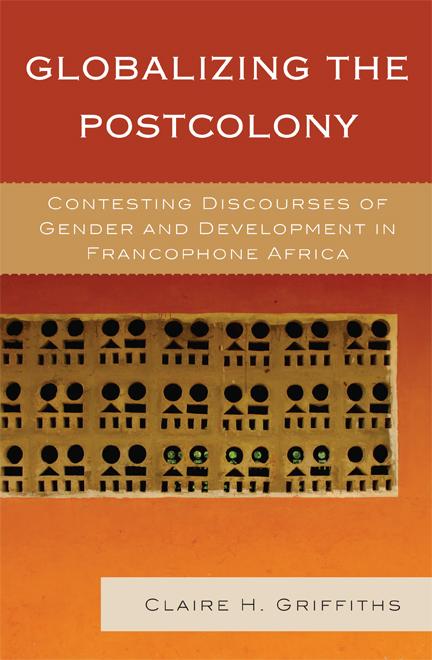
Globalizing the Postcolony: Contesting Discourses of Gender and Development in Francophone Africa is a study of development in the former French colonies of West Africa. It takes as its starting point the international community's reporting on human and social development and gender in the developing areas which began systematically in 1990 and which has provided a framework for policy-making in this field. International reports suggest that the francophone African countries have been experiencing low levels of social development throughout the past two decades. These levels fall dramatically when the factor of gender is introduced to the point where statistically-speaking francophone African women have had less access to social development than any other population in the world.
This study analyzes current thinking on the challenges facing gender and development in Africa, before moving on to examine the historical factors marking the gender and development profile of the francophone West African region. Through an analysis of gender politics in the region from pre-colonial to postcolonial times, the book examines the gradual incursion of exogenous gender policies into the region throughout the 20th century. The discussion concludes by arguing that despite the tendency of the international community, and their colonial administrative forebears, to pursue 'one-size-fits-all' solutions to what they identified as the main development challenges of the day, the impact of standardized solutions remains subject to the unique historical and cultural context in which they are implemented. Adapting formula-driven policies to unique cultural contexts constitutes a major challenge for gender and development politics in the second decade of the new century.
Meanwhile, the book coincides with the introduction of a new international development agenda in Africa articulated around issues of security and globalization. While civil unrest continues to destabilize vast regions of the continent making the prospe
This study analyzes current thinking on the challenges facing gender and development in Africa, before moving on to examine the historical factors marking the gender and development profile of the francophone West African region. Through an analysis of gender politics in the region from pre-colonial to postcolonial times, the book examines the gradual incursion of exogenous gender policies into the region throughout the 20th century. The discussion concludes by arguing that despite the tendency of the international community, and their colonial administrative forebears, to pursue 'one-size-fits-all' solutions to what they identified as the main development challenges of the day, the impact of standardized solutions remains subject to the unique historical and cultural context in which they are implemented. Adapting formula-driven policies to unique cultural contexts constitutes a major challenge for gender and development politics in the second decade of the new century.
Meanwhile, the book coincides with the introduction of a new international development agenda in Africa articulated around issues of security and globalization. While civil unrest continues to destabilize vast regions of the continent making the prospe
Payez facilement par carte, Klarna, Apple Pay ou Google Pay. Pas satisfait ? Vous avez toujours une garantie de remboursement de 14 jours. En savoir plus dans nos conditions. Si vous avez des questions, envoyez-nous un e-mail à hello@memmo.org.
Memmo facilite tes études, où que tu sois dans le monde. On rassemble tes manuels de cours et des outils d'étude intelligents au même endroit : résumés, quiz, podcasts et flashcards. Et il y a Ted, ton compagnon d'étude qui répond à toutes tes questions. Plus de 50 000 étudiants étudient déjà ici – conçu pour t'aider à apprendre plus vite et à moins stresser.