
By the end of the 2000s, the term "resource curse" had become so widespread that it had turned into a kind of magic keyword, not only in the scholarly language of the social sciences, but also in the discourse of politicians, commentators and analysts all over the world--like the term "modernization" in the early 1960s or "transition" in the early 1990s. In fact, the aggravation of many problems in the global economy and politics, against the background of the rally of oil prices in 2004–2008, became the environment for academic and public debates about the role of natural resources in general, and oil and gas in particular, in the development of various societies. The results of numerous studies do not give a clear answer to questions about the nature and mechanisms of the influence of the oil and gas abundance on the economic, political and social processes in various states and nations. However, the majority of scholars and observers agree that this influence in the most of countries is primarily negative.
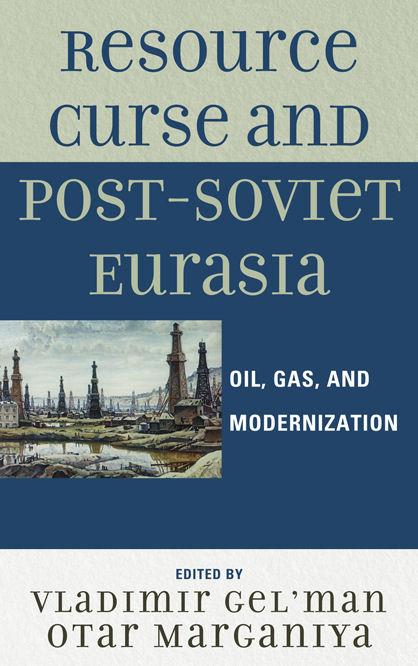
Resource Curse and Post-Soviet Eurasia: Oil, Gas, and Modernization is an in-depth analysis of the impact of oil and gas abundance on political, economic, and social developments of Russia and other post-Soviet states and nations (such as Kazakhstan and Azerbaijan). The chapters of the book systematically examine various effects of "resource curse" in different arenas such as state building, regime changes, rule of law, property rights, policy-making, interest representation, and international relations in theoretical, historical, and comparative perspectives. The authors analyze the role of oil and gas dependency in the evolution and subsequent collapse of the Soviet Union, authoritarian drift of post-Soviet countries, building of predatory state and pendulum-like swings of Russia from "state capture" of 1990s to "business capture" of 2000s, uneasy relationships between the state and special interest groups, and numerous problems of "geo-economics" of pipelines in post-Soviet Eurasia.
Resource Curse and Post-Soviet Eurasia: Oil, Gas, and Modernization is an in-depth analysis of the impact of oil and gas abundance on political, economic, and social developments of Russia and other post-Soviet states and nations (such as Kazakhstan and Azerbaijan). The chapters of the book systematically examine various effects of "resource curse" in different arenas such as state building, regime changes, rule of law, property rights, policy-making, interest representation, and international relations in theoretical, historical, and comparative perspectives. The authors analyze the role of oil and gas dependency in the evolution and subsequent collapse of the Soviet Union, authoritarian drift of post-Soviet countries, building of predatory state and pendulum-like swings of Russia from "state capture" of 1990s to "business capture" of 2000s, uneasy relationships between the state and special interest groups, and numerous problems of "geo-economics" of pipelines in post-Soviet Eurasia.
Pages: 226
Catégorie: Ekonomi & Utveckling
e-ISBN: 9780739143759
Poids d'expédition: 1.2 kg
Expédié sous: 1-2 jours
Payez facilement par carte, Klarna, Apple Pay ou Google Pay. Pas satisfait ? Vous avez toujours une garantie de remboursement de 14 jours. En savoir plus dans nos conditions. Si vous avez des questions, envoyez-nous un e-mail à hello@memmo.org.
Memmo facilite tes études, où que tu sois dans le monde. On rassemble tes manuels de cours et des outils d'étude intelligents au même endroit : résumés, quiz, podcasts et flashcards. Et il y a Ted, ton compagnon d'étude qui répond à toutes tes questions. Plus de 50 000 étudiants étudient déjà ici – conçu pour t'aider à apprendre plus vite et à moins stresser.