
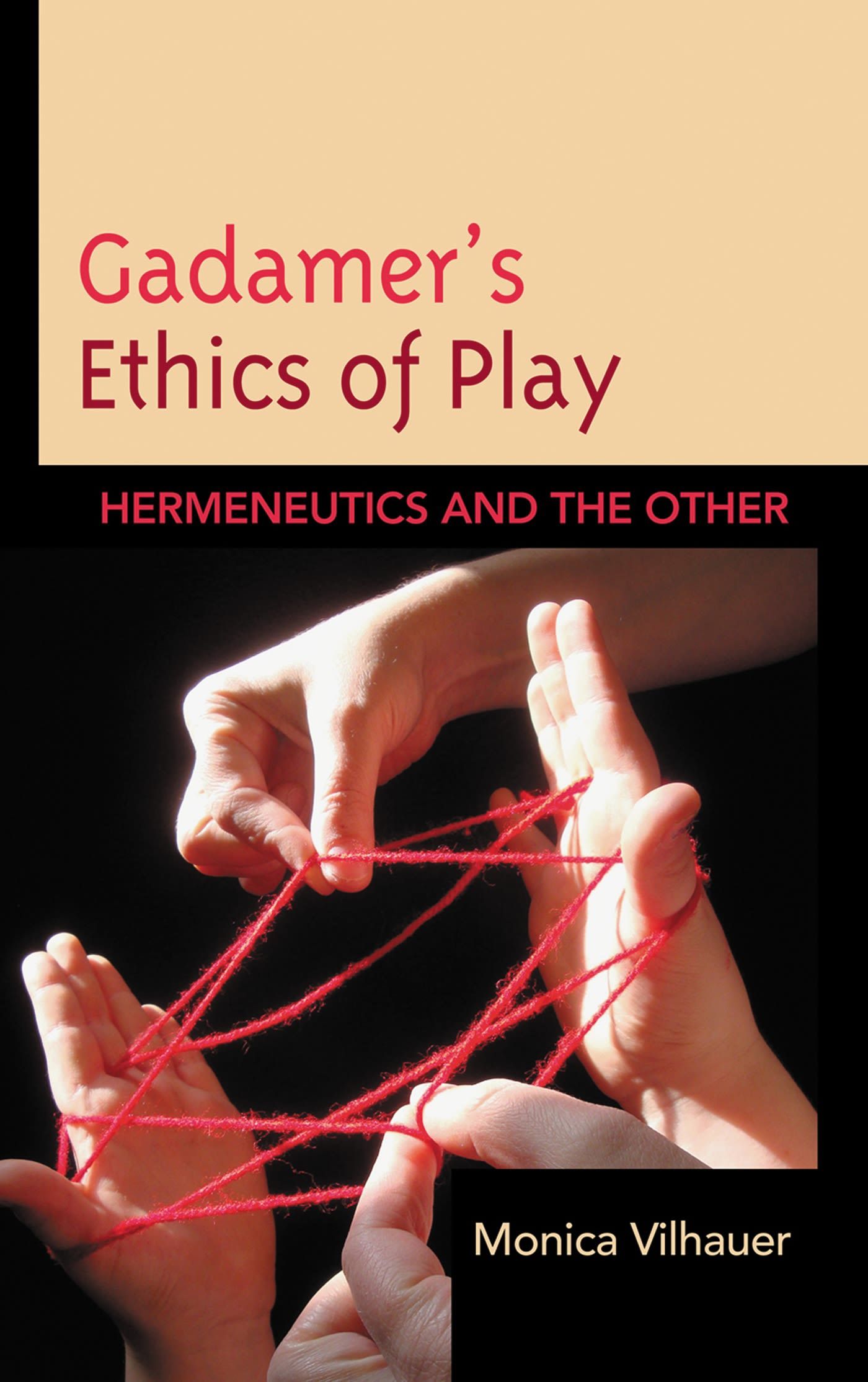
Gadamer's Ethics of Play: Hermeneutics and the Other examines the ethical dimensions of understanding by focusing on Gadamer's concept of "play" as it is developed in his magnum opus Truth and Method. Monica Vilhauer argues for the global relevance of play in Gadamer's philosophical hermeneutics by revealing play as the key concept that depicts the process of all understanding-that is, the dynamic, dialogical, and interpretive process by which interlocutors come to grasp a common subject matter together. Through the lens of dialogue-play, the book focuses on openness toward one's dialogue partner, respect for his differing point of view, and a willingness to learn from him in conversation as crucial ethical conditions of genuine understanding. The book aims to revive the ethical heart of philosophical hermeneutics and reveal the transforming power of the Other in Gadamer's hermeneutics.
While Gadamer's Ethics of Play develops his philosophical hermeneutics as an ethical philosophy, in the style of the older tradition of Aristotelian practical philosophy, it is finally critical of the extent to which Gadamer's hermeneutics can be used as a guide to practice. The book points out our need for guidance when we face our most prevalent obstacle to understanding-a closedness to the Other, or unwillingness to engage in conversation-but finds no guidance from Gadamer in scenarios where ethical conditions are lacking. Inspired by Gadamer's discussion of play, the book searches for types of human interaction that might have the power to open or re-open the play of dialogue between those who have become closed to each other, so that true understanding between them can be developed. The book is accessible to an undergraduate audience, while also being relevant to ongoing debates among Gadamer scholars.
While Gadamer's Ethics of Play develops his philosophical hermeneutics as an ethical philosophy, in the style of the older tradition of Aristotelian practical philosophy, it is finally critical of the extent to which Gadamer's hermeneutics can be used as a guide to practice. The book points out our need for guidance when we face our most prevalent obstacle to understanding-a closedness to the Other, or unwillingness to engage in conversation-but finds no guidance from Gadamer in scenarios where ethical conditions are lacking. Inspired by Gadamer's discussion of play, the book searches for types of human interaction that might have the power to open or re-open the play of dialogue between those who have become closed to each other, so that true understanding between them can be developed. The book is accessible to an undergraduate audience, while also being relevant to ongoing debates among Gadamer scholars.
Payez facilement par carte, Klarna, Apple Pay ou Google Pay. Pas satisfait ? Vous avez toujours une garantie de remboursement de 14 jours. En savoir plus dans nos conditions. Si vous avez des questions, envoyez-nous un e-mail à hello@memmo.org.
Memmo facilite tes études, où que tu sois dans le monde. On rassemble tes manuels de cours et des outils d'étude intelligents au même endroit : résumés, quiz, podcasts et flashcards. Et il y a Ted, ton compagnon d'étude qui répond à toutes tes questions. Plus de 50 000 étudiants étudient déjà ici – conçu pour t'aider à apprendre plus vite et à moins stresser.