
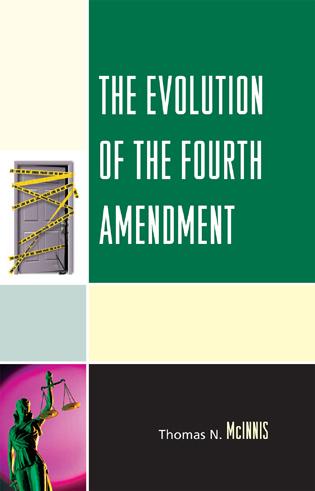
This book examines the history of the Fourth Amendment, which prohibits unreasonable search and seizure, and its interpretation by the Supreme Court. It concentrates on the changes in interpretation that have taken place after the Supreme Court, led by Chief Justice Earl Warren in 1961, decided in Mapp v. Ohio to apply the exclusionary rule, which makes illegally seized evidence inadmissible in court, to the actions of state governments. In The Evolution of the Fourth Amendment, Thomas N. McInnis demonstrates that prior to Mapp the Court relied on the warrant rule, which with limited exceptions emphasized the need to have a search warrant prior to a search or seizure.
Due to the unhappiness that post-Warren Courts had with the application of the exclusionary rule, they reinterpreted the Fourth Amendment using the expansive language that the Warren Court had used in Fourth Amendment cases. In doing so, they broadened the government's powers to search and seize under the Fourth Amendment by developing new exceptions to the warrant rule, developing both the reasonableness approach and special needs test to the Fourth Amendment, limiting the expectations of privacy that citizens have, and narrowing those areas actually protected by the amendment. McInnis also examines how the Court has limited the effect of the exclusionary rule by reinterpreting when it needs to be applied and by creating new exceptions. The book ends by examining the emerging Fourth Amendment jurisprudence of the Roberts Court and assessing the future of the Fourth Amendment in a post-9/11 world.
Due to the unhappiness that post-Warren Courts had with the application of the exclusionary rule, they reinterpreted the Fourth Amendment using the expansive language that the Warren Court had used in Fourth Amendment cases. In doing so, they broadened the government's powers to search and seize under the Fourth Amendment by developing new exceptions to the warrant rule, developing both the reasonableness approach and special needs test to the Fourth Amendment, limiting the expectations of privacy that citizens have, and narrowing those areas actually protected by the amendment. McInnis also examines how the Court has limited the effect of the exclusionary rule by reinterpreting when it needs to be applied and by creating new exceptions. The book ends by examining the emerging Fourth Amendment jurisprudence of the Roberts Court and assessing the future of the Fourth Amendment in a post-9/11 world.
Payez facilement par carte, Klarna, Apple Pay ou Google Pay. Pas satisfait ? Vous avez toujours une garantie de remboursement de 14 jours. En savoir plus dans nos conditions. Si vous avez des questions, envoyez-nous un e-mail à hello@memmo.org.
Memmo facilite tes études, où que tu sois dans le monde. On rassemble tes manuels de cours et des outils d'étude intelligents au même endroit : résumés, quiz, podcasts et flashcards. Et il y a Ted, ton compagnon d'étude qui répond à toutes tes questions. Plus de 50 000 étudiants étudient déjà ici – conçu pour t'aider à apprendre plus vite et à moins stresser.