
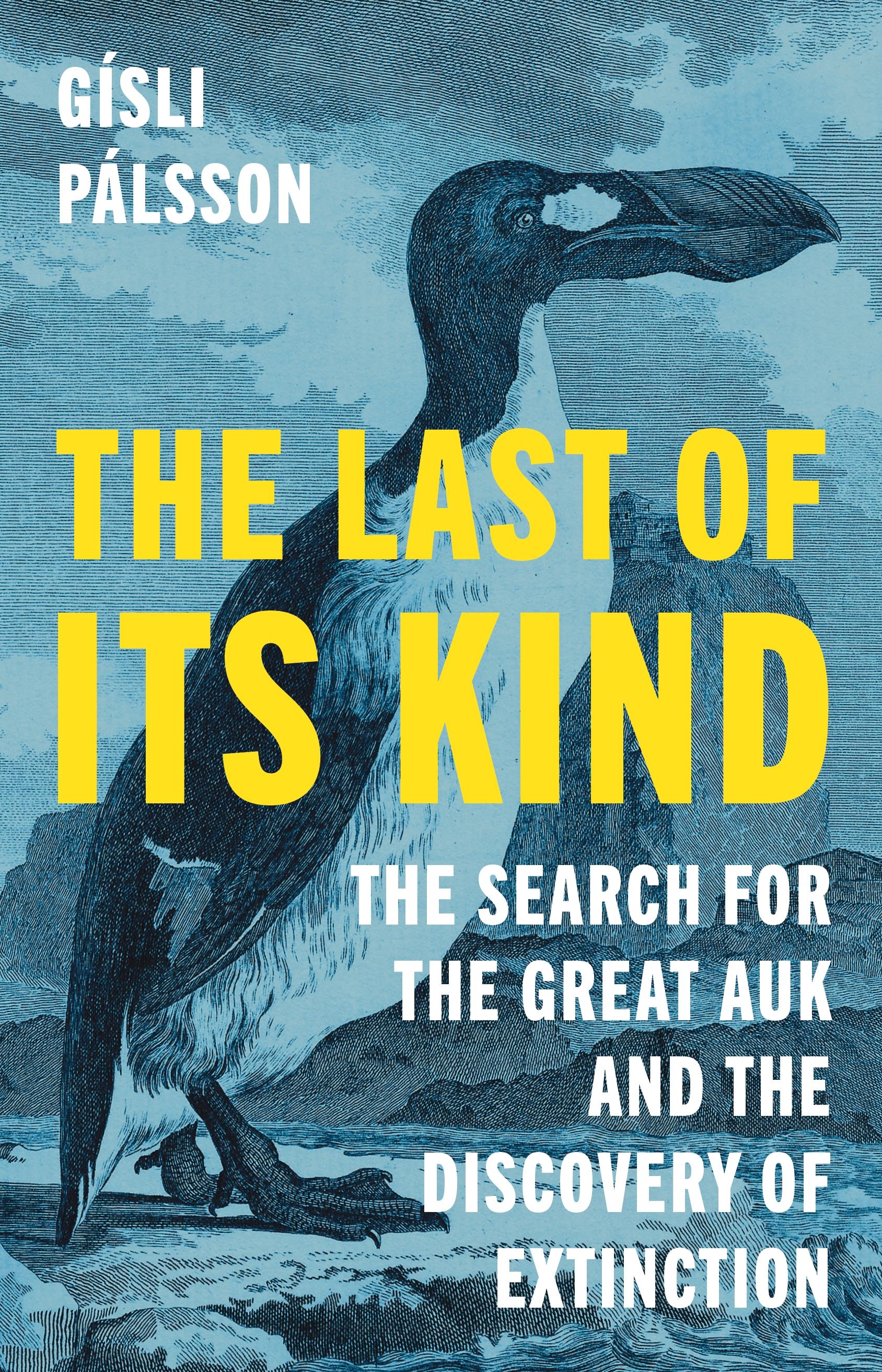
Shortlisted for the Royal Society Trivedi Science Book Prize
How an iconic bird’s final days exposed the reality of human-caused extinction
The great auk is one of the most tragic and documented examples of extinction. A flightless bird that bred primarily on the remote islands of the North Atlantic, the last of its kind were killed in Iceland in 1844. Gísli Pálsson draws on firsthand accounts from the Icelanders who hunted the last great auks to bring to life a bygone age of Victorian scientific exploration while offering vital insights into the extinction of species.
Pálsson vividly recounts how British ornithologists John Wolley and Alfred Newton set out for Iceland to collect specimens only to discover that the great auks were already gone. At the time, the Victorian world viewed extinction as an impossibility or trivialized it as a natural phenomenon. Pálsson chronicles how Wolley and Newton documented the fate of the last birds through interviews with the men who killed them, and how the naturalists’ Icelandic journey opened their eyes to the disappearance of species as a subject of scientific concern—and as something that could be caused by humans.
Blending a richly evocative narrative with rare, unpublished material as well as insights from ornithology, anthropology, and Pálsson’s own North Atlantic travels, The Last of Its Kind reveals how the saga of the great auk opens a window onto the human causes of mass extinction.
Payez facilement par carte, Klarna, Apple Pay ou Google Pay. Pas satisfait ? Vous avez toujours une garantie de remboursement de 14 jours. En savoir plus dans nos conditions. Si vous avez des questions, envoyez-nous un e-mail à hello@memmo.org.
Memmo facilite tes études, où que tu sois dans le monde. On rassemble tes manuels de cours et des outils d'étude intelligents au même endroit : résumés, quiz, podcasts et flashcards. Et il y a Ted, ton compagnon d'étude qui répond à toutes tes questions. Plus de 50 000 étudiants étudient déjà ici – conçu pour t'aider à apprendre plus vite et à moins stresser.