
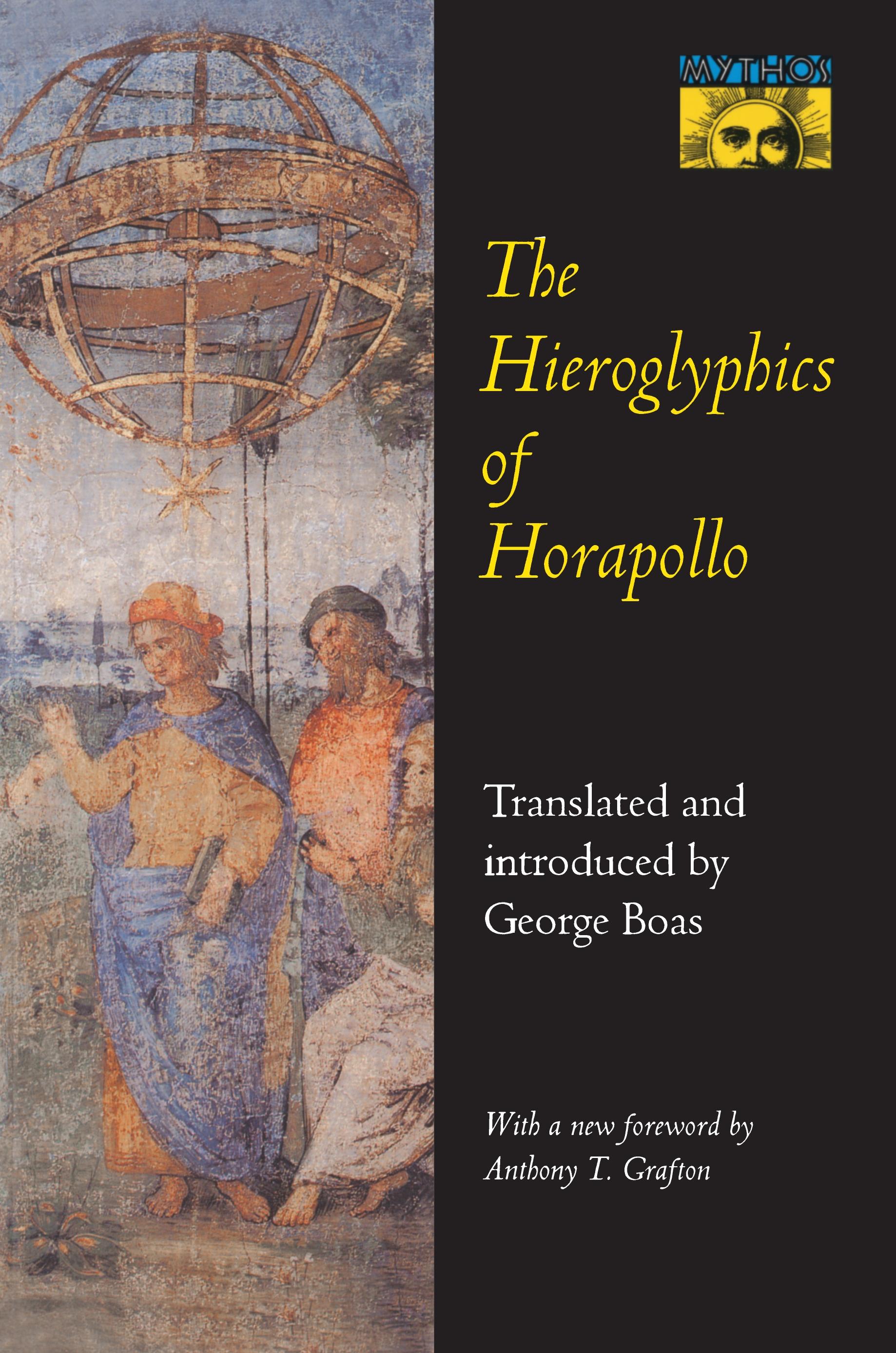
Written reputedly by an Egyptian magus, Horapollo Niliacus, in the fourth century C.E., The Hieroglyphics of Horapollo is an anthology of nearly two hundred "hieroglyphics," or allegorical emblems, said to have been used by the Pharaonic scribes in describing natural and moral aspects of the world. Translated into Greek in 1505, it informed much of Western iconography from the sixteenth through the nineteenth centuries. This work not only tells how various types of natural phenomena, emotions, virtues, philosophical concepts, and human character-types were symbolized, but also explains why, for example, the universe is represented by a serpent swallowing its tail, filial affection by a stork, education by the heavens dropping dew, and a horoscopist by a person eating an hourglass.
In his introduction Boas explores the influence of The Hieroglyphics and the causes behind the rebirth of interest in symbolism in the sixteenth century. The illustrations to this edition were drawn by Albrecht Dürer on the verso pages of his copy of a Latin translation.
Payez facilement par carte, Klarna, Apple Pay ou Google Pay. Pas satisfait ? Vous avez toujours une garantie de remboursement de 14 jours. En savoir plus dans nos conditions. Si vous avez des questions, envoyez-nous un e-mail à hello@memmo.org.
Memmo facilite tes études, où que tu sois dans le monde. On rassemble tes manuels de cours et des outils d'étude intelligents au même endroit : résumés, quiz, podcasts et flashcards. Et il y a Ted, ton compagnon d'étude qui répond à toutes tes questions. Plus de 50 000 étudiants étudient déjà ici – conçu pour t'aider à apprendre plus vite et à moins stresser.