
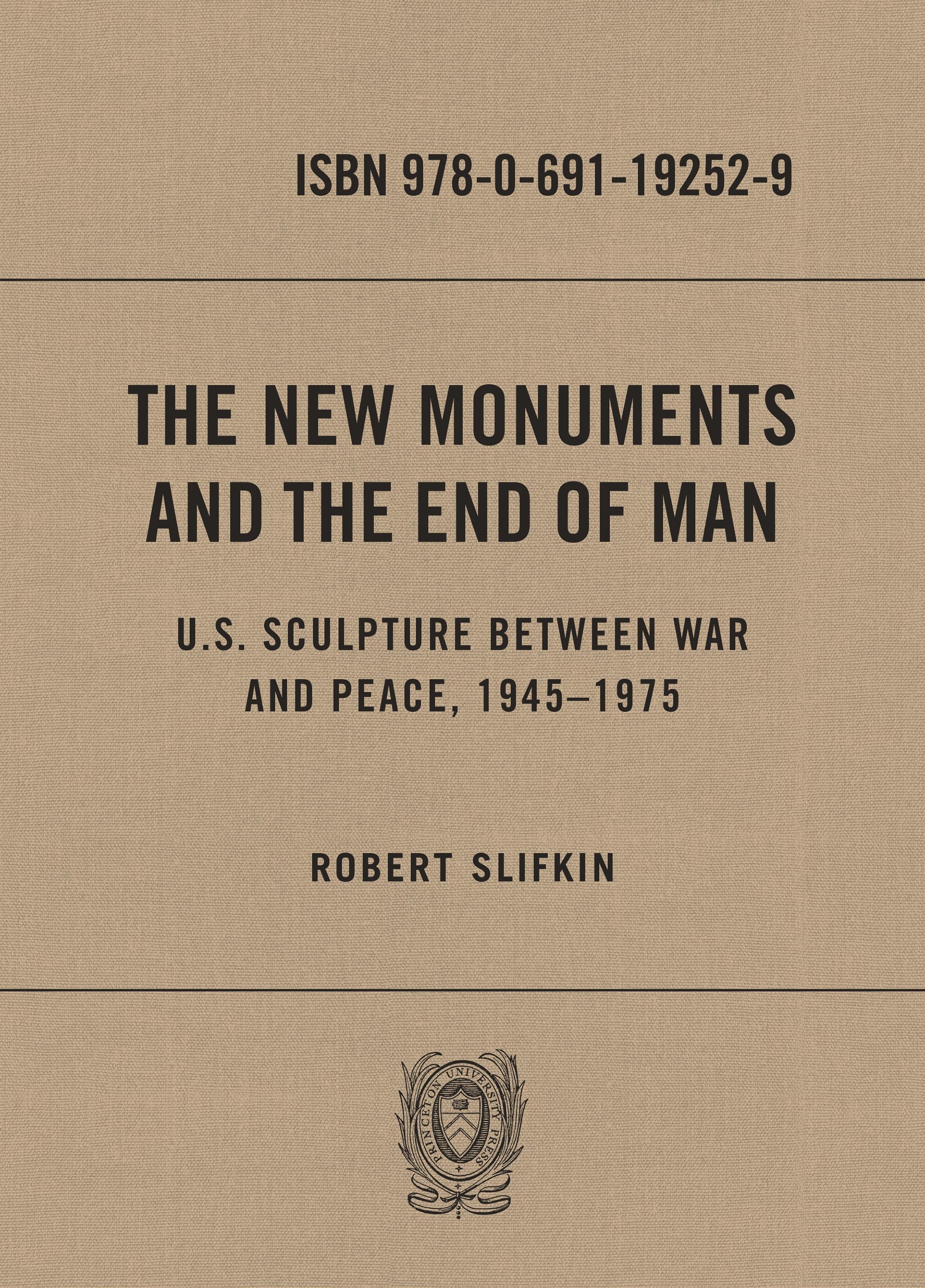
How leading American artists reflected on the fate of humanity in the nuclear era through monumental sculpture
In the wake of the atomic bombings of Japan in 1945, artists in the United States began to question what it meant to create a work of art in a world where humanity could be rendered extinct by its own hand. The New Monuments and the End of Man examines how some of the most important artists of postwar America revived the neglected tradition of the sculptural monument as a way to grapple with the cultural and existential anxieties surrounding the threat of nuclear annihilation.
Robert Slifkin looks at such iconic works as the industrially evocative welded steel sculptures of David Smith, the austere structures of Donald Judd, and the desolate yet picturesque earthworks of Robert Smithson. Transforming how we understand this crucial moment in American art, he traces the intersections of postwar sculptural practice with cybernetic theory, science-fiction cinema and literature, and the political debates surrounding nuclear warfare. Slifkin identifies previously unrecognized affinities of the sculpture of the 1940s and 1950s with the minimalism and land art of the 1960s and 1970s, and acknowledges the important contributions of postwar artists who have been marginalized until now, such as Raoul Hague, Peter Grippe, and Robert Mallary.
Strikingly illustrated throughout, The New Monuments and the End of Man spans the decades from Hiroshima to the Fall of Saigon, when the atomic bomb cast its shadow over American art.
Payez facilement par carte, Klarna, Apple Pay ou Google Pay. Pas satisfait ? Vous avez toujours une garantie de remboursement de 14 jours. En savoir plus dans nos conditions. Si vous avez des questions, envoyez-nous un e-mail à hello@memmo.org.
Memmo facilite tes études, où que tu sois dans le monde. On rassemble tes manuels de cours et des outils d'étude intelligents au même endroit : résumés, quiz, podcasts et flashcards. Et il y a Ted, ton compagnon d'étude qui répond à toutes tes questions. Plus de 50 000 étudiants étudient déjà ici – conçu pour t'aider à apprendre plus vite et à moins stresser.