
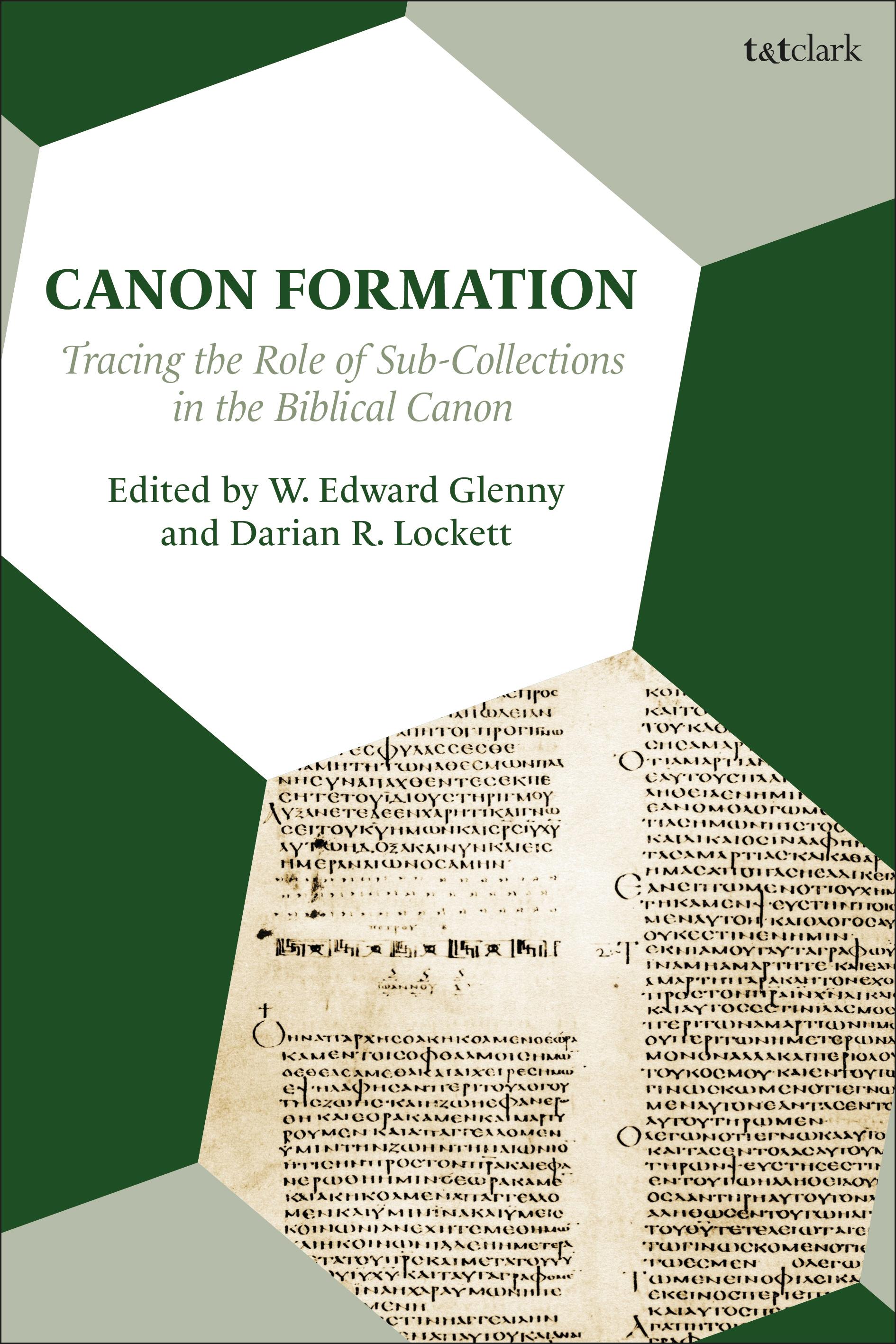
Contributors to this volume examine the various collections of canonical sub-units in the canon, considering the state of the question regarding each particular collection. The chapters introduce the issues involved in sub-collections being accepted in the canon, summarize the historical evidence of the acceptance of these collections, and discuss the compositional evidence of “canonical consciousness” in the various collections. The contributors consider paratextual evidence, for example, the arrangement of the books in various manuscripts, the titles of the books, and also include evidence such as the presence of catchwords, framing devices, and themes.
The book begins with a consideration of the two overarching collections – the Old and New Testaments. Next, several sub-collections within the Hebrew Bible (OT) are considered, including the Torah, Prophets, the Megilloth, the Twelve (both in their Masoretic Text and Septuagint forms), and the Psalter. In addition, sub-collections in the New Testament include the four-fold Gospel, the Pauline Collection (usually with Hebrews in the early manuscripts), the function of Acts within the New Testament, the Praxapostolos (Acts along with the Catholic Epistles), and the function of Revelation as the end of the canon.
The book begins with a consideration of the two overarching collections – the Old and New Testaments. Next, several sub-collections within the Hebrew Bible (OT) are considered, including the Torah, Prophets, the Megilloth, the Twelve (both in their Masoretic Text and Septuagint forms), and the Psalter. In addition, sub-collections in the New Testament include the four-fold Gospel, the Pauline Collection (usually with Hebrews in the early manuscripts), the function of Acts within the New Testament, the Praxapostolos (Acts along with the Catholic Epistles), and the function of Revelation as the end of the canon.
Payez facilement par carte, Klarna, Apple Pay ou Google Pay. Pas satisfait ? Vous avez toujours une garantie de remboursement de 14 jours. En savoir plus dans nos conditions. Si vous avez des questions, envoyez-nous un e-mail à hello@memmo.org.
Memmo facilite tes études, où que tu sois dans le monde. On rassemble tes manuels de cours et des outils d'étude intelligents au même endroit : résumés, quiz, podcasts et flashcards. Et il y a Ted, ton compagnon d'étude qui répond à toutes tes questions. Plus de 50 000 étudiants étudient déjà ici – conçu pour t'aider à apprendre plus vite et à moins stresser.