
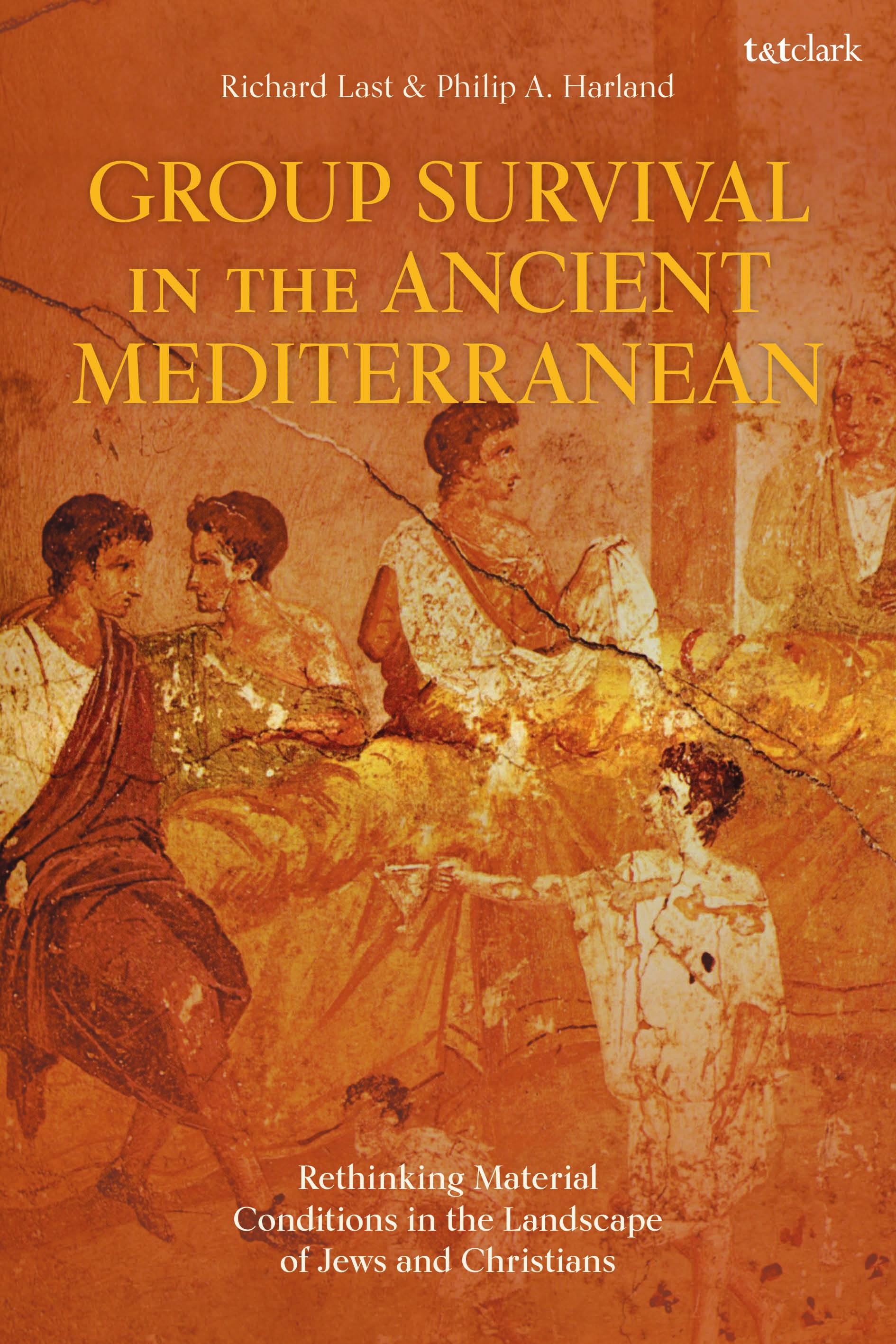
Philip A. Harland and Richard Last consider the economics of early Christian group life within its social, cultural and economic contexts, by drawing on extensive epigraphic and archaeological evidence. In exploring the informal associations, immigrant groups, and guilds that dotted the world of the early Christians, Harland
and Last provide fresh perspective on the question of how Christian assemblies and Judean/Jewish gatherings gained necessary resources to pursue their social, religious, and additional aims.
By considering both neglected archaeological discoveries and literary evidence, the authors analyse financial and material aspects of group life, both sources of income and various areas of expenditure. Harland and Last then turn to the use of material resources for mutual support of members in various groups, including the importance of burial and the practice of interest-free loans. Christian and Judean evidence is explored throughout this book, culminating in a discussion of texts detailing the internal financial life of Christian assemblies as seen in first and second century sources, including Paul, the Didache, Justin Martyr, and Tertullian. In shedding new light on early Christian financial organisation, this volume aids further understanding of how some Christian groups survived and developed in the Greco-Roman world.
and Last provide fresh perspective on the question of how Christian assemblies and Judean/Jewish gatherings gained necessary resources to pursue their social, religious, and additional aims.
By considering both neglected archaeological discoveries and literary evidence, the authors analyse financial and material aspects of group life, both sources of income and various areas of expenditure. Harland and Last then turn to the use of material resources for mutual support of members in various groups, including the importance of burial and the practice of interest-free loans. Christian and Judean evidence is explored throughout this book, culminating in a discussion of texts detailing the internal financial life of Christian assemblies as seen in first and second century sources, including Paul, the Didache, Justin Martyr, and Tertullian. In shedding new light on early Christian financial organisation, this volume aids further understanding of how some Christian groups survived and developed in the Greco-Roman world.
Pages: 240
Catégorie: Arkeologi & Antikvetenskap
e-ISBN: 9780567657503
Poids d'expédition: 1.2 kg
Expédié sous: 1-2 jours
Payez facilement par carte, Klarna, Apple Pay ou Google Pay. Pas satisfait ? Vous avez toujours une garantie de remboursement de 14 jours. En savoir plus dans nos conditions. Si vous avez des questions, envoyez-nous un e-mail à hello@memmo.org.
Memmo facilite tes études, où que tu sois dans le monde. On rassemble tes manuels de cours et des outils d'étude intelligents au même endroit : résumés, quiz, podcasts et flashcards. Et il y a Ted, ton compagnon d'étude qui répond à toutes tes questions. Plus de 50 000 étudiants étudient déjà ici – conçu pour t'aider à apprendre plus vite et à moins stresser.