
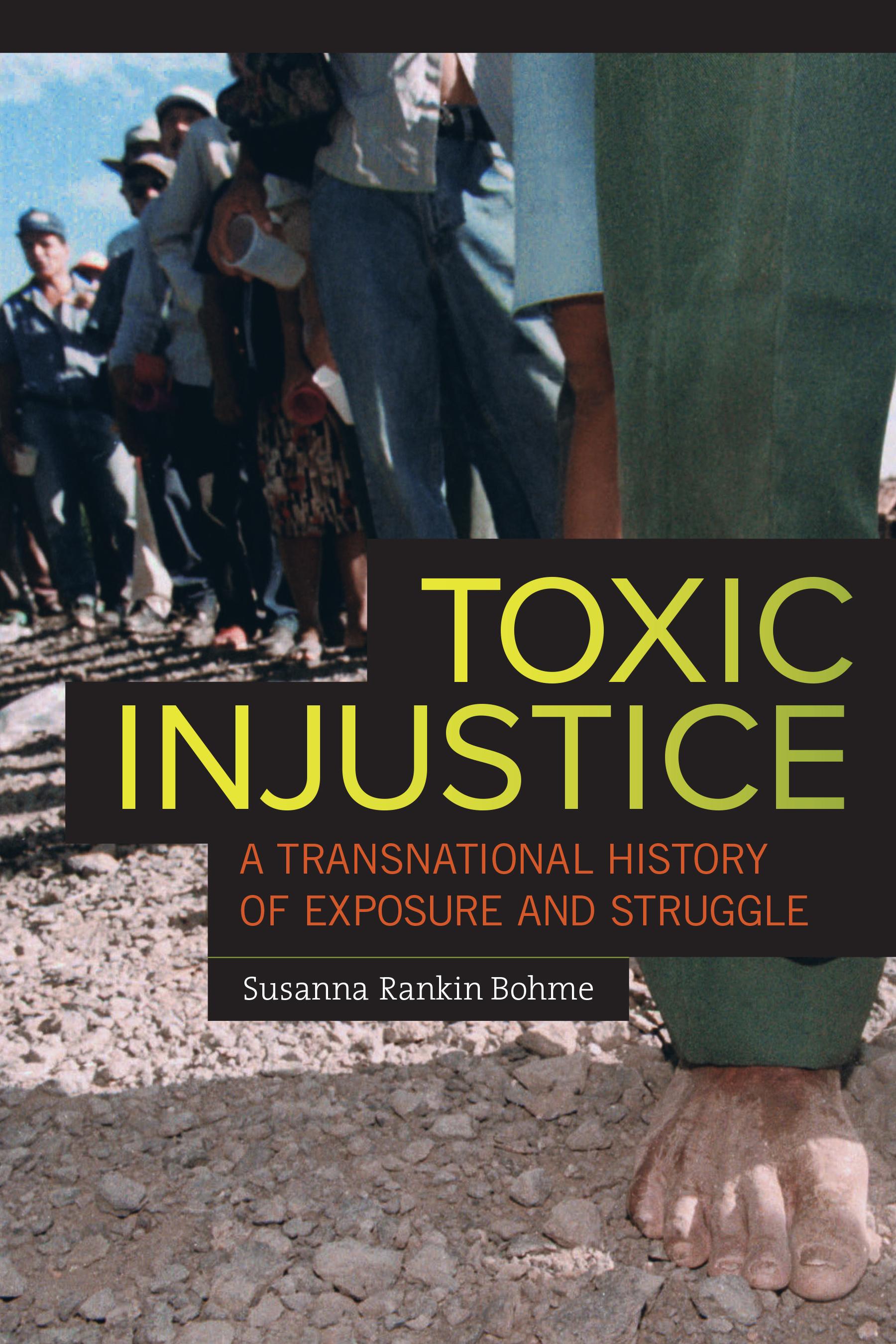
The pesticide dibromochloropropane, known as DBCP, was developed by the chemical companies Dow and Shell in the 1950s to target wormlike, soil-dwelling creatures called nematodes. Despite signs that the chemical was dangerous, it was widely used in U.S. agriculture and on Chiquita and Dole banana plantations in Central America. In the late 1970s, DBCP was linked to male sterility, but an uneven regulatory process left many workers—especially on Dole’s banana farms—exposed for years after health risks were known.
Susanna Rankin Bohme tells an intriguing, multilayered history that spans fifty years, highlighting the transnational reach of corporations and social justice movements. Toxic Injustice links health inequalities and worker struggles as it charts how people excluded from workplace and legal protections have found ways to challenge power structures and seek justice from states and transnational corporations alike.
Susanna Rankin Bohme tells an intriguing, multilayered history that spans fifty years, highlighting the transnational reach of corporations and social justice movements. Toxic Injustice links health inequalities and worker struggles as it charts how people excluded from workplace and legal protections have found ways to challenge power structures and seek justice from states and transnational corporations alike.
Payez facilement par carte, Klarna, Apple Pay ou Google Pay. Pas satisfait ? Vous avez toujours une garantie de remboursement de 14 jours. En savoir plus dans nos conditions. Si vous avez des questions, envoyez-nous un e-mail à hello@memmo.org.
Memmo facilite tes études, où que tu sois dans le monde. On rassemble tes manuels de cours et des outils d'étude intelligents au même endroit : résumés, quiz, podcasts et flashcards. Et il y a Ted, ton compagnon d'étude qui répond à toutes tes questions. Plus de 50 000 étudiants étudient déjà ici – conçu pour t'aider à apprendre plus vite et à moins stresser.
Tu pourrais aussi aimer
Acheter le livre0