
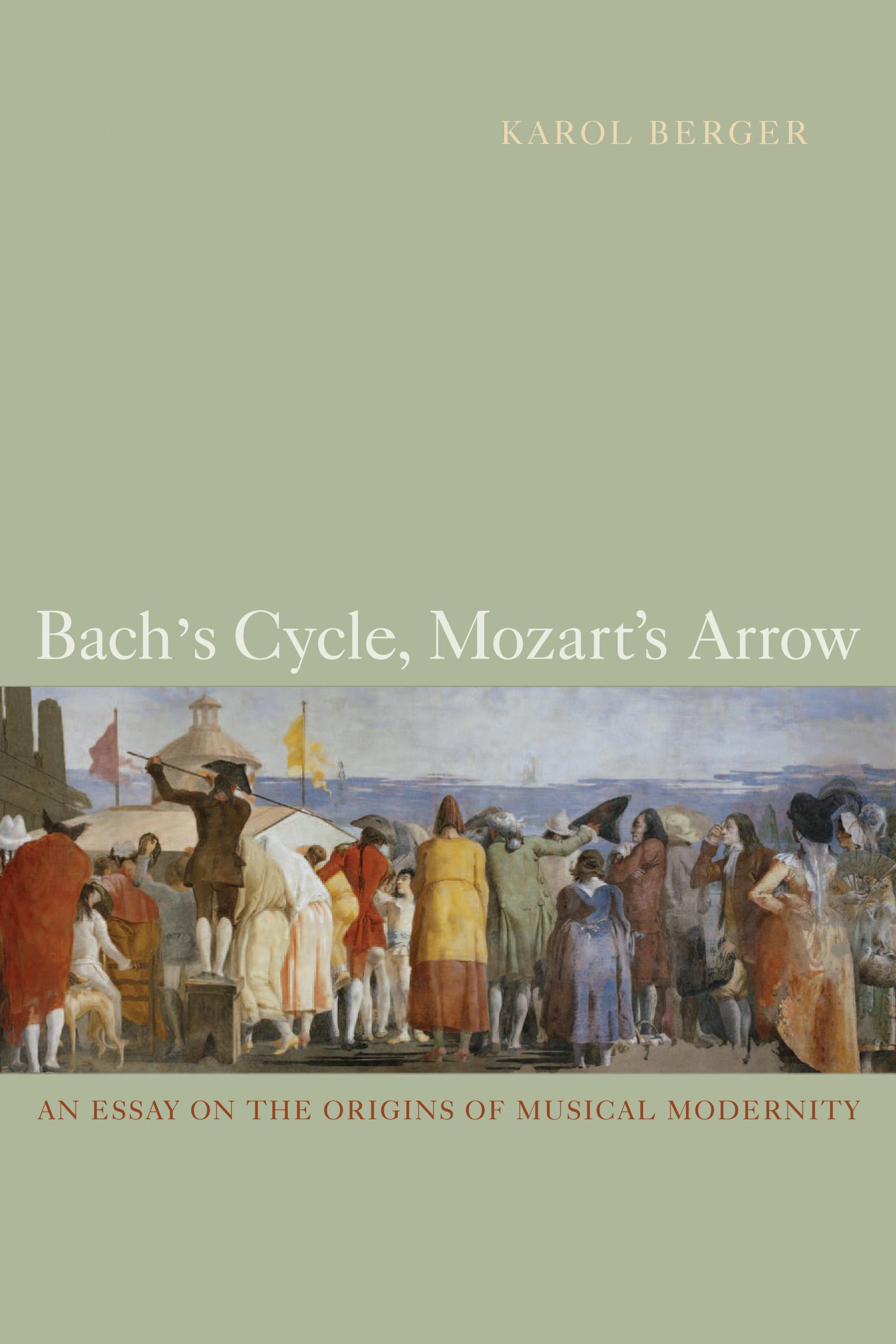
In this erudite and elegantly composed argument, Karol Berger uses the works of Monteverdi, Bach, Mozart, and Beethoven to support two groundbreaking claims: first, that it was only in the later eighteenth century that music began to take the flow of time from the past to the future seriously; second, that this change in the structure of musical time was an aspect of a larger transformation in the way educated Europeans began to imagine and think about time with the onset of modernity, a part of a shift from the premodern Christian outlook to the modern post-Christian worldview. Until this historical moment, as Berger illustrates in his analysis of Bach's St. Matthew Passion, music was simply "in time." Its successive events unfolded one after another, but the distinction between past and future, earlier and later, was not central to the way the music was experienced and understood. But after the shift, as he finds in looking at Mozart's Don Giovanni, the experience of linear time is transformed into music's essential subject matter; the cycle of time unbends and becomes an arrow. Berger complements these musical case studies with a rich survey of the philosophical, theological, and literary trends influencing artists during this period.
Payez facilement par carte, Klarna, Apple Pay ou Google Pay. Pas satisfait ? Vous avez toujours une garantie de remboursement de 14 jours. En savoir plus dans nos conditions. Si vous avez des questions, envoyez-nous un e-mail à hello@memmo.org.
Memmo facilite tes études, où que tu sois dans le monde. On rassemble tes manuels de cours et des outils d'étude intelligents au même endroit : résumés, quiz, podcasts et flashcards. Et il y a Ted, ton compagnon d'étude qui répond à toutes tes questions. Plus de 50 000 étudiants étudient déjà ici – conçu pour t'aider à apprendre plus vite et à moins stresser.
Tu pourrais aussi aimer
Acheter le livre0